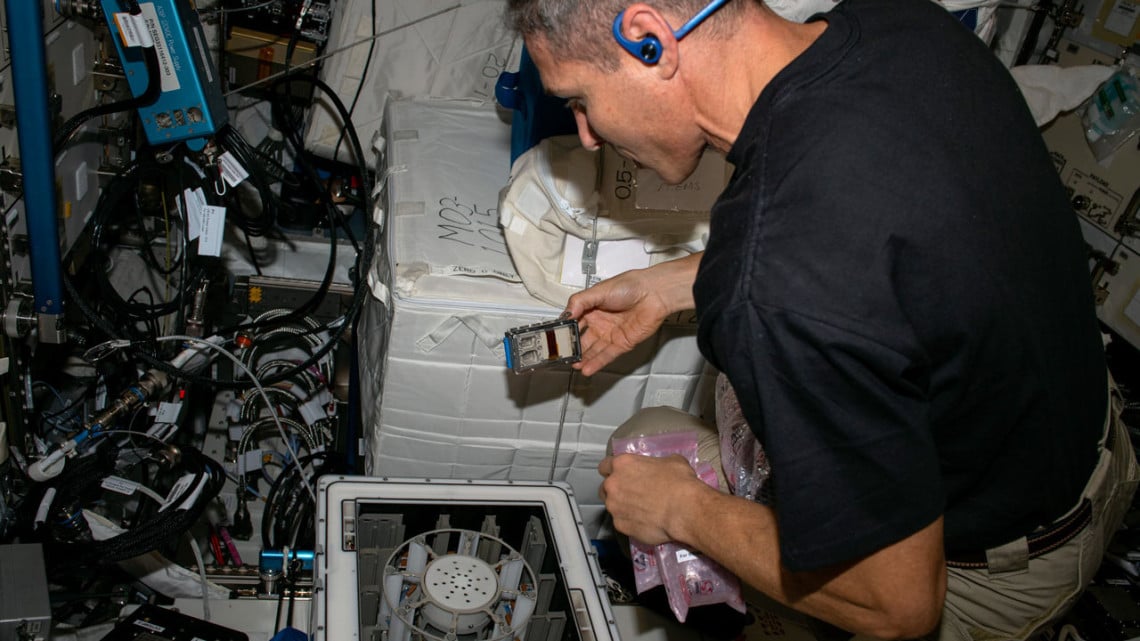
If humankind is to explore deep space, one small passenger should not be left behind: microbes. In fact, it would be impossible to leave them behind, since they live on


If humankind is to explore deep space, one small passenger should not be left behind: microbes. In fact, it would be impossible to leave them behind, since they live on
Red dwarfs make up the vast majority of stars in the galaxy. Such ubiquity means they host the majority of rocky exoplanets we’ve found so far—which in turn makes them
About 15% of asteroids near Earth have small moons orbiting them, making binary asteroid systems common in our cosmic neighborhood.
Life’s capacity to survive in simulated lunar and Martian soils has been explored in two papers published in Scientific Reports. Treating simulated lunar soil with both symbiotic fungi and worm-produced
Ever since physicist Freeman Dyson first proposed the concept in 1960, the “Dyson sphere” has been the holy grail of techno-signature hunters. A highly advanced civilization could build a “sphere”
Italian astronomers have performed extensive spectroscopic monitoring of a recently discovered nova known as Vulpeculae 2024, also known as V615 Vul. Results of the new observations, presented in a paper
Researchers at Nagoya University in Japan have conducted the most detailed simulation of the interior of stars and disproved a theory scientists have believed for 45 years: that stars switch
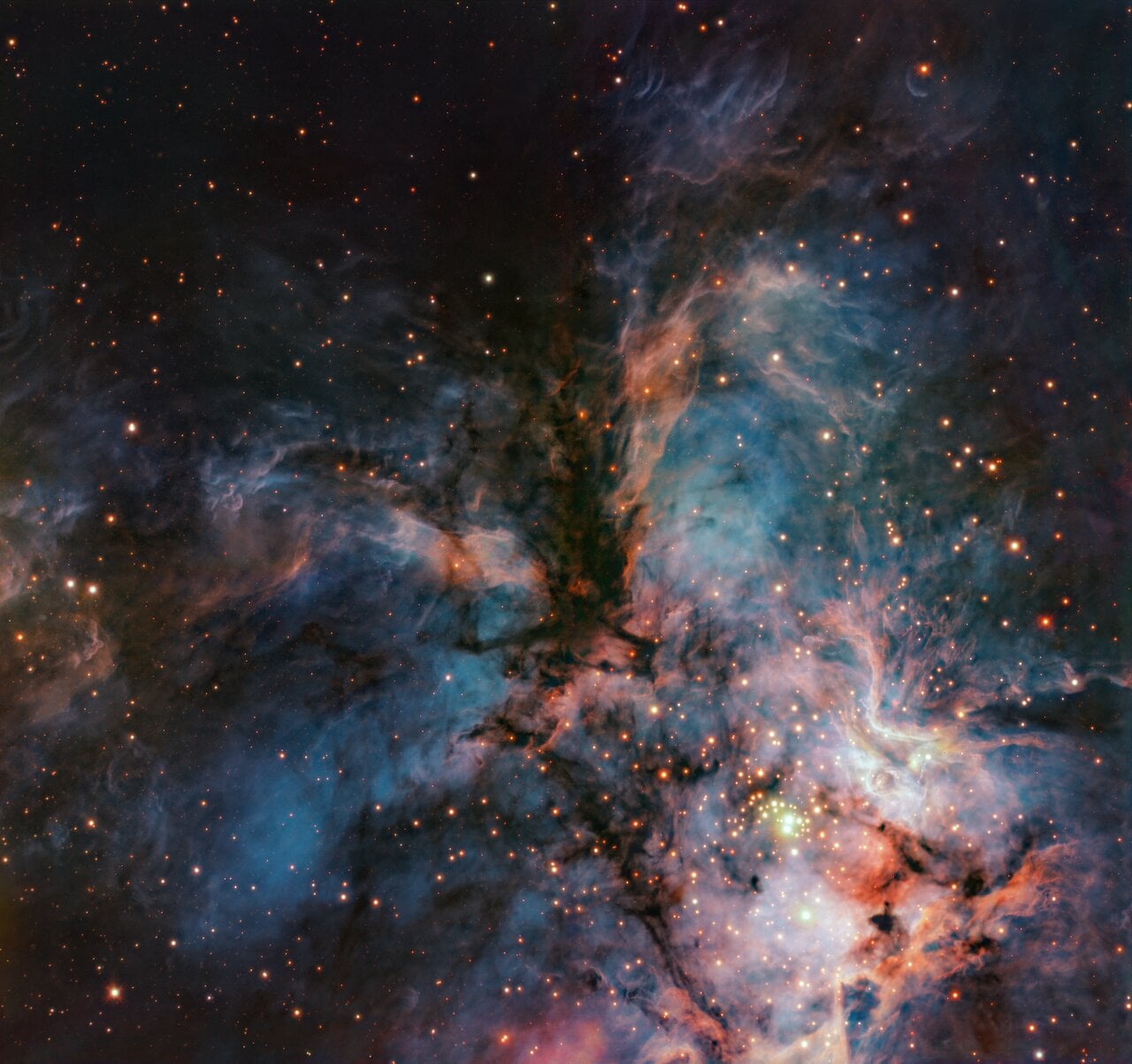
Today’s Picture of the Week, taken with ESO’s Very Large Telescope (VLT), seems to have captured a cosmic hawk as it spans its wings.
Neutron stars harbor some of the most extreme environments in the universe: their densities soar to several times those of atomic nuclei, and they possess some of the strongest gravitational
Finding Earth-like planets orbiting sun-like stars and identifying signs of life such as oxygen or water is a major goal in astronomy and a key interest for the public. Addressing