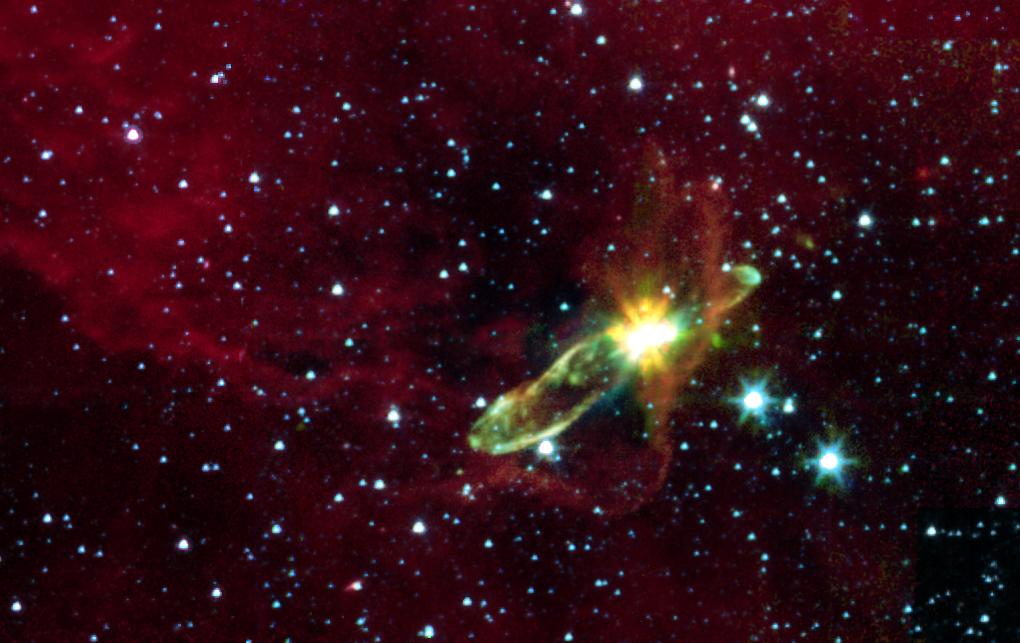
Young stars buried deep in molecular clouds are bathed in ultraviolet radiation, but they shouldn’t be. Protostars are too cold and dim to produce UV light themselves, yet James Webb


Young stars buried deep in molecular clouds are bathed in ultraviolet radiation, but they shouldn’t be. Protostars are too cold and dim to produce UV light themselves, yet James Webb
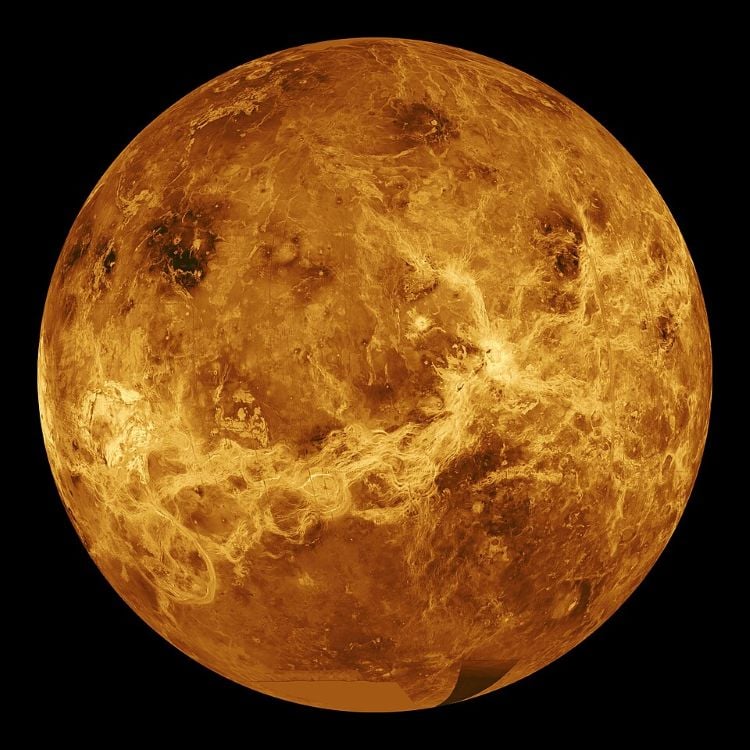
What is the importance of studying explosive volcanism on Venus? This is what a recent study published in the Journal of Geophysical Research: Planets hopes to address as a team
A strong geomagnetic storm in spring 2024 brought the northern lights unusually far south, as the auroral oval expanded well beyond its typical position. “I am surprised at how sparse
A cosmological simulation study by researchers from the Shanghai Astronomical Observatory of the Chinese Academy of Sciences has systematically revealed, for the first time, how the interaction between dark matter
A new study led by the Yunnan Observatories of the Chinese Academy of Sciences has detected quasi-periodic oscillation (QPO) signals in an unusual gamma-ray burst (GRB) event. The findings are
Scientists have captured an exceptionally rare, high-resolution view of an active region that produced two powerful X-class solar flares—an achievement rarely possible from Earth. Using the GREGOR solar telescope in
Stars usually form in clusters, which can also form in pairs or groups. Binary clusters (BCs) are defined as pairs of open clusters closely associated both in position and kinematics.
An international research team led by PD Dr. Florian Peissker at the University of Cologne has used the new observation instrument ERIS (Enhanced Resolution Imager and Spectrograph) at the Very
Russia’s space launch site in Kazakhstan was damaged on Thursday after a Soyuz mission took off with Russian cosmonauts and US astronauts onboard, Moscow’s space agency Roscosmos said.
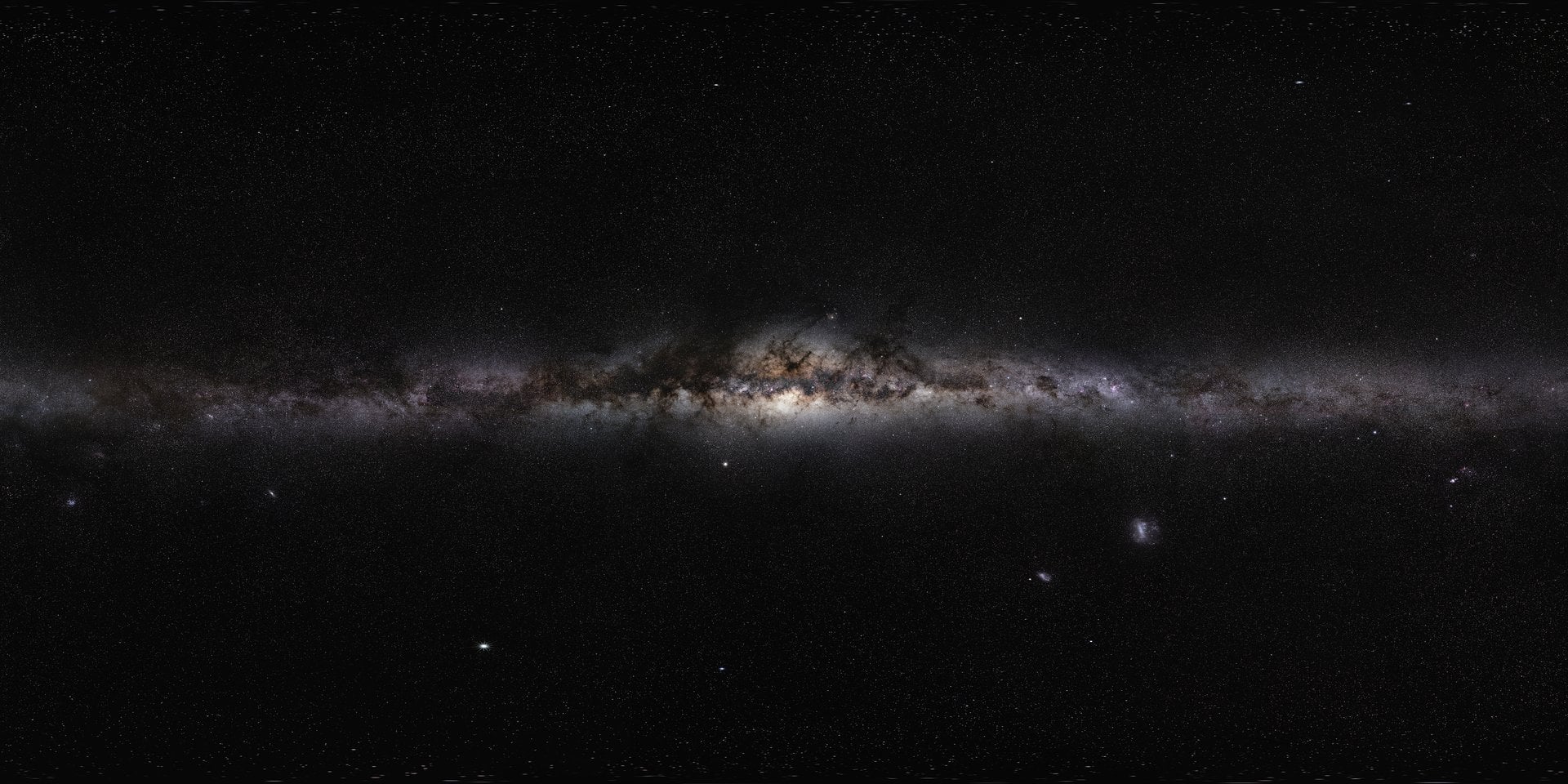
Research led by the RIKEN Center for Interdisciplinary Theoretical and Mathematical Sciences (iTHEMS) in Japan has successfully performed the world’s first Milky Way simulation that accurately represents more than 100