
Now Reading: BAE Systems, GlobalFoundries team up to modernize chipmaking for space
-
01
BAE Systems, GlobalFoundries team up to modernize chipmaking for space


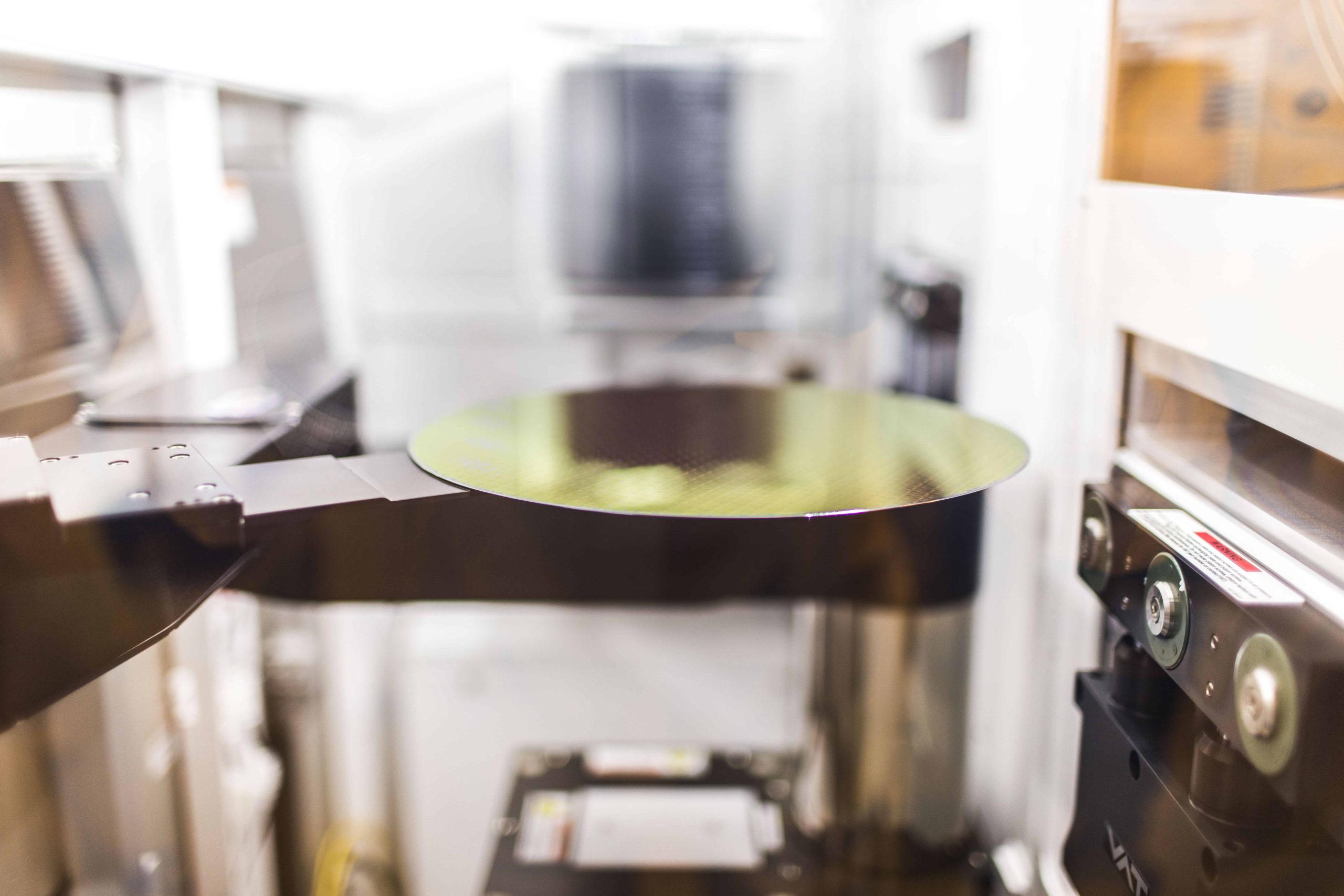

WASHINGTON — BAE Systems is partnering with GlobalFoundries to bring advanced semiconductor manufacturing techniques to space-grade electronics — a move aimed at closing the performance gap between modern commercial processors and the older, radiation-hardened electronics that power many satellites.
“We’re seeing a growing demand for higher processing capabilities, lower power consumption and smaller form factors driving the development of new radiation-hardened processors,” said Andrew Kelly, director of space systems and advanced microelectronics at BAE Systems.
The company is offering the new chip design process to U.S. government contractors and space agencies. Kelly said the goal is to give spacecraft builders a fast, secure way to create custom, U.S.-made microchips based on an advanced 12-nanometer manufacturing process at GlobalFoundries’ facility in Malta, New York.
For the space industry, that represents a leap forward, Kelly told SpaceNews. Most radiation-hardened chips in orbit today are built on older nodes, often 45 nanometers or larger. These lag behind the commercial market, where 12-nanometer FinFET technology has been common for years.
FinFET comes to space
BAE Systems will use GlobalFoundries’ FinFET semiconductor technology, the same transistor architecture found in modern CPUs and GPUs. FinFETs deliver higher performance and better power efficiency than planar transistors, but adapting them for space has been difficult. Radiation effects can flip bits, degrade materials or cause latch-ups, which is why government programs have been slow to adopt newer designs.
Commercial devices can accept failure rates that are unacceptable in space. Spacecraft electronics must operate for years without repair in harsh radiation environments. Kelly said this gap has kept advanced electronics off satellites even as data demands have grown.
GlobalFoundries and BAE Systems plan to address the needs of the space industry with a radiation-hardened version of GlobalFoundries’ 12LP FinFET platform. The companies said the smaller transistors enable higher processing throughput, improved signal handling and lower power consumption.
A ‘storefront’ for radiation-hardened chips
BAE Systems calls the new service “RH12 Storefront.” It pairs GlobalFoundries’ production line with BAE’s portfolio of pre-hardened circuit blocks. These building blocks help customers design application-specific integrated circuits, or ASICs, and system-on-chip devices using the same commercial-foundry technology employed in advanced terrestrial electronics.
Kelly said the storefront model is meant to reduce development cycles and lower the barrier for national security and civil-space programs that want to move beyond legacy architectures. Instead of designing radiation hardening from scratch, customers can assemble designs from trusted components that already meet space requirements.
For satellites that handle real-time imaging, communications, radar or onboard analytics, size, weight and power are constant constraints. Kelly said the RH12 approach gives programs access to higher-performance hardware without sacrificing reliability.
Work on the RH12 technology is done at BAE Systems’ Manassas, Virginia, facility. The site is a Category 1A Microelectronics Trusted Source, a Defense Microelectronics Activity designation reserved for suppliers that meet the highest security standards for designing, fabricating and distributing microelectronics for the Department of Defense.










Related Posts


Stay Informed With the Latest & Most Important News





Advertisement
-
 01Two Black Holes Observed Circling Each Other for the First Time
 -
 02From Polymerization-Enabled Folding and Assembly to Chemical Evolution: Key Processes for Emergence of Functional Polymers in the Origin of Life
 -
 03Astronomy 101: From the Sun and Moon to Wormholes and Warp Drive, Key Theories, Discoveries, and Facts about the Universe (The Adams 101 Series)
 -
 04True Anomaly hires former York Space executive as chief operating officer
 -
 05Φsat-2 begins science phase for AI Earth images
 -
 06Hurricane forecasters are losing 3 key satellites ahead of peak storm season − a meteorologist explains why it matters
 -
 07Binary star systems are complex astronomical objects − a new AI approach could pin down their properties quickly