
Now Reading: Canadian astronaut Josh Kutryk finally flying to ISS after Boeing Starliner mishap: ‘I’m committed to making the most of this unique opportunity’
-
01
Canadian astronaut Josh Kutryk finally flying to ISS after Boeing Starliner mishap: ‘I’m committed to making the most of this unique opportunity’

Canadian astronaut Josh Kutryk finally flying to ISS after Boeing Starliner mishap: ‘I’m committed to making the most of this unique opportunity’

First Canada flew an astronaut to the moon — and now, it’s returning to the space station.
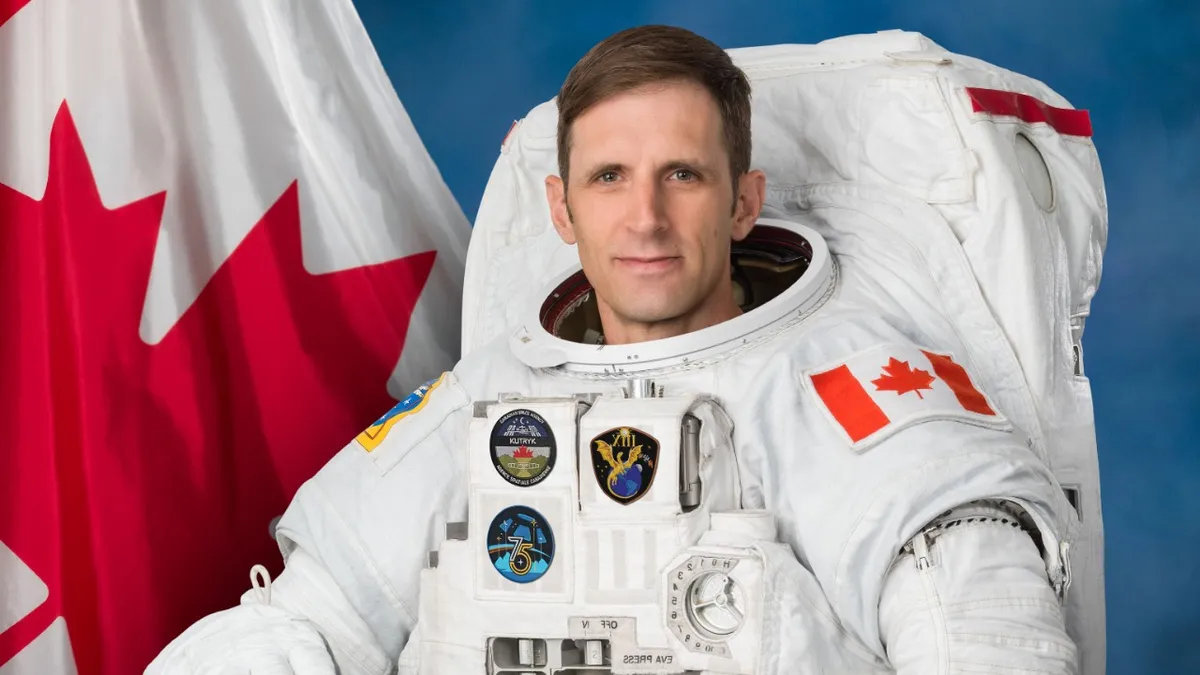
Canadian Space Agency (CSA) astronaut Josh Kutryk will fly on the upcoming SpaceX Crew-13 mission no earlier than September 2026. Kutryk’s International Space Station (ISS) mission was announced on Thursday (April 23), less than two weeks after CSA astronaut Jeremy Hansen and three NASA astronauts finished the banner Artemis 2 mission around the moon on April 10.
It’s a big month not only for Canada’s space agency, but also for its military. Hansen and Kutryk are both colonels in the Royal Canadian Air Force, which celebrated its centennial on April 1 — the same day Hansen launched to the moon. Crew-13 also includes NASA astronauts Jessica Watkins and Luke Delaney, and Roscosmos cosmonaut Sergey Teteryatnikov.
“I am honoured to be a part of Crew-13 and represent Canada on this mission,” Kutryk said in an agency statement. “To me, space is driven by curiosity, adventure, innovation, and science — but above all, collaboration. Collaboration that creates opportunity, and builds a better future. I’m committed to making the most of this unique opportunity.”
Kutryk will spend half a year on the ISS as a part of Expeditions 75 and 76, becoming the first CSA astronaut to do so in eight years — after David Saint-Jacques in 2018-19. (Other Canadians have reached the ISS outside of CSA.)
CSA normally flies to the ISS about every six years under the international partnership, and that was expected to happen again. Kutryk was at first assigned in 2023 to Starliner-1, for what was then supposed to be a 2024 flight—right on pace.
But difficulties with two Starliner uncrewed tests, and a ‘Type A mishap‘ during the astronaut Crew Flight Test in 2024, ensued. All Starliner-1 crew members were eventually reassigned while the program continues to undergo further development, which will include a third uncrewed test at some point.
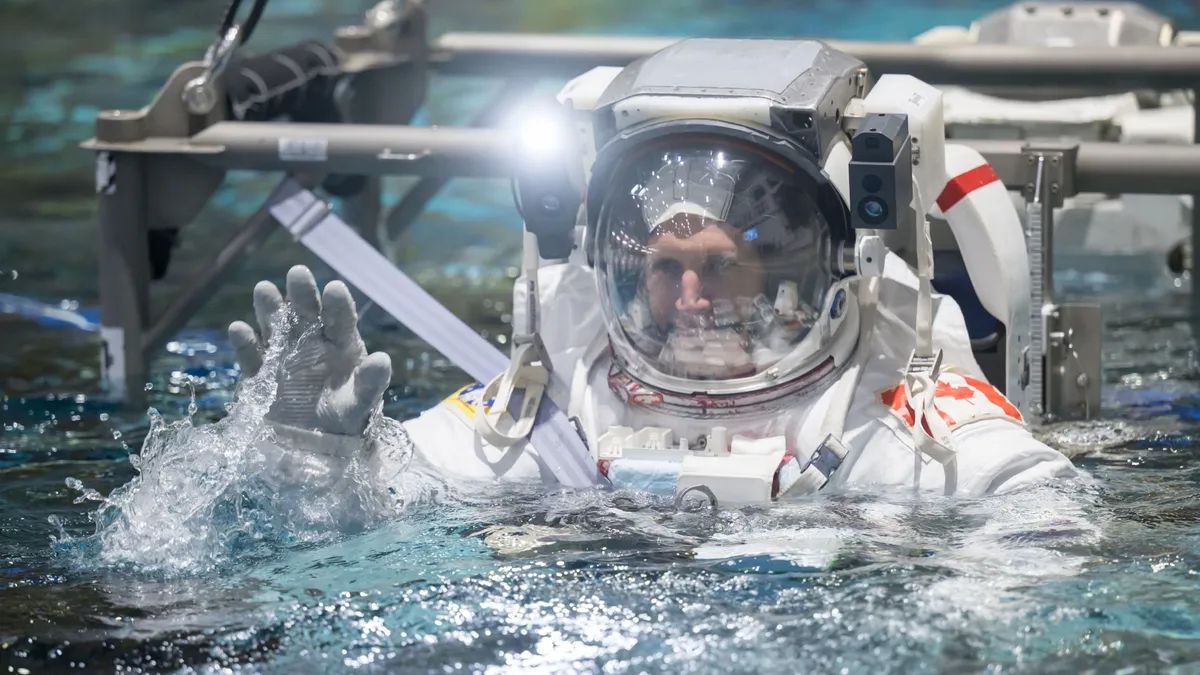
Schedules for ISS astronauts — including spacewalks and robotic ship catches — do not approach finalization until much closer to launch. Then there are many changes during the mission, due to maintenance needs, cargo-ship launches and departures, and other ISS activities.
As such, for now Kutryk’s assignment simply includes “several science experiments, including Canadian-led investigations that focus on human health. He will also perform maintenance and operational activities,” the CSA stated.
Kutryk is a highly experienced military test pilot known for his contributions to, and his instruction for, the CF-18 jet program. He has at least 4,000 flight hours across 40 aircraft types, according to his CSA biography. His time in the cockpit also includes missions on behalf of NATO, NORAD and the United Nations, as well as conflict operations in Libya and Afghanistan.
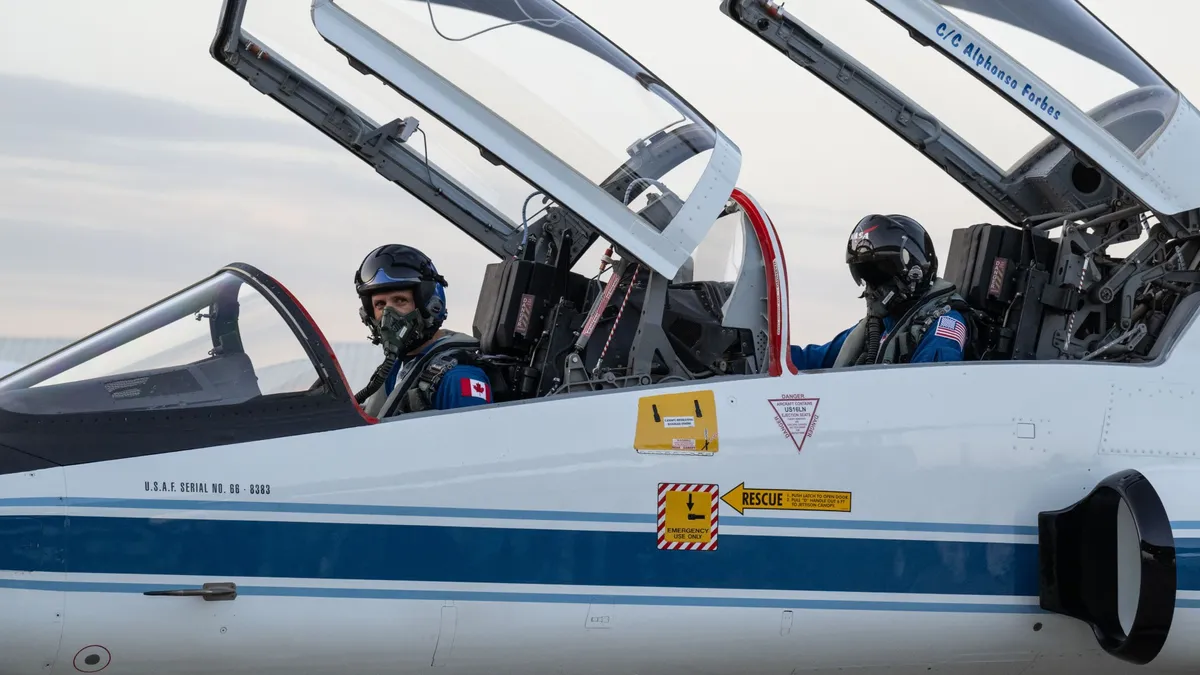
Kutryk achieved the final four in the 2008-09 astronaut selection for CSA (in which two astronauts, including Hansen, were selected), finally making the cut on the next selection in 2017. Kutryk was fully certified as an astronaut in 2020.
Aside from his Starliner work as a member of the flight control team and as a test subject, his ground experience includes capcom for several ISS missions, capcom for Crew Flight Test’s ascent, and operations officer for the NASA Astronaut Office.
CSA has two pathways to human spaceflight, both mainly fueled by robotics. Kutryk’s flight, and other ISS flights, come courtesy of Canadarm2 and other robotics on the orbiting complex, at a 2.3% contribution.
The Artemis Accords, of which Canada is an early signatory, had the country contribute several moon projects including the next-generation Canadarm3 — backing not only Hansen’s opportunity, but backup astronaut Jenni Gibbons (who also contributed as capsule communicator.) Canada is expected to make at least one more Artemis flight at some point, based on current contributions.
Canadarm3 was originally manifested to fly on Gateway, a NASA-led lunar station recently paused so that the agency could focus resources on a moon base. NASA has said the international partners will be accommodated, but negotiations are ongoing with all Gateway participants.










Related Posts
Stay Informed With the Latest & Most Important News
Previous Post
Next Post


Advertisement
-
 01Two Black Holes Observed Circling Each Other for the First Time
 -
 02From Polymerization-Enabled Folding and Assembly to Chemical Evolution: Key Processes for Emergence of Functional Polymers in the Origin of Life
 -
 03Astronomy 101: From the Sun and Moon to Wormholes and Warp Drive, Key Theories, Discoveries, and Facts about the Universe (The Adams 101 Series)
 -
 04True Anomaly hires former York Space executive as chief operating officer
 -
 05Φsat-2 begins science phase for AI Earth images
 -
 06Hurricane forecasters are losing 3 key satellites ahead of peak storm season − a meteorologist explains why it matters
 -
 07Binary star systems are complex astronomical objects − a new AI approach could pin down their properties quickly