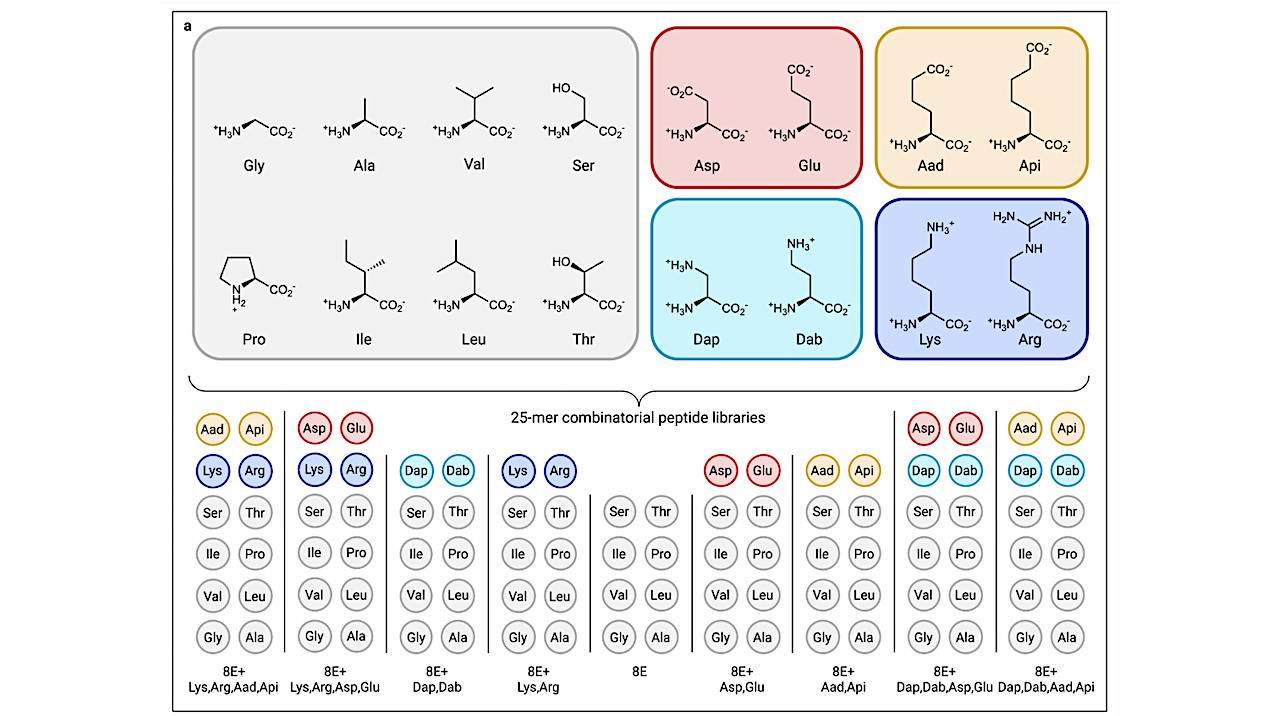
Prebiotic Chemistry on Early Earth – Grok via Astrobiology.com Chemical and geological processes on prebiotic Earth are believed to have resulted in the emergence of life through the increasing organization
Astrobiology Science Conference 2026 Submit a Session or Town Hall Proposal for the Astrobiology Science Conference 2026 Join the astrobiology community in Madison, Wisconsin, 17-22 May 2026 for AbSciCon26. AbSciCon26
Humans on Mars — Grok via Astrobiology.com As focus for exploration of Mars transitions from current robotic explorers to development of crewed missions, it remains important to protect the integrity
Physical parameters of the simulated events with and without detected moons. In each panel, the grey points show the events our simulation where a moon was not detected, i.e., these
Carbonate-silicate weathering feedback behavior throughout the habitable zone (HZ). (a) Reproduction of O. R. Lehmer et al. (2020) results showing stable, Earth-like climates generated by their habitable zone weathering model.
The comparison of reference sample with 𝐾𝑧𝑧 = 106 cm2 s−1 between GJ-176 and GJ-436. The difference between stars is not significant and only visible in the upper atmosphere, where
date: 21 January 2014 altitude: 290 km — NASA/JPL-Caltech/University of Arizona larger image In the center of this observation, we see a ring of cones that have developed over a
Keith Cowing Explorers Club Fellow, ex-NASA Space Station Payload manager/space biologist, Away Teams, Journalist, Lapsed climber, Synaesthete, Na’Vi-Jedi-Freman-Buddhist-mix, ASL, Devon Island and Everest Base Camp veteran, (he/him) 🖖🏻 Follow on
NASA’s Perseverance Mars rover took a selfie with the Ingenuity helicopter, seen here about 13 feet (3.9 meters) from the rover. This image was taken by the WASTON camera on
Series of zoomed in images from observations of 3I/ATLAS on UT 2025 July 9. Each panel is a single 30.0 s exposure taken in 𝑟′-band and 3I/ATLAS is identified within