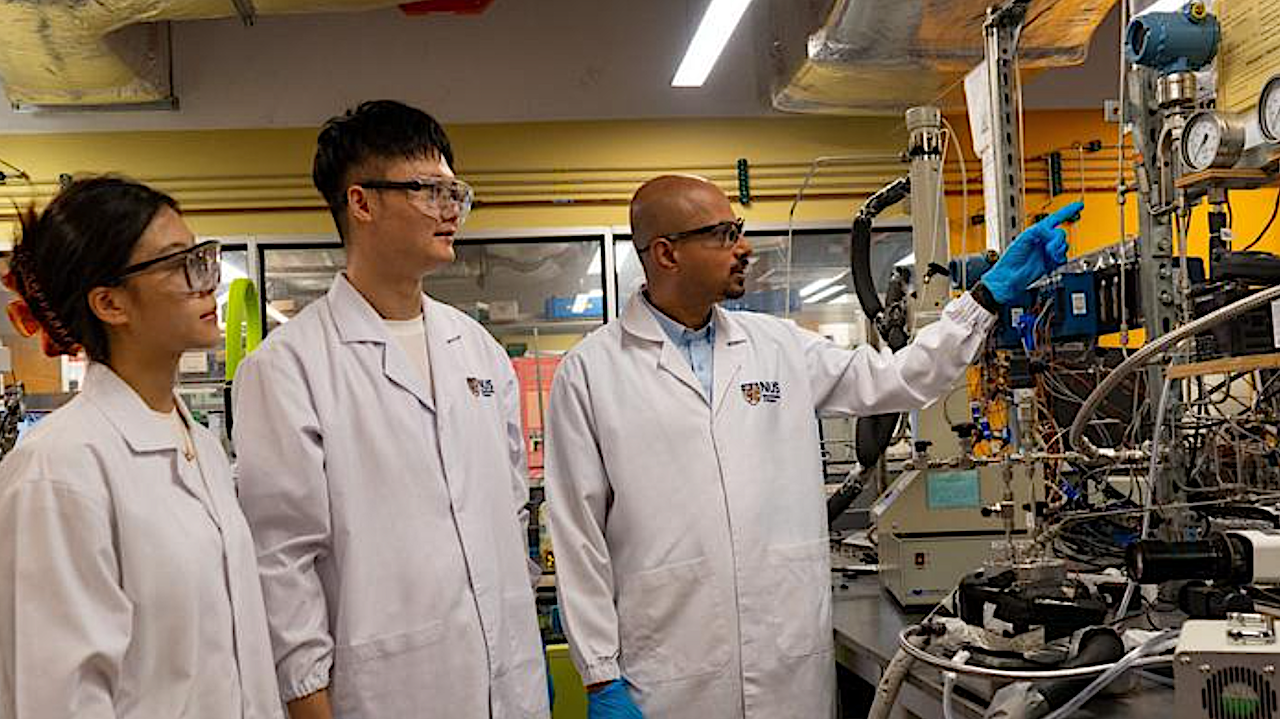
Professor Praveen Linga and his research team, Yunhan Ma (left) and Dr Ye Zhang (middle), at their lab, where the amino-acid-modified ice technology was developed. Credit College of Design and

Professor Praveen Linga and his research team, Yunhan Ma (left) and Dr Ye Zhang (middle), at their lab, where the amino-acid-modified ice technology was developed. Credit College of Design and
Keith Cowing Explorers Club Fellow, ex-NASA Space Station Payload manager/space biologist, Away Teams, Journalist, Lapsed climber, Synaesthete, Na’Vi-Jedi-Freman-Buddhist-mix, ASL, Devon Island and Everest Base Camp veteran, (he/him) 🖖🏻 Follow on
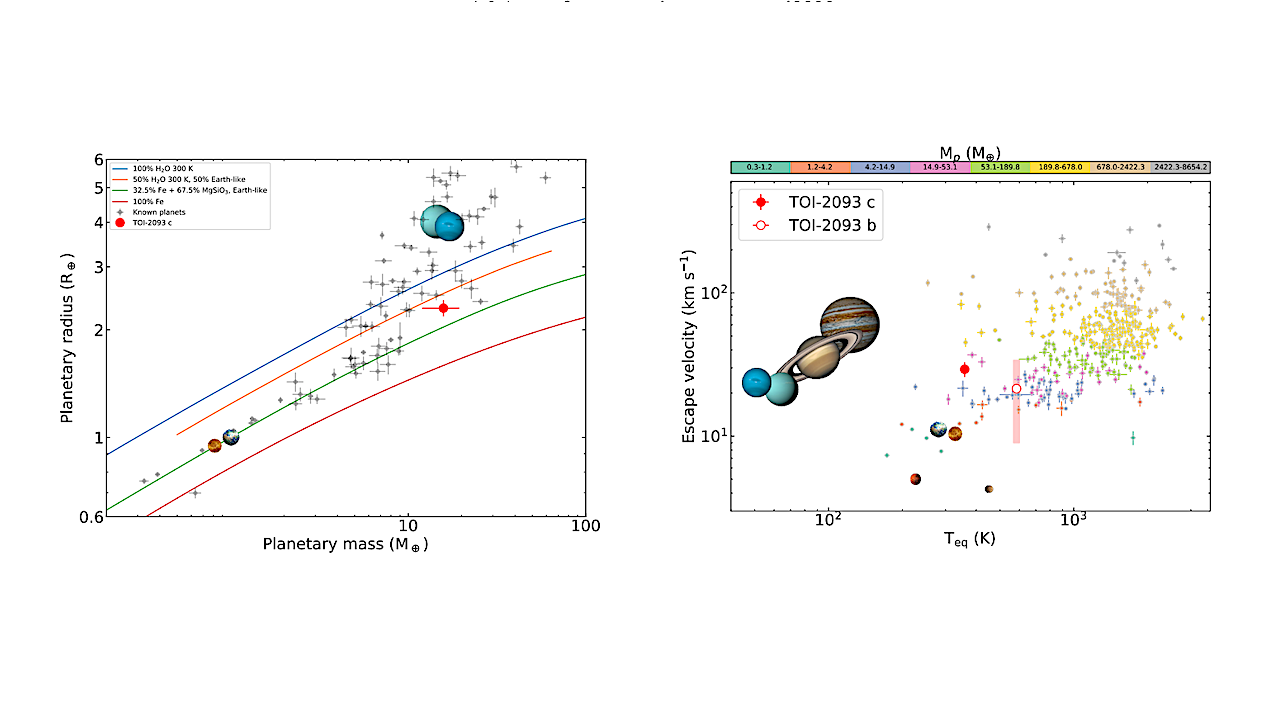
TOI 2093 c in the context of exoplanets with known mass and radius with errors smaller than 12%. Left panel: Planetary mass and radius, with theoretical models from Zeng et
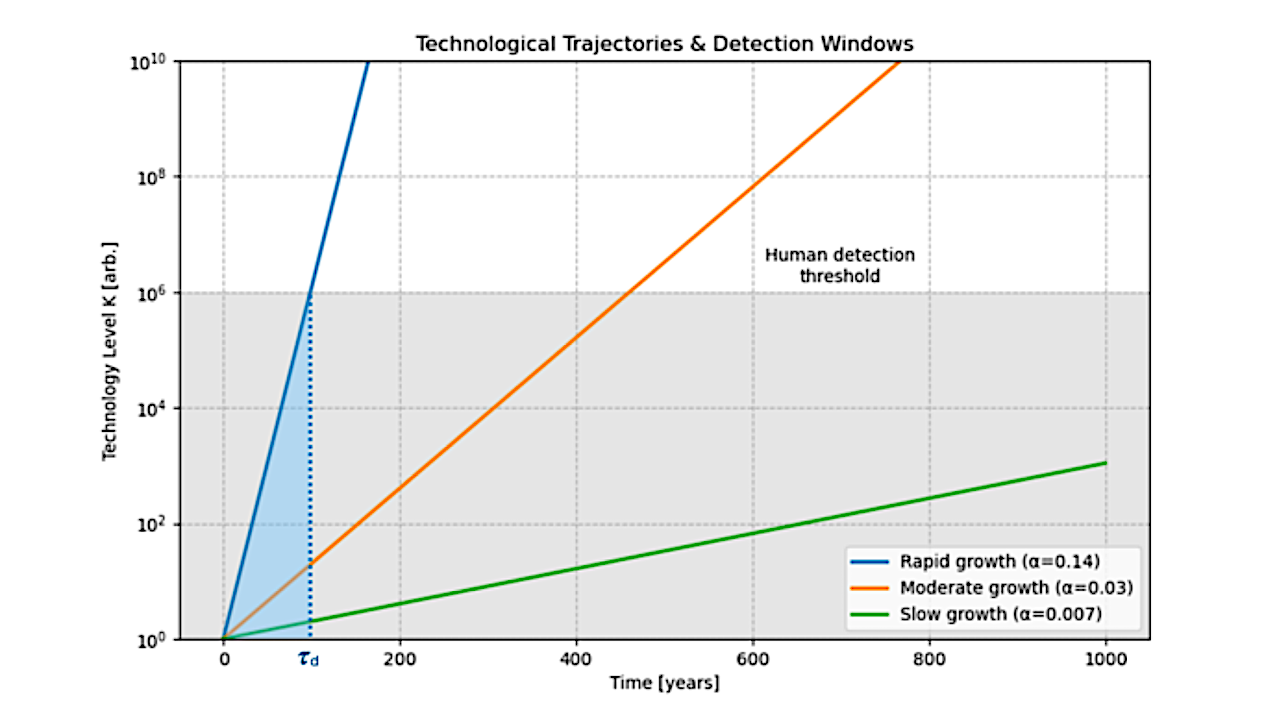
A plot of a civilisation’s Technical Level (K) versus time. The window of detection is defined as the area under the growth lines that intersect with the human detection threshold.
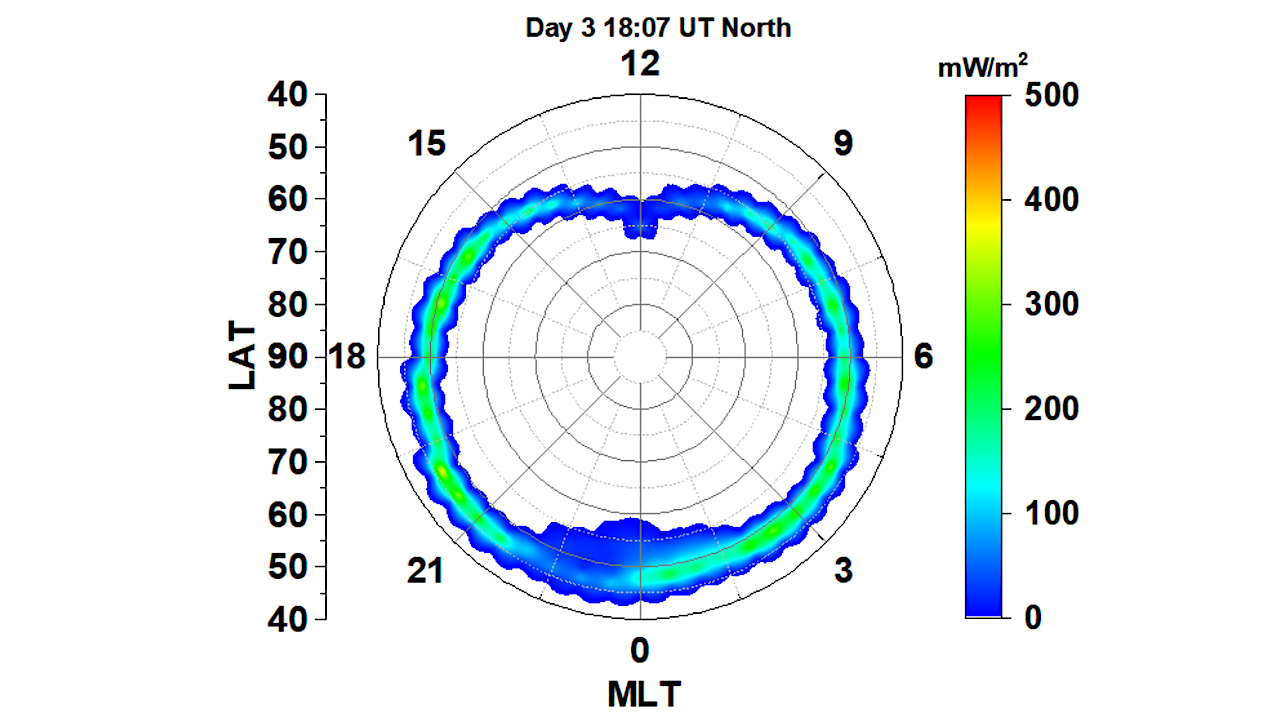
Integrated energy flux from SWMF electron precipitation in the northern hemisphere during positive stellar magnetic field Bz and low By period with high proton density, dynamic pressure, and stellar wind

ASGSR 2025 The ASGSR Awards Committee is currently soliciting nominations for the awards listed below from the membership-at-large. The awards will be presented at the American Society for Gravitational and
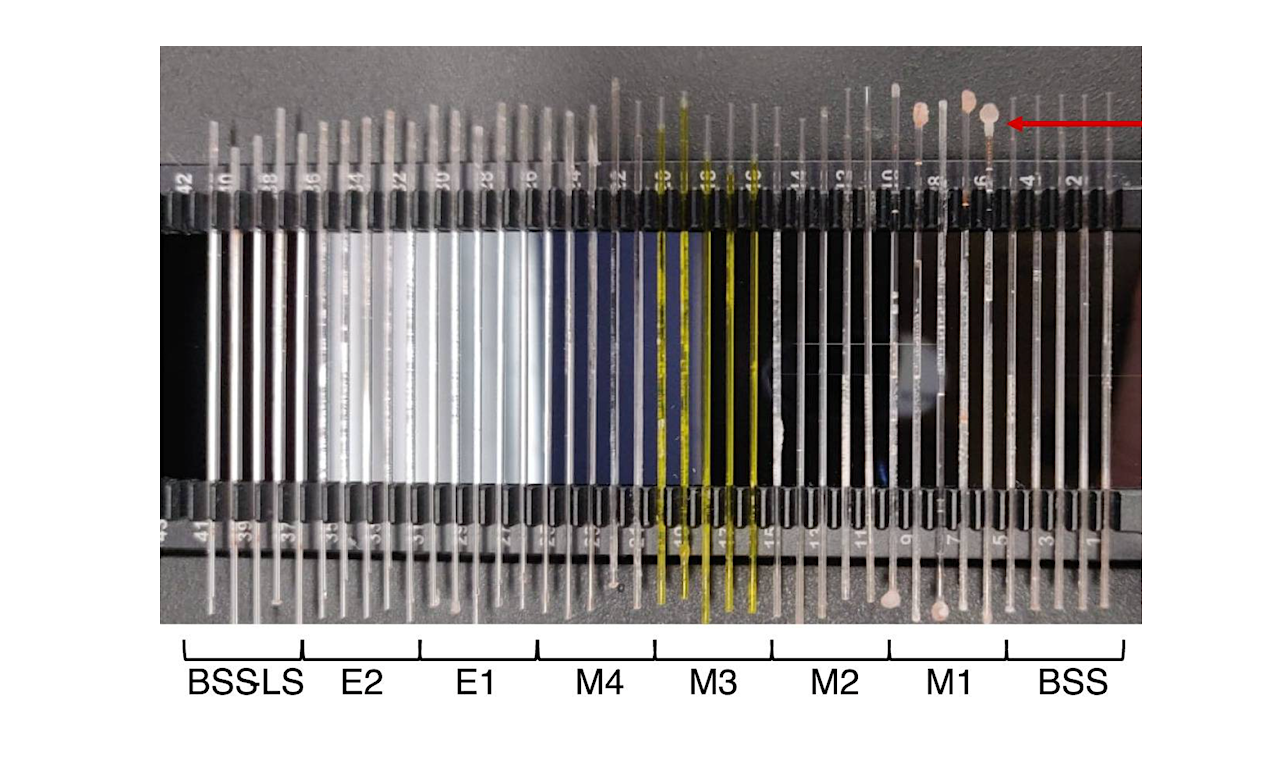
Nano-DSF glass capillaries filled with different brines. Crystallisation processes can be observed at the extremities of the capillaries. The red arrow indicates extensive crystallisation at the extremity of the capillaries
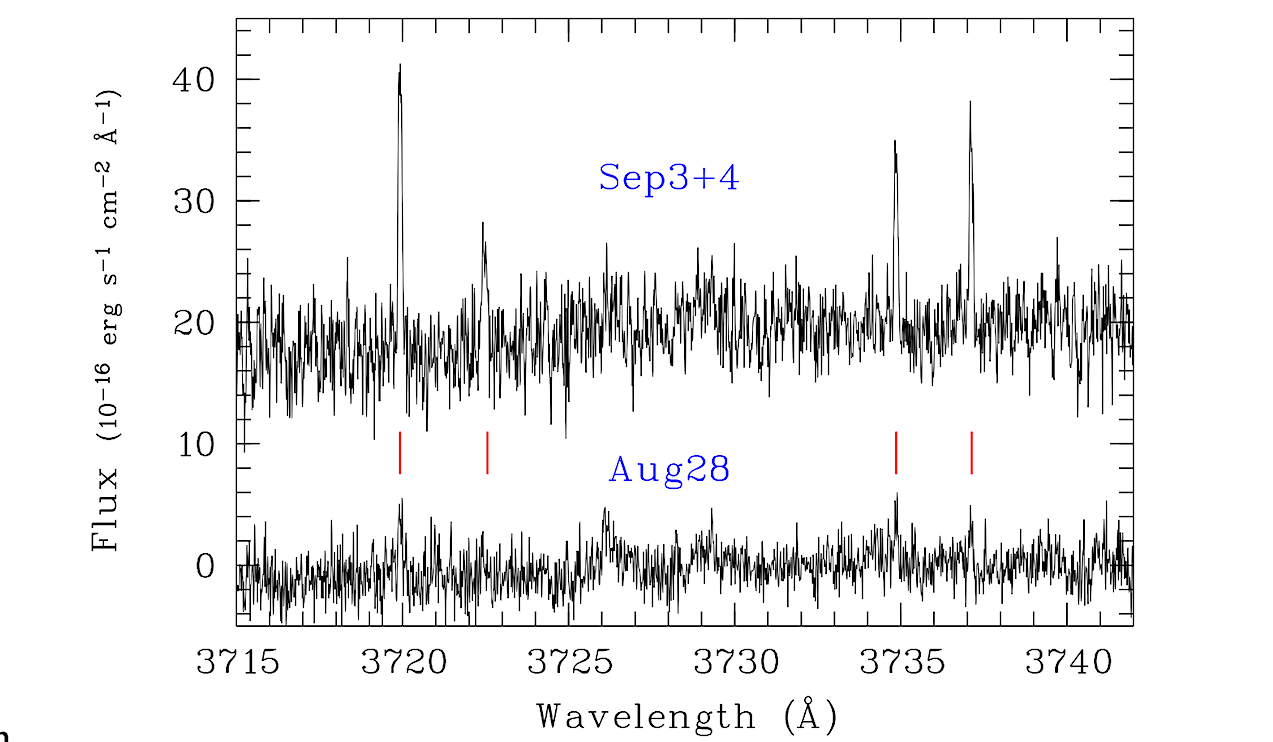
Continuum-subtracted spectra of comet 3I obtained on August 28 and September 3+4. Three narrow FeI lines are detected on August 28 in this spectral range, FeI λ3719.93Å being the brightest
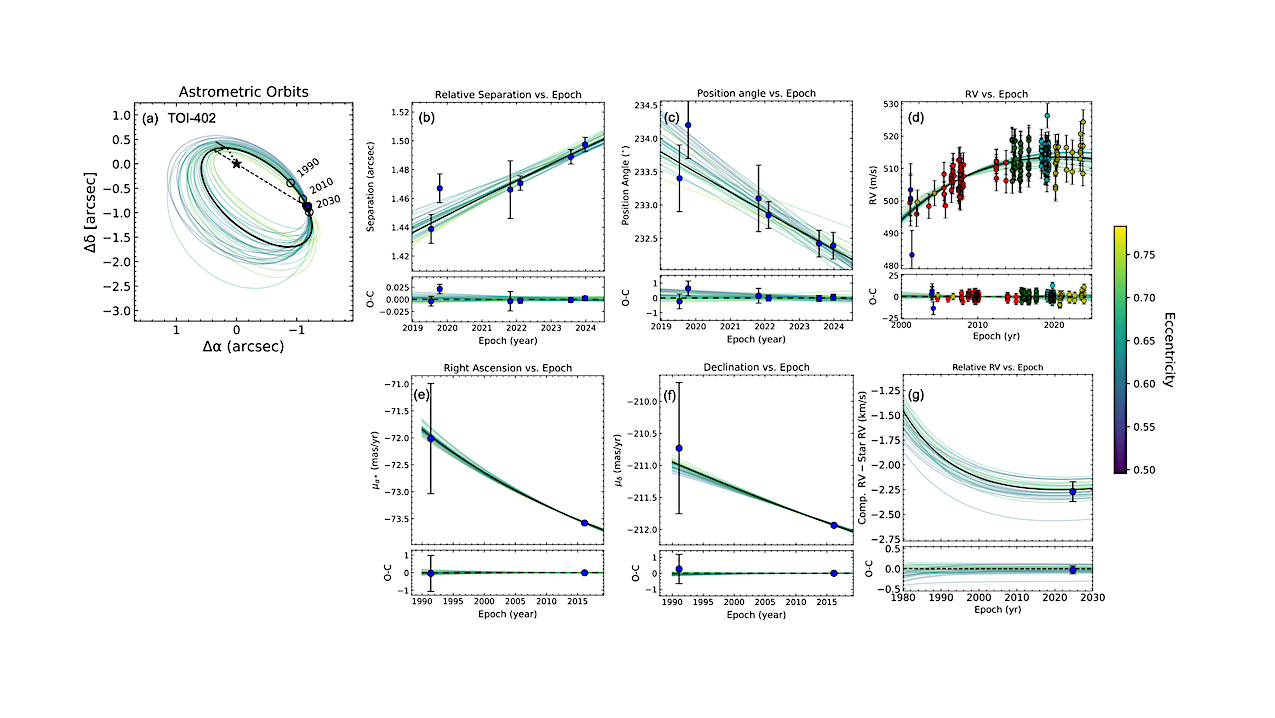
Orbital characterization of TOI-402 B around A using multiple datasets. (a): astrometric orbits of TOI-402 B around A. The blue filled circles are observed relative astrometry used in our analysis.
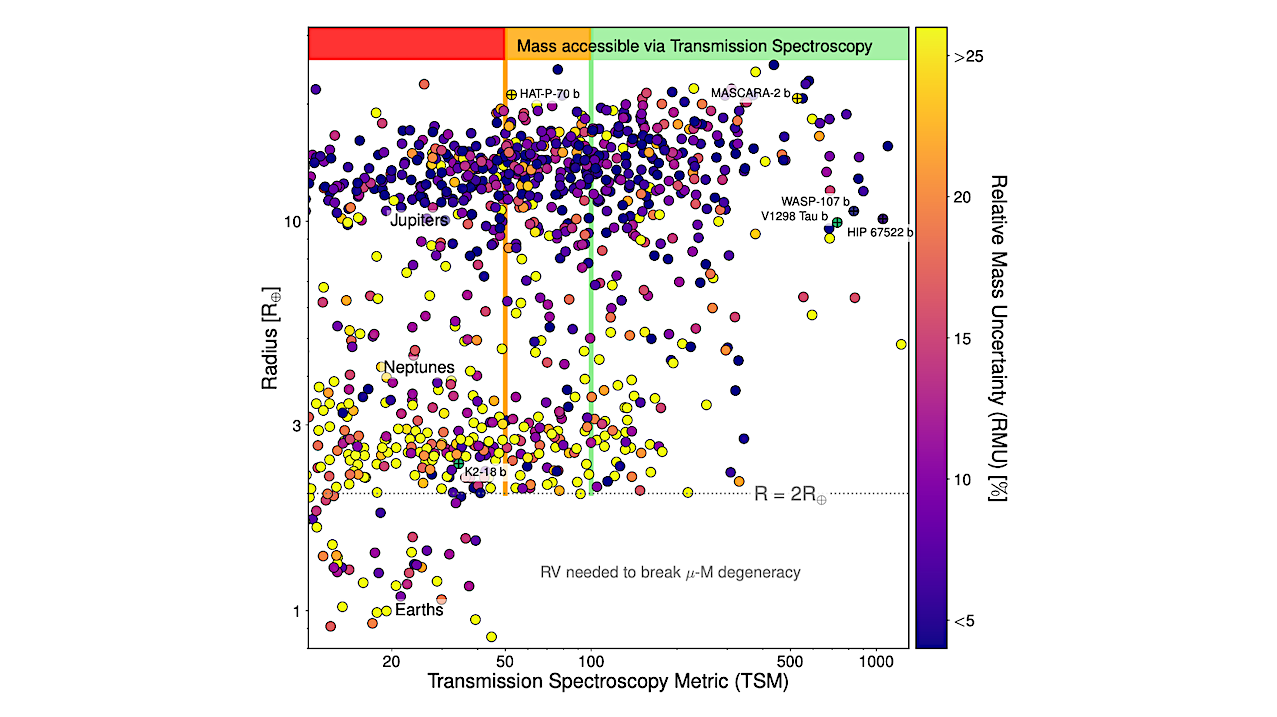
Application domain for mass measurements via small JWST atmospheric exploration programs. Size of known exoplanets with mass measurements (relative mass uncertainty, RMU, as color) versus their estimated TSM—data from Ref.37.