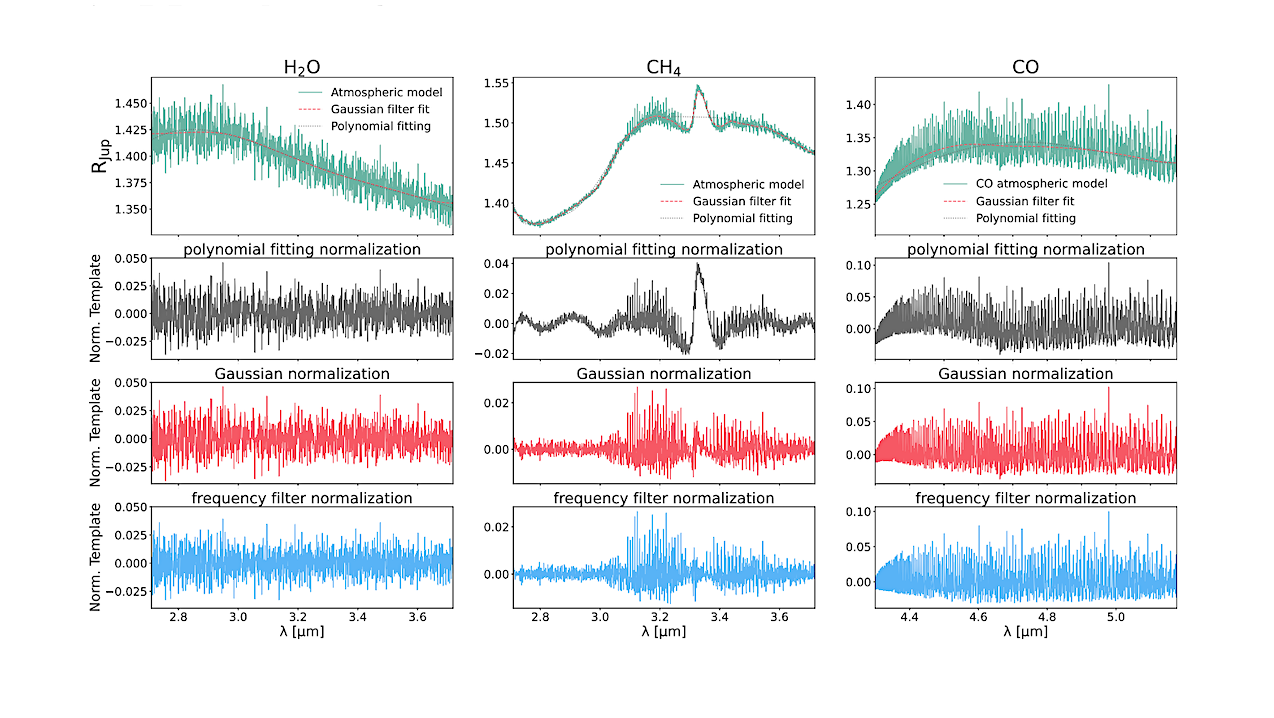
Examples of the template extraction from the atmospheric models at JWST’s spectral resolution (top panels) for three molecules, H2O (left column panels), CH4 (middle column panels) and CO (right column

Examples of the template extraction from the atmospheric models at JWST’s spectral resolution (top panels) for three molecules, H2O (left column panels), CH4 (middle column panels) and CO (right column
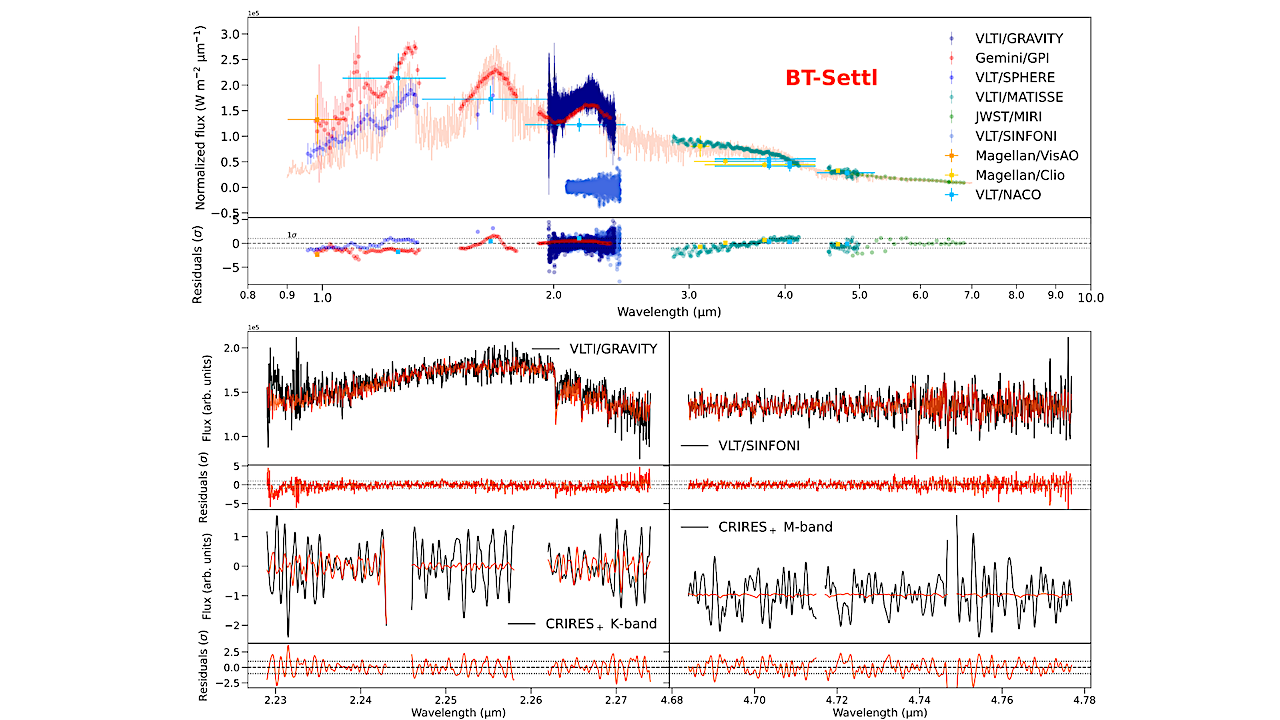
Results of the forward modeling of β Pic b using the most recent spectro/photometric observations of the planet (including CRIRES+) using BT-Settl. Top panel: spectra (points) and photometry (squares) of
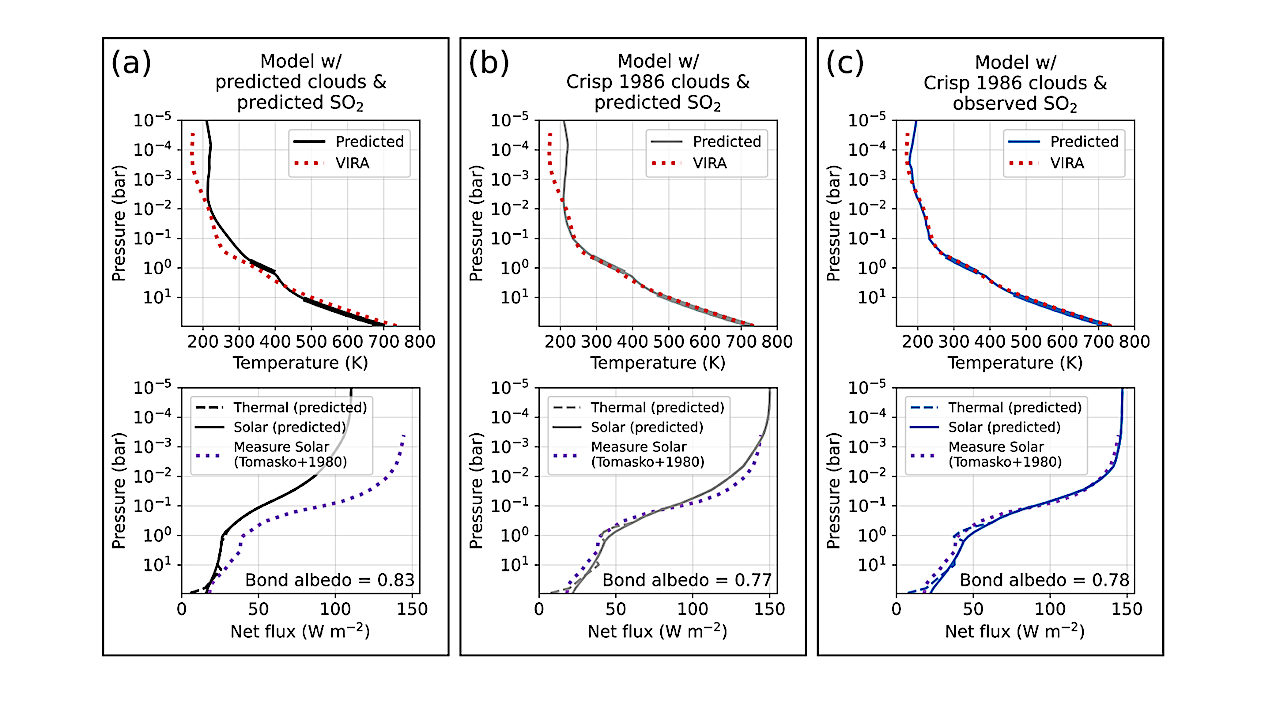
Climate simulations of Venus’s atmosphere. (a) A climate model that uses the H2SO4 clouds and gas concentrations predicted by the nominal photochemical simulation in Figure 2. (b) The same as
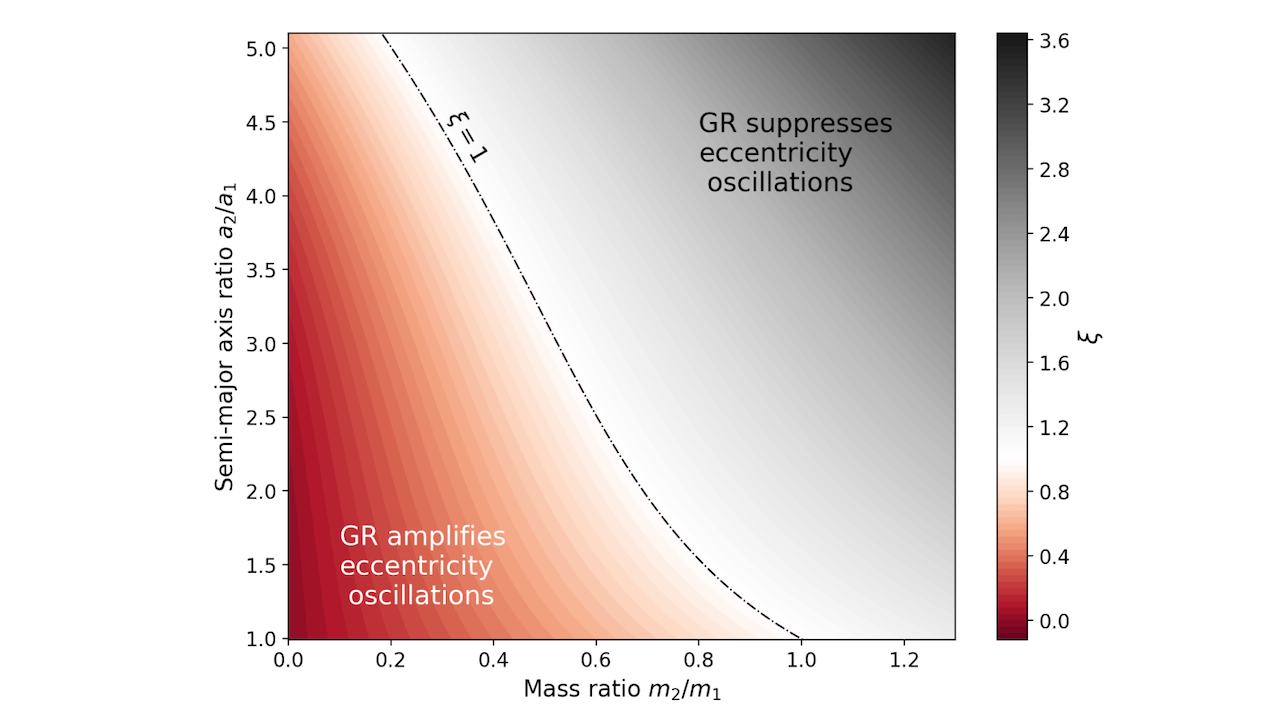
Parameter space showing the effect of GR on eccentricity oscillations due to an exterior planetary companion for a variety of combinations of the mass ratio m2/m1 and semi-major axis ratio
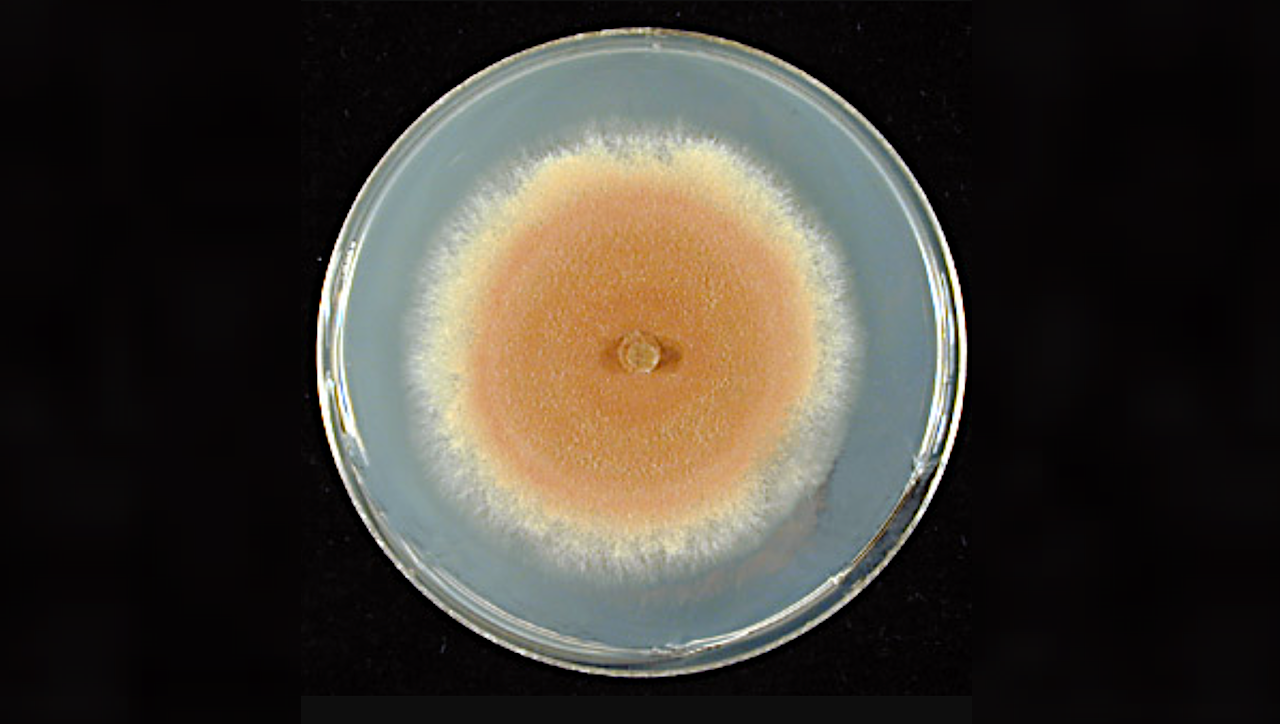
Kultur von Hypomyces completus Public Domain, Quelle: US Department of Agriculture, Agricultural Research Service, Systematic Botany and Mycology Laboratory, Larger image New research published in Nature Ecology & Evolution
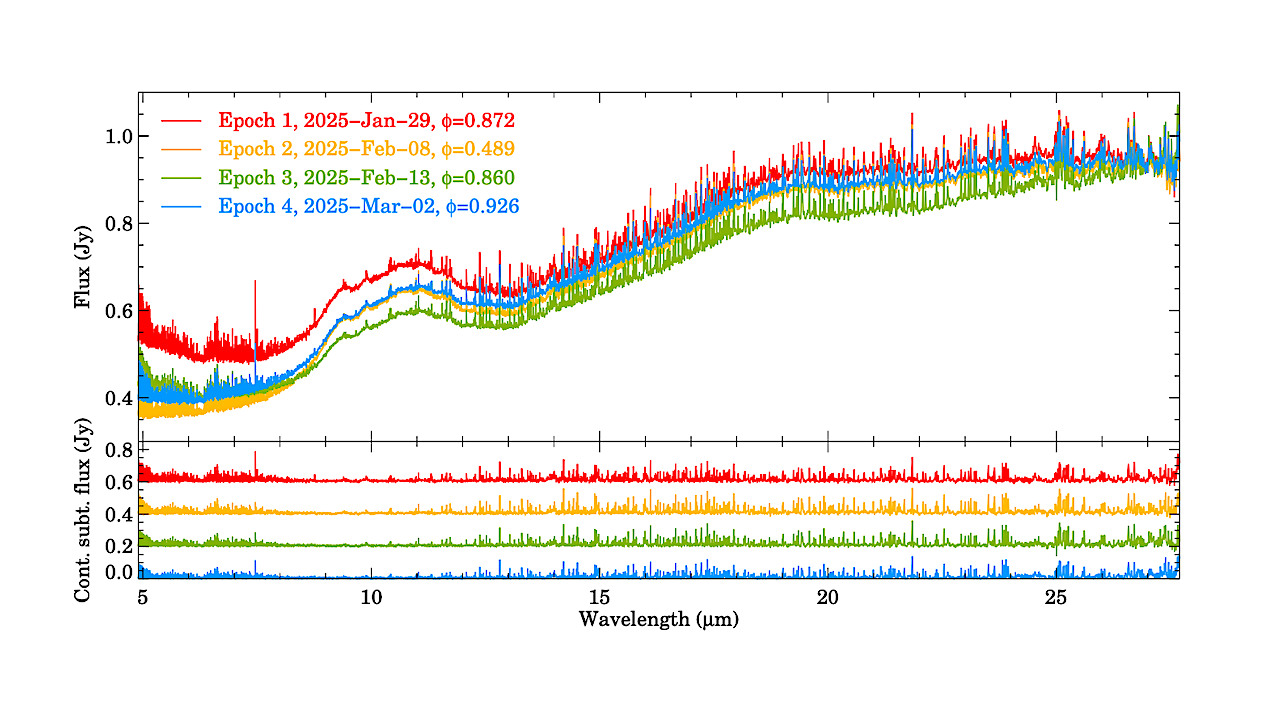
JWST MIRI MRS spectra of DQ Tau. Various colors mark the different observing epochs, whose dates and the corresponding orbital phases are indicated in the upper left corner. The bottom
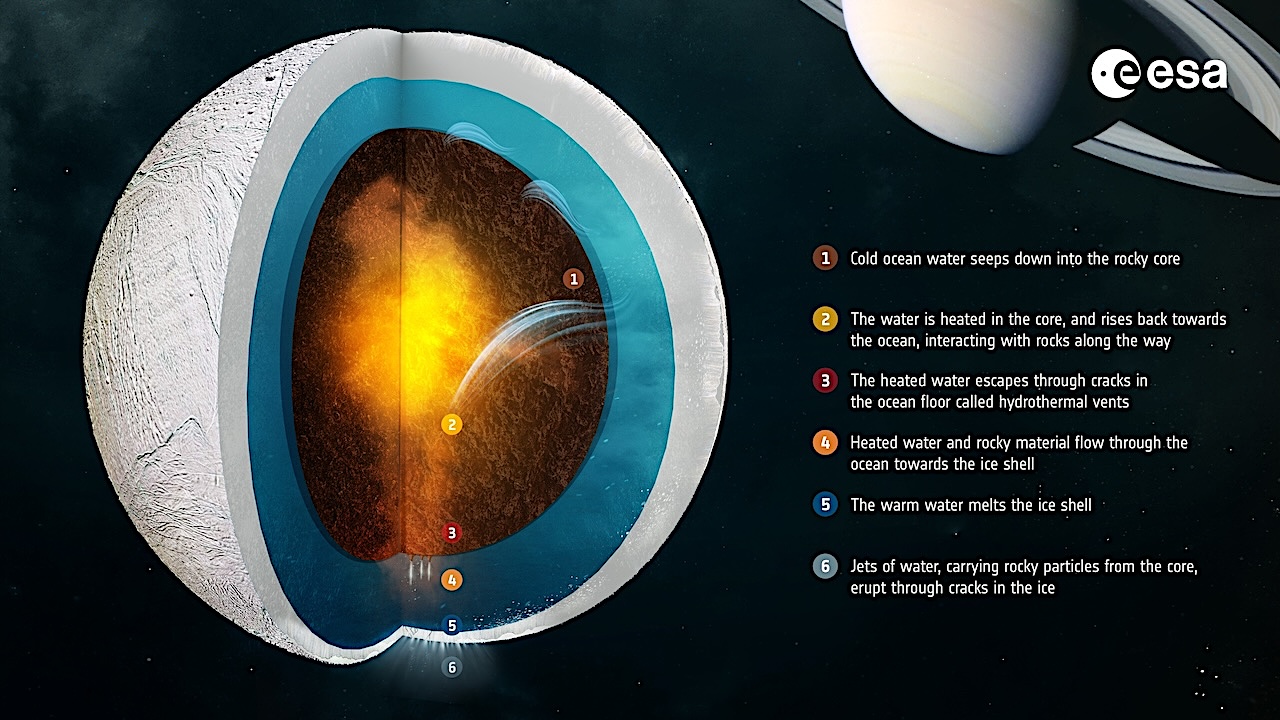
Scientists digging through data collected by the Cassini spacecraft have found new complex organic molecules spewing from Saturn’s moon Enceladus. This is a clear sign that complex chemical reactions are

LIFE RCN Workshop Dr. Greg Fournier is an Associate Professor of Geobiology at MIT. He studies the deep evolutionary history of life, applying molecular clocks and phylogenetics to uncover how
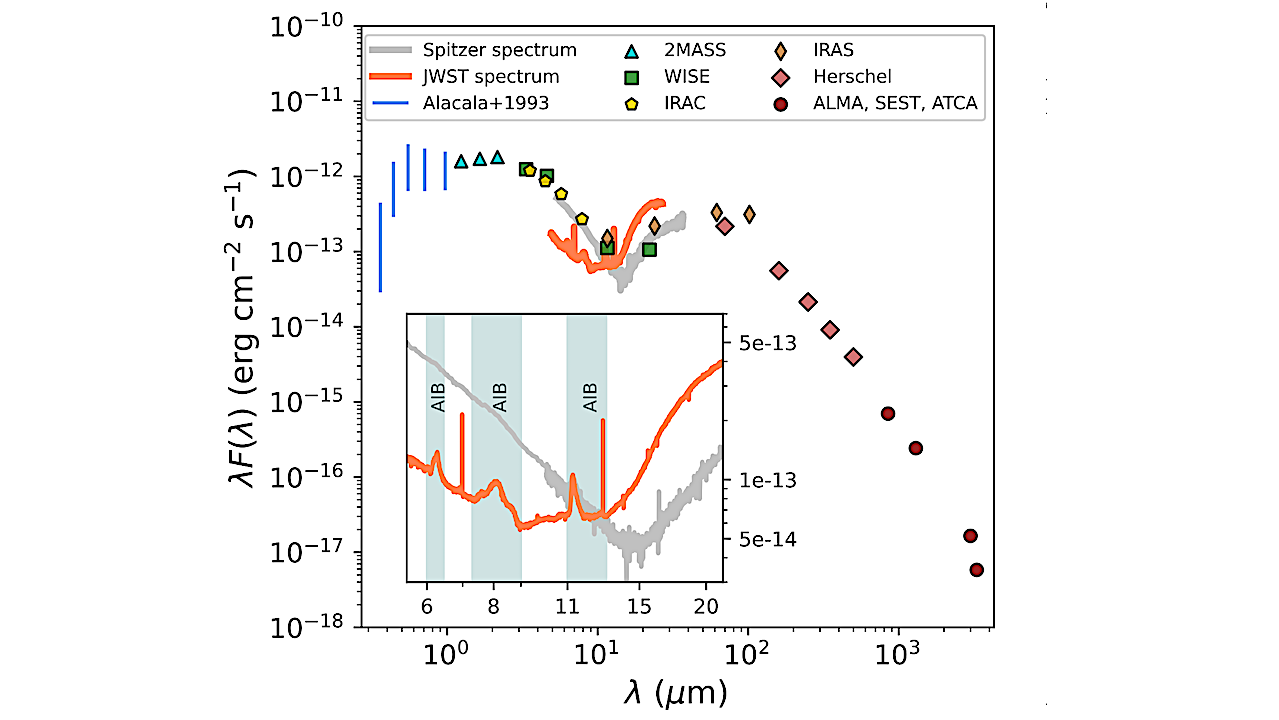
A collection of photometric fluxes and spectra of T Cha are shown. The blue vertical lines represent the variability in optical fluxes (Alcalá et al. 1993). IR photometric fluxes are
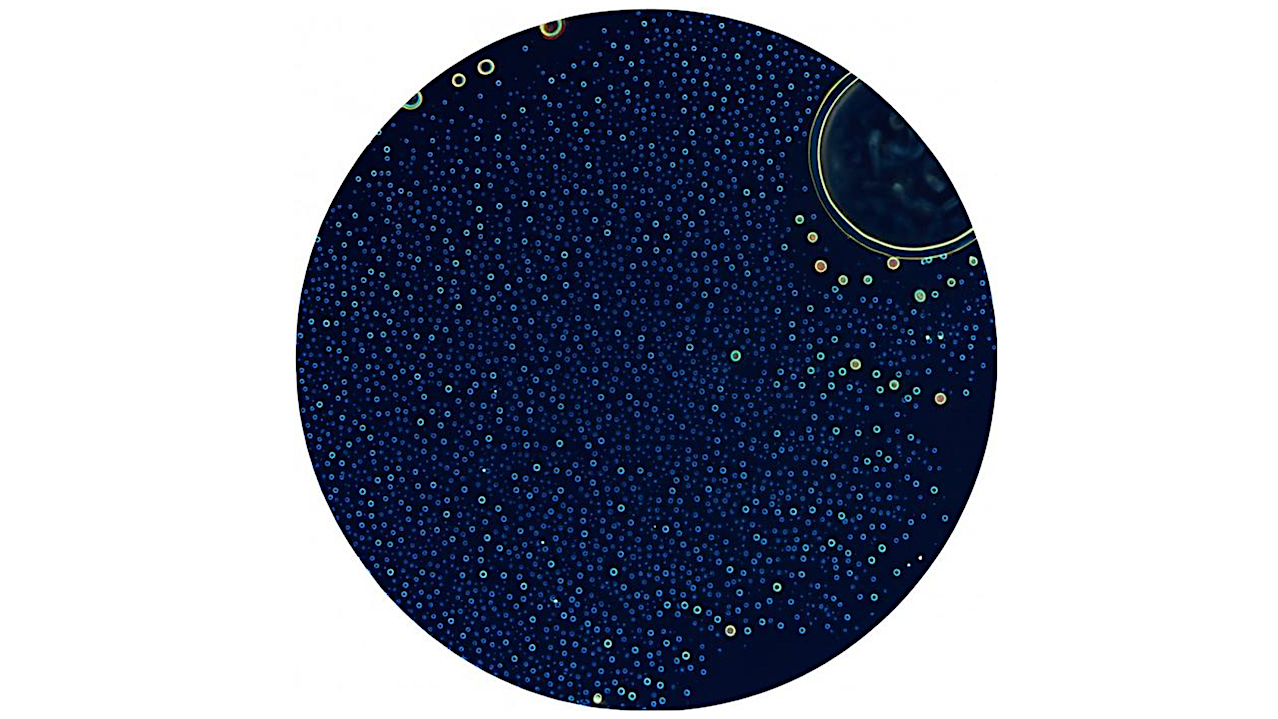
Assembly formed by primordial peptides as observed by bright field Microscopy Credit Frenkel-Pinter Lab Why did life on Earth choose alpha amino acids as the building blocks of proteins? A