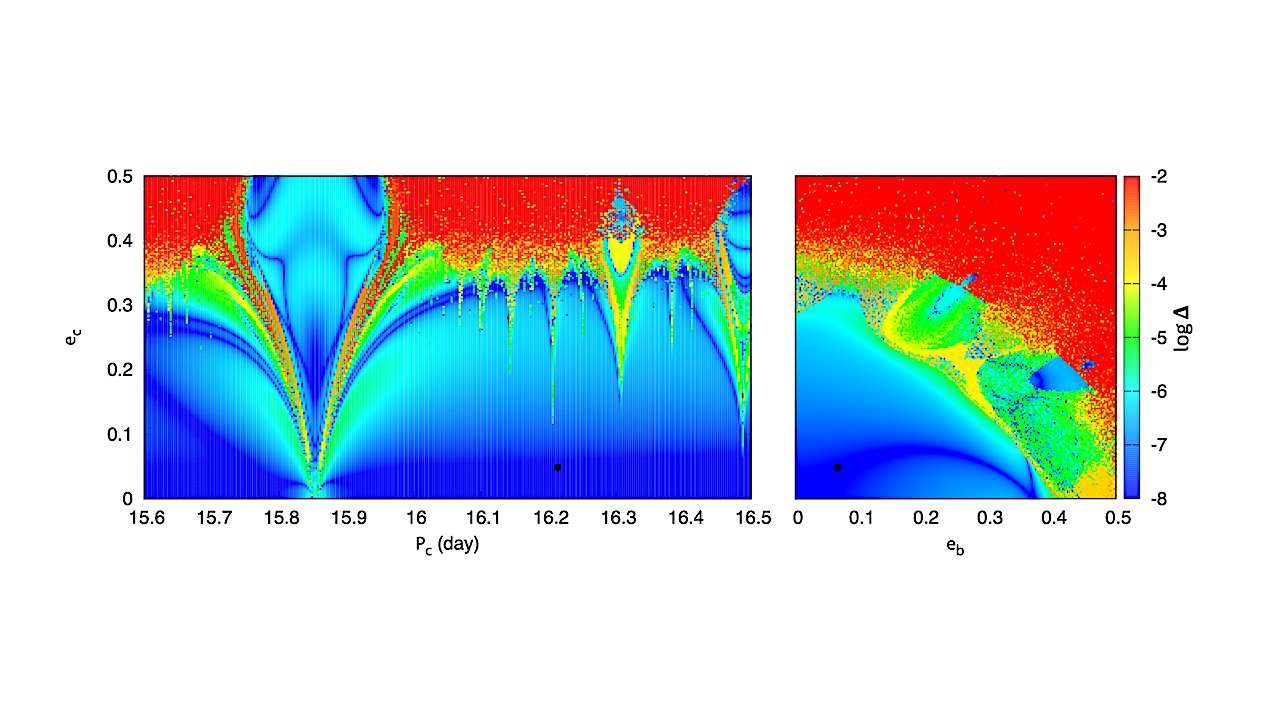
Stability analysis of the TOI-5788 planetary system. For fixed initial conditions (Table 4), the parameter space of the system is explored by varying the orbital period and the eccentricity of

Stability analysis of the TOI-5788 planetary system. For fixed initial conditions (Table 4), the parameter space of the system is explored by varying the orbital period and the eccentricity of
![Discovery Of 1H-cyclopent[cd]indene (c-C11H8) In TMC-1 With The QUIJOTE Line Survey: A New Three-ringed Polycyclic Aromatic Hydrocarbon](https://flyingtomars.com/wp-content/uploads/2026/01/discovery-of-1h-cyclopentcdindene-c-c11h8-in-tmc-1-with-the-quijote-line-survey-a-new-three-ringed-polycyclic-aromatic-hydrocarbon.png)
polycyclic aromatic hydrocarbon (PAH) 1H-cyclopentindene (c-C11H8) — astro-ph.GA We report the detection of the polycyclic aromatic hydrocarbon (PAH) 1H-cyclopentindene (c-C11H8) in TMC-1 with the QUI- JOTE line survey. We detected
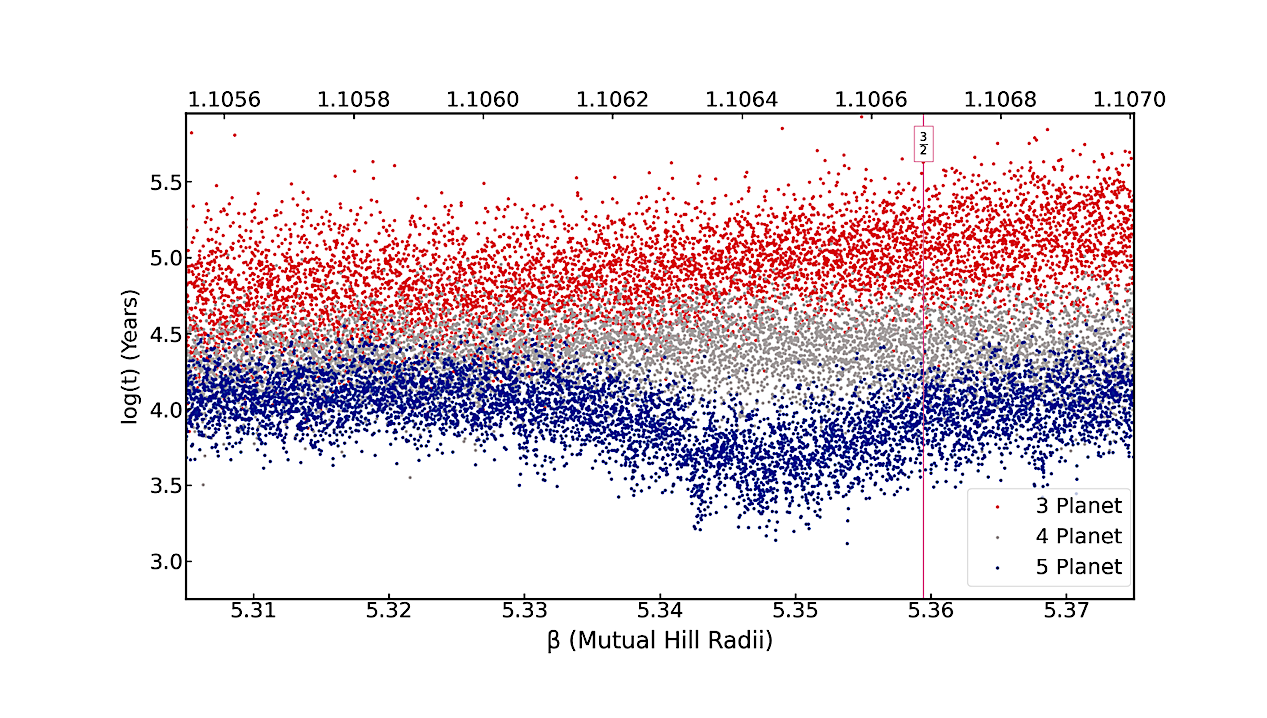
Lifetimes of three-, four-, and five-planet systems with SL09 initial longitudes and orbital separations at a resolution of 10−6 mutual Hill radii are superimposed in the region corresponding to a
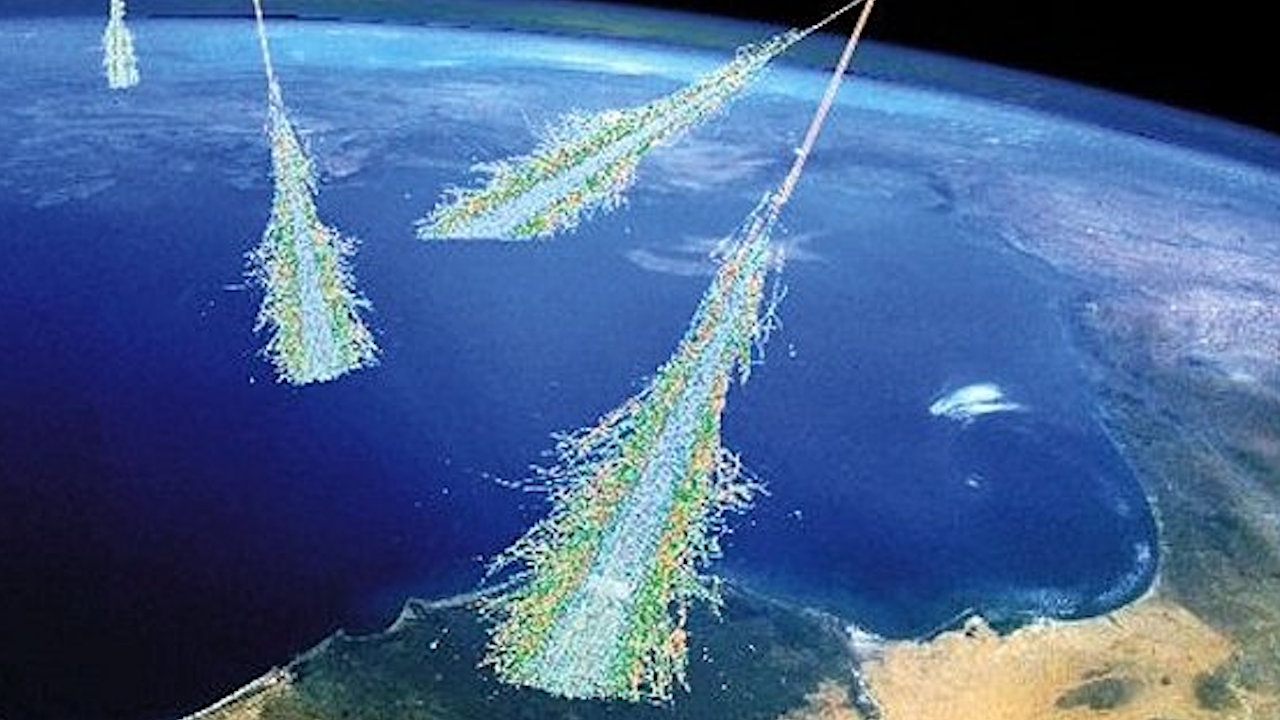
Air showers ensuing from very-high-energy cosmic rays can enter Earth’s atmosphere from multiple directions. Credit: Simon Swordy/NASA The exploration of cosmic rays, which are high-energy particles originate from space and
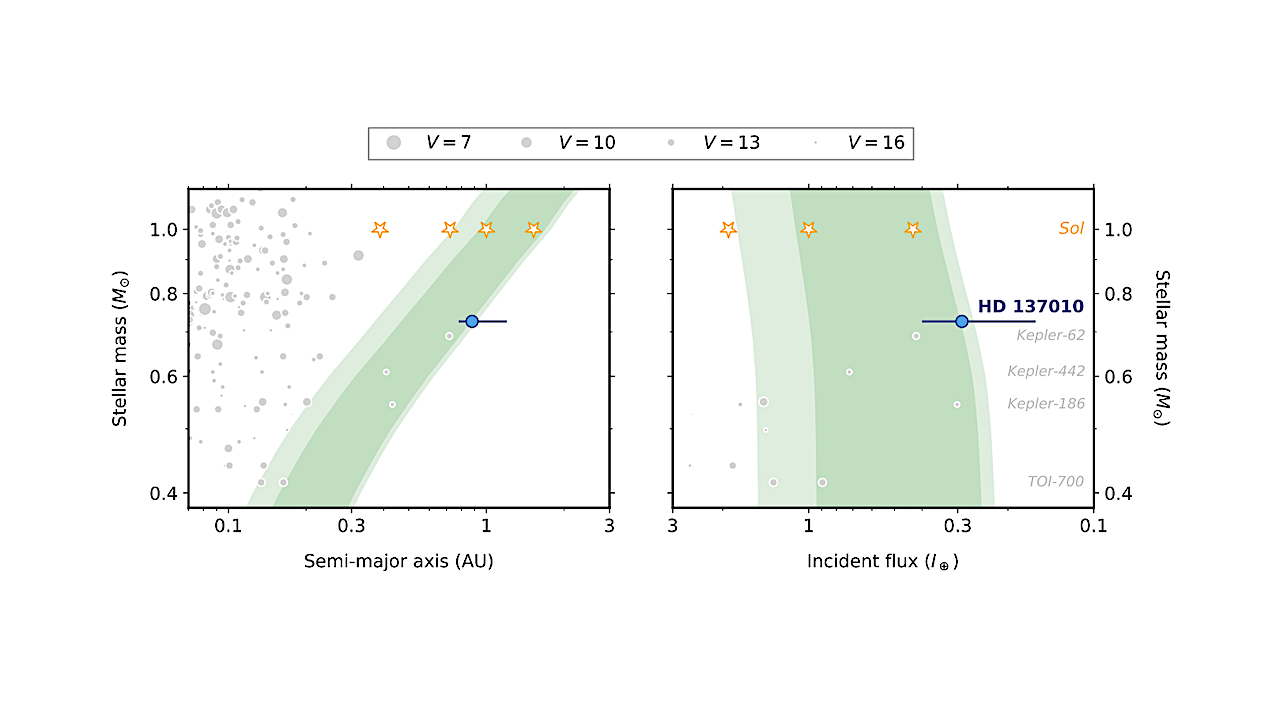
HD 137010 b in context. We plot known transiting planets smaller than 1.6 R⊕ orbiting 0.4 − 1.2 M⊙ stars with grey points in semi-major axis (left) and incident flux
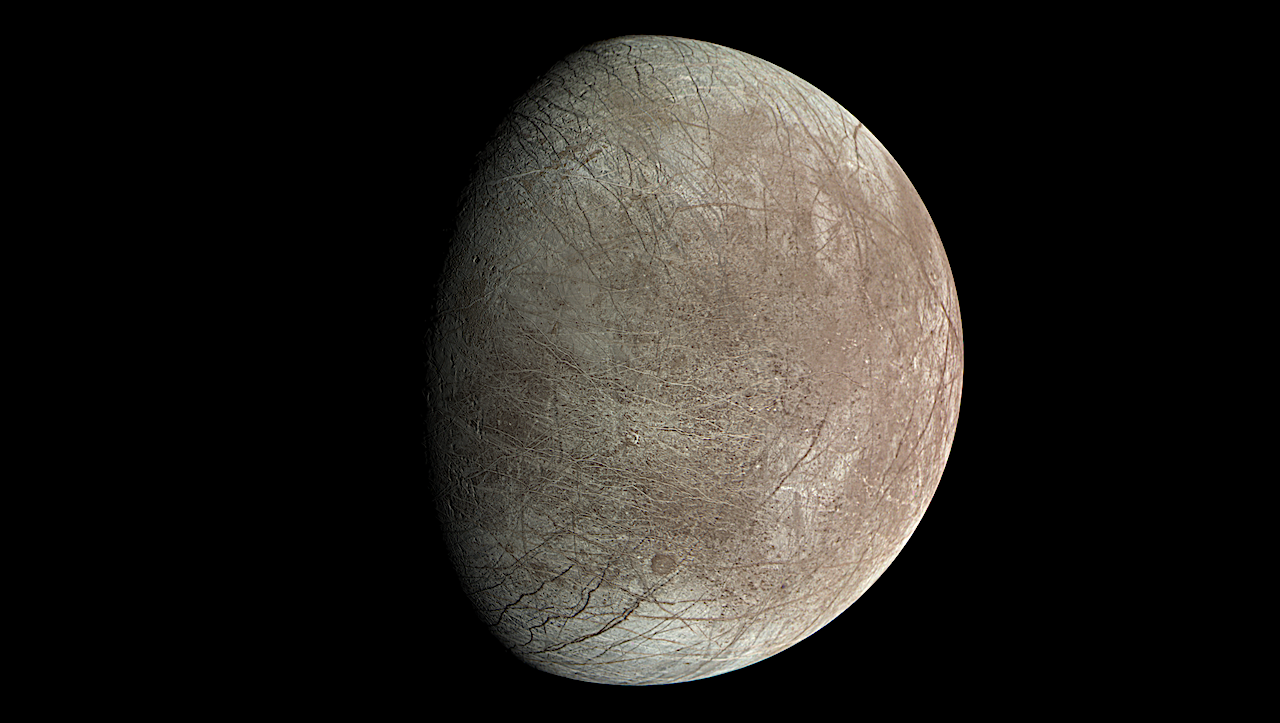
Jupiter’s moon Europa was captured by the JunoCam instrument aboard NASA’s Juno spacecraft during the mission’s close flyby on Sept. 29, 2022. The images show the fractures, ridges, and bands

NASA ROSES-2026 — Astrobiology.com The Exoplanets Research Program (XRP), element F.3 of ROSES-25, solicits basic research proposals to conduct scientific investigations that significantly improve our understanding of exoplanets and exoplanet
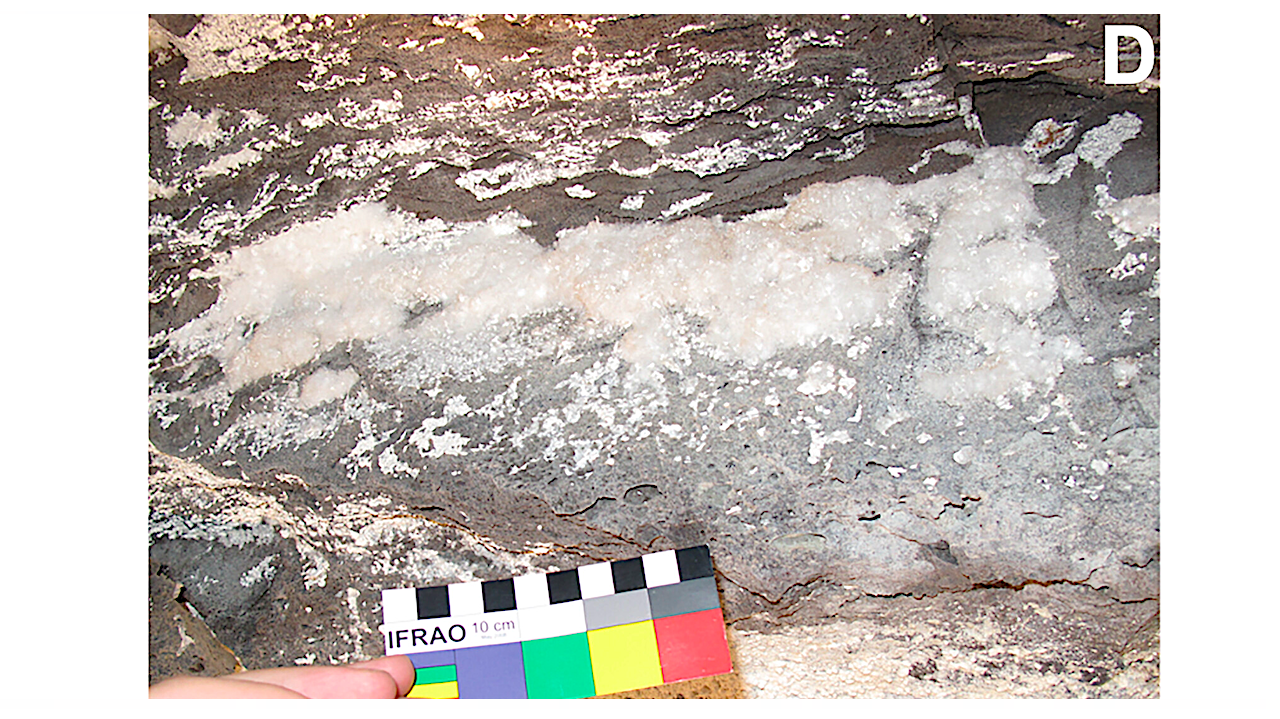
(D) White cotton-like secondary mineral deposits on the wall–ceiling interface (sampling site CLT3, dark zone; scale bar = 10 cm). — Astrobiology via Sage Lava tubes are recognized as strategic

Artist impression of what Prototaxites would have look like in life, credit Matt Humpage, National Museums Scotland News The genus ‘Prototaxites’ had previously been thought to be an early type
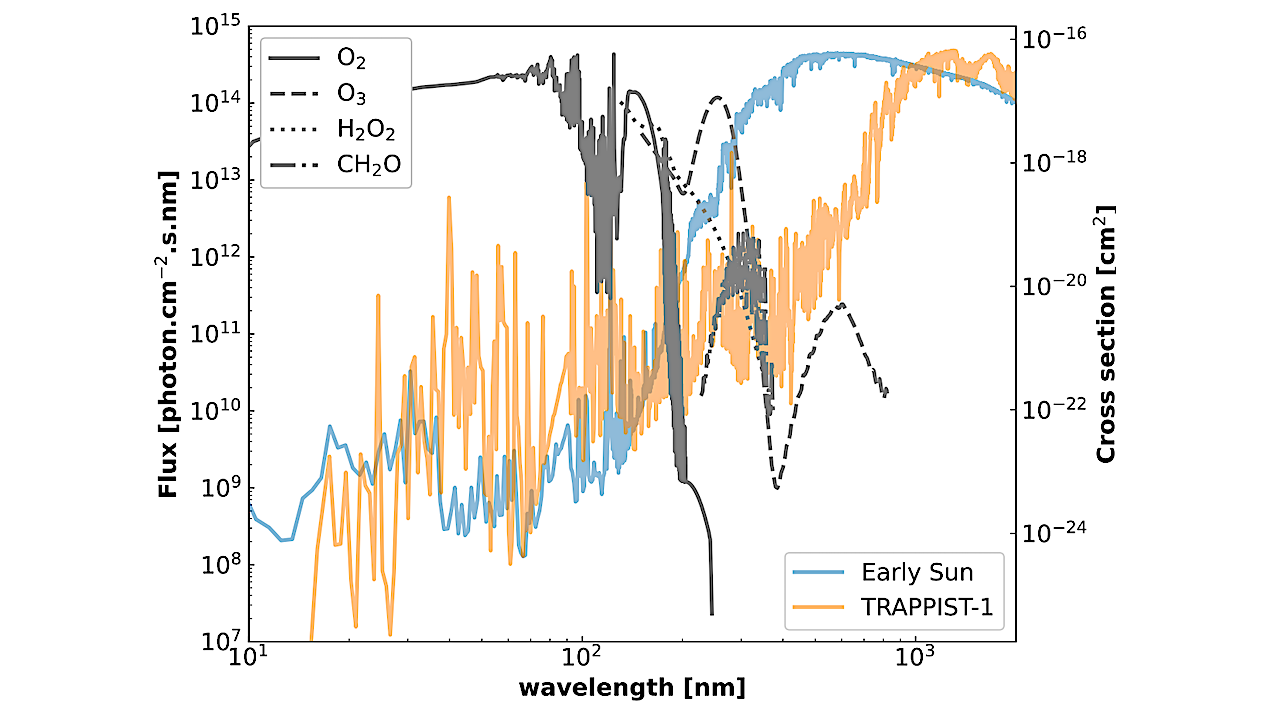
Stellar irradiation received at the top of the atmosphere on Earth 2.7Ga ago (blue)30 and on TRAPPIST-1e (orange)29. Cross section per molecules of O2, O3 and H2O2 are represented in