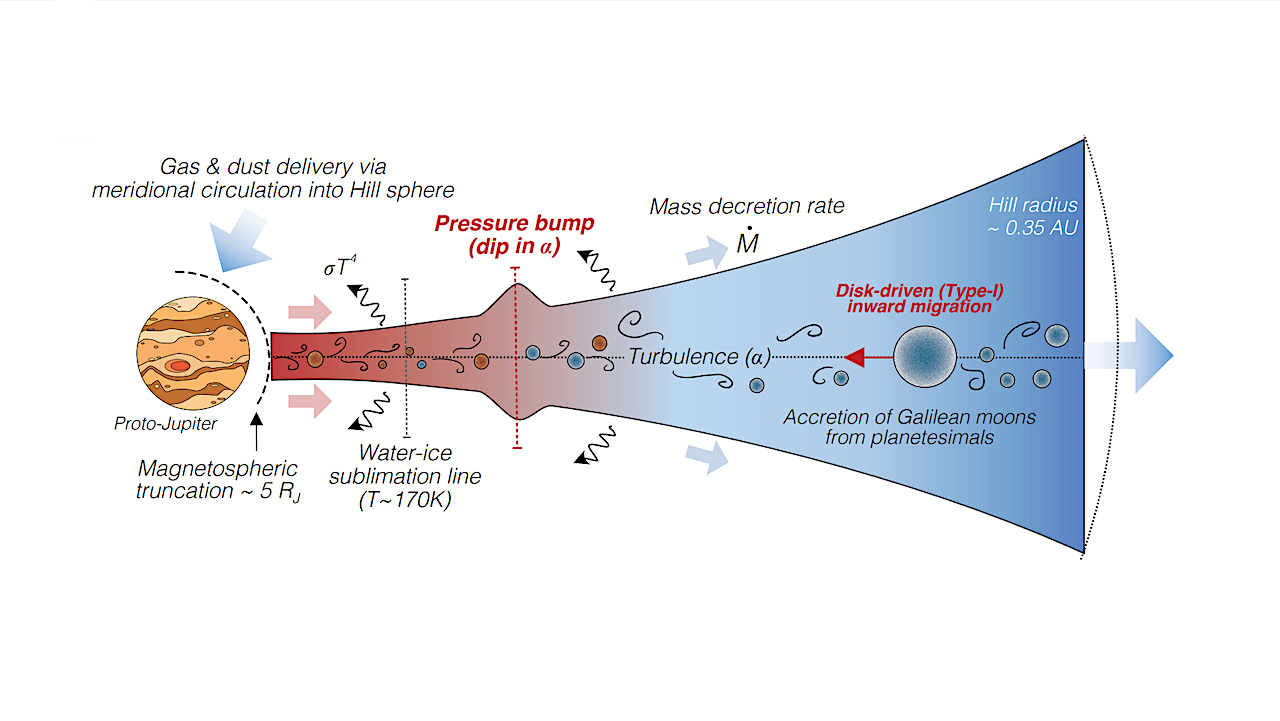
Schematic of the circum-Jovian decretion disk. Gas and dust from the circumsolar accretion disk are subsumed into the Jovian disk from approximately one hydrostatic scale height via meridional flows, and

Schematic of the circum-Jovian decretion disk. Gas and dust from the circumsolar accretion disk are subsumed into the Jovian disk from approximately one hydrostatic scale height via meridional flows, and
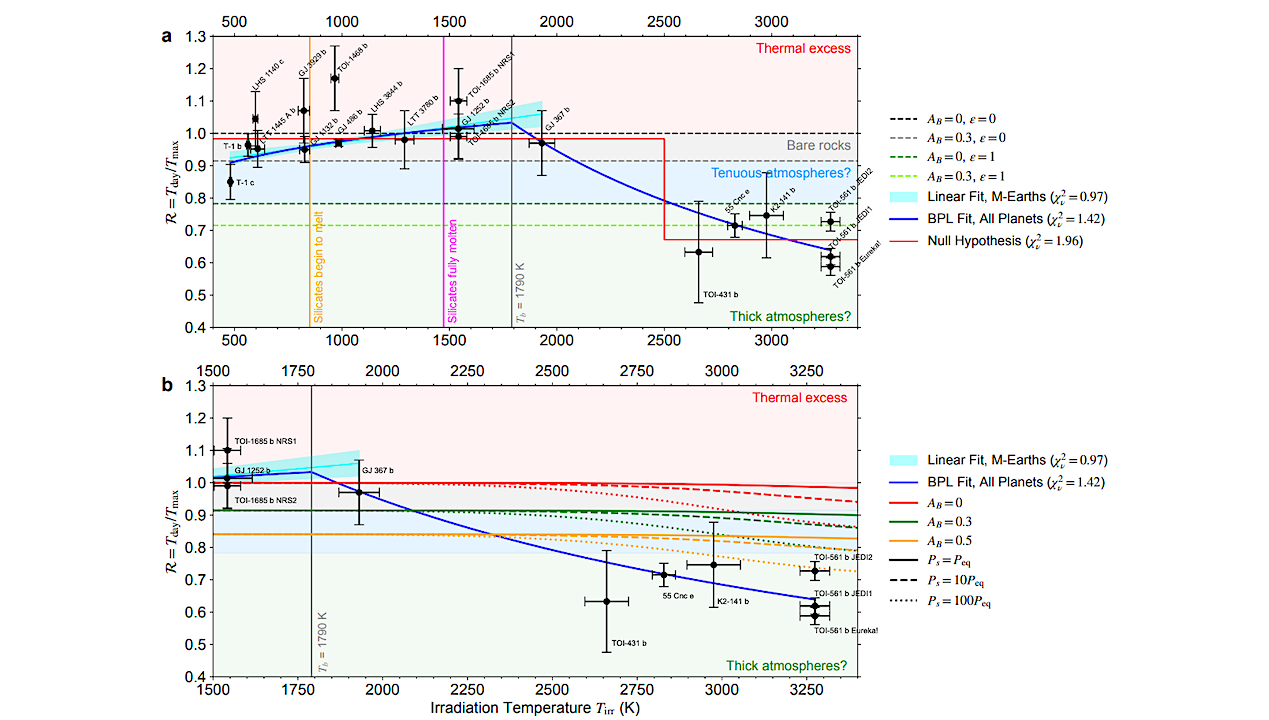
Dayside temperature scaling factor, R = Tday/Tday,max, as a function of irradiation temperature, Tirr, for (a) all observed rocky exoplanets and (b) planets with Tirr > 1500 K, which may
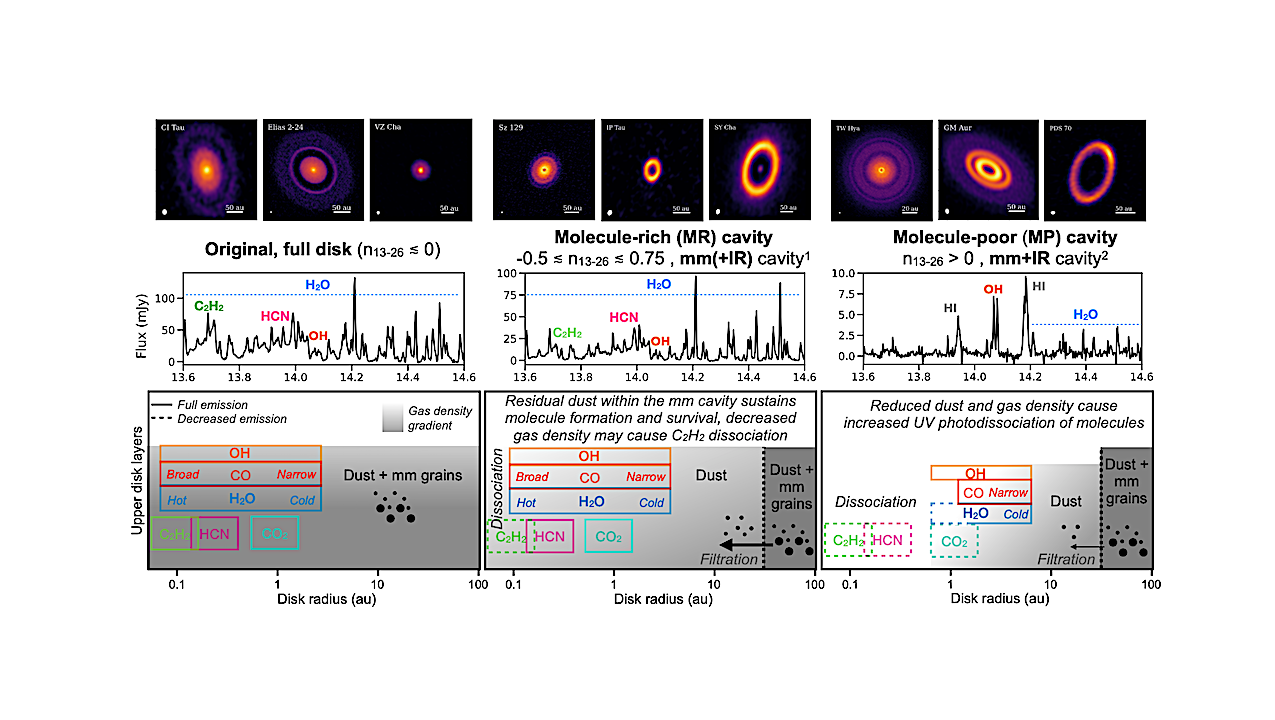
Schematic illustration of the properties and relative distribution of µm-size dust, mm grains, and molecular gas in the two cavity types presented in this work in comparison to a full
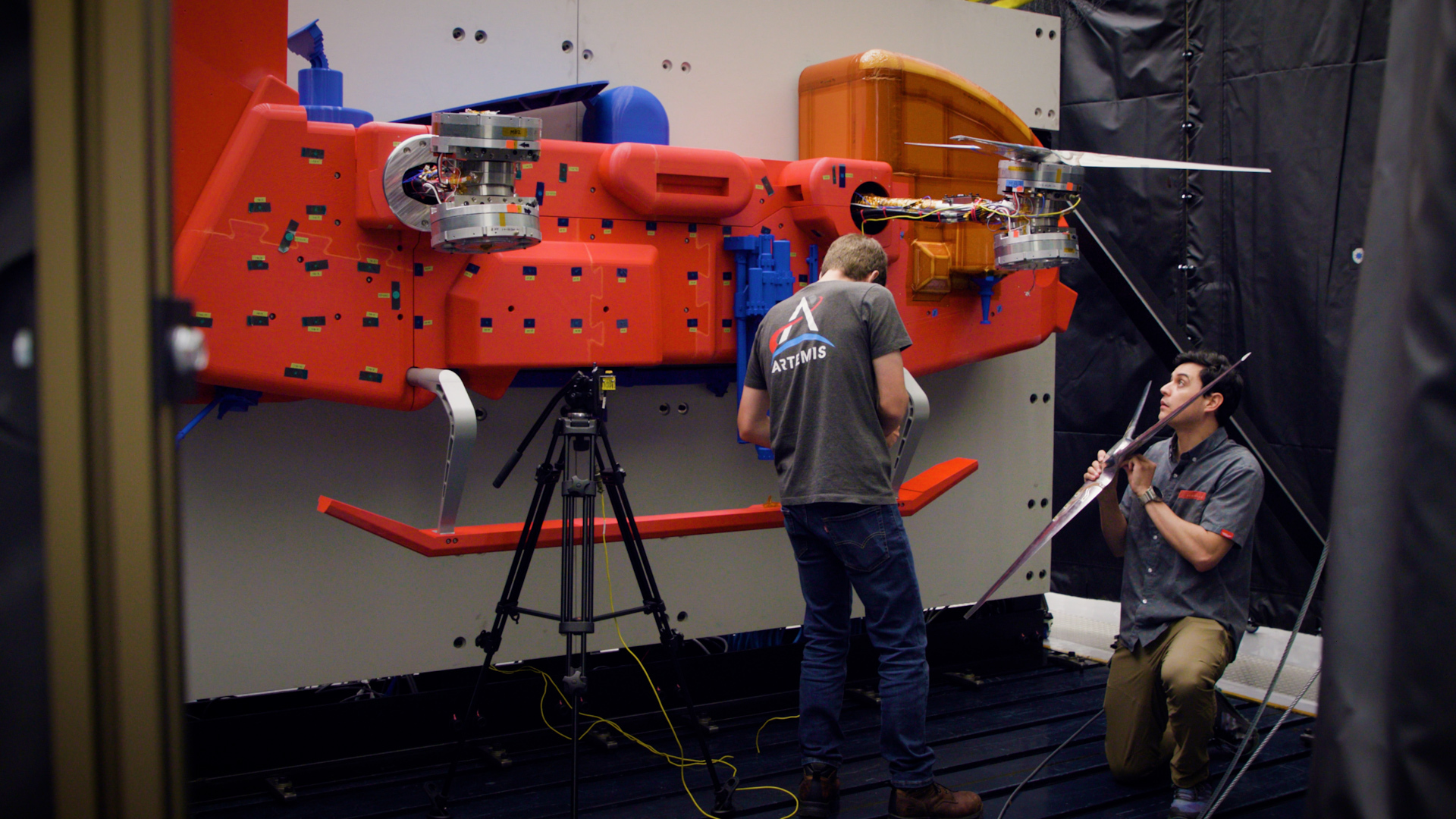
In sending a car-sized rotorcraft to explore Saturn’s moon Titan, NASA’s Dragonfly mission will undertake an unprecedented voyage of scientific discovery. And the work to ensure that this first-of-its-kind project
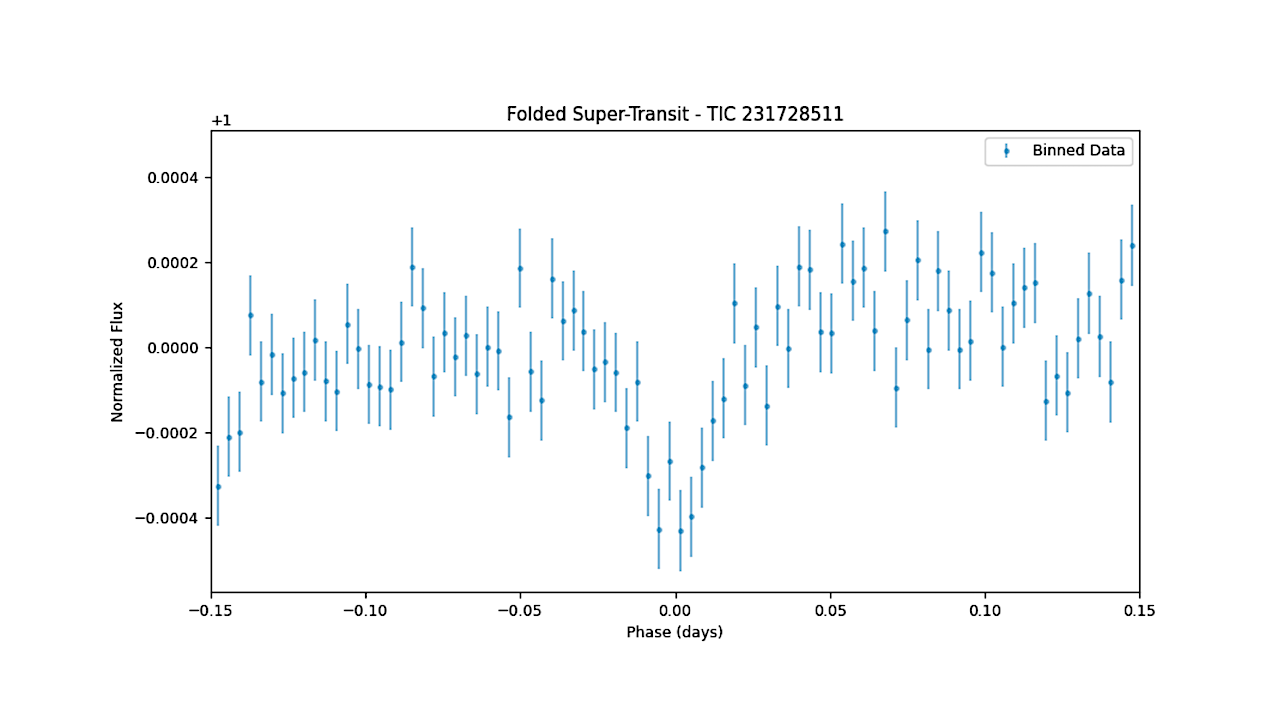
Exoplanets, -moons, -comets Status Report astro-ph.EP January 9, 2026 Phase-folded TESS light curve utilizing all 54 available sectors, binned to 5 minutes (blue points with error bars). The clear U-shape
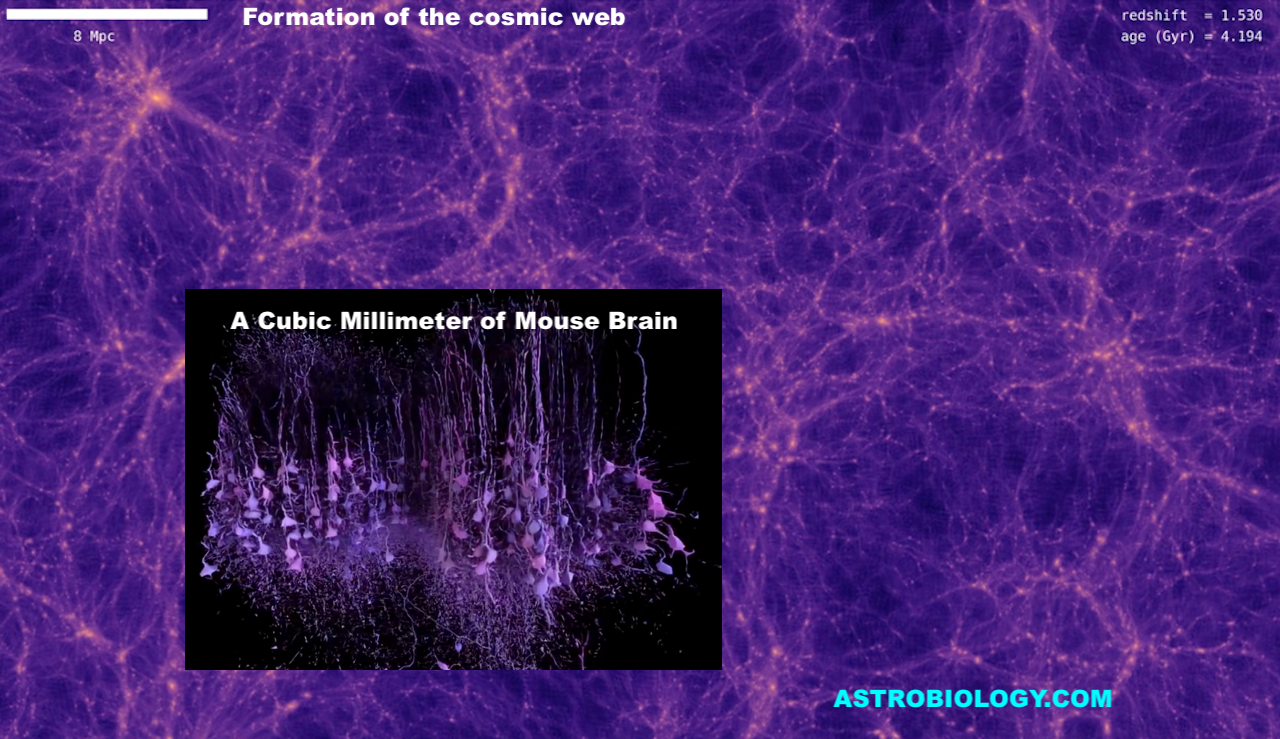
Formation of the cosmic web (San Han) – Inset: A Cubic Millimeter of Mouse Brain (Quorumetrix Studio) – Astrobiology.com Editor’s note: Astrobiology has links to and from everything NASA does.
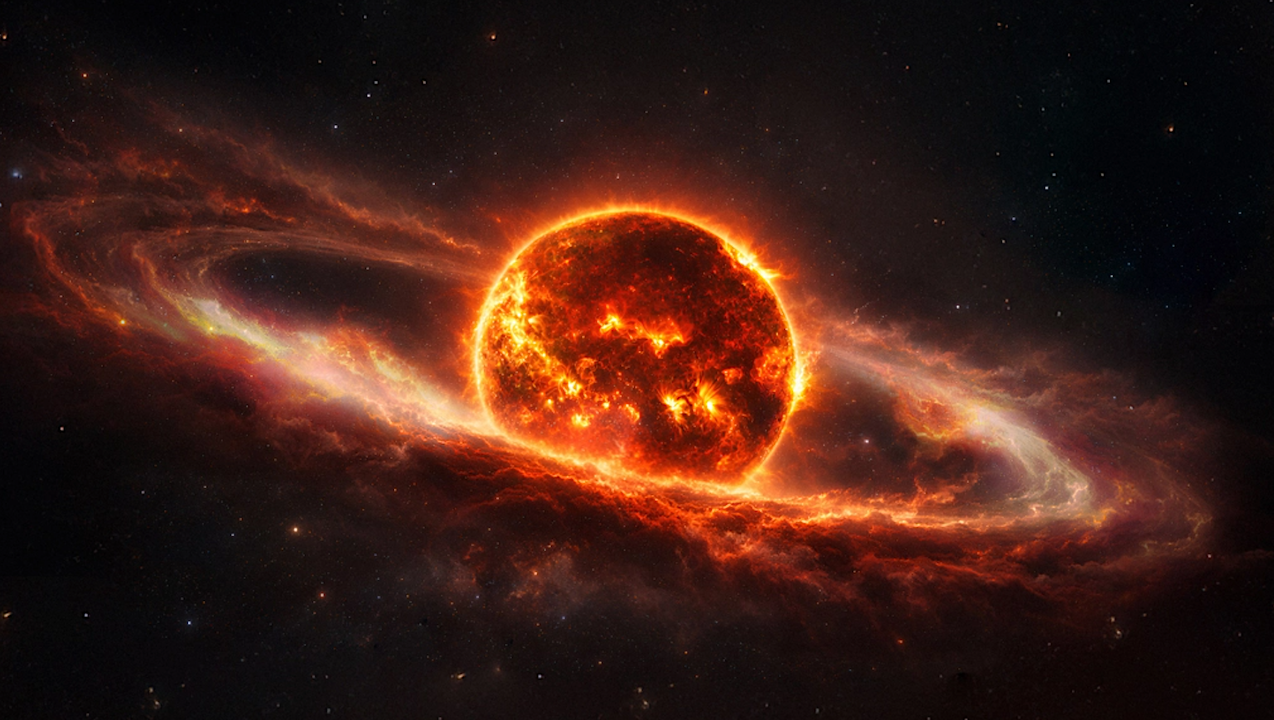
Artist’s rendition of the space weather around M dwarf TIC 141146667. The torus of ionized gas is sculpted by the star’s magnetic field and rotation, with two pinched, dense clumps
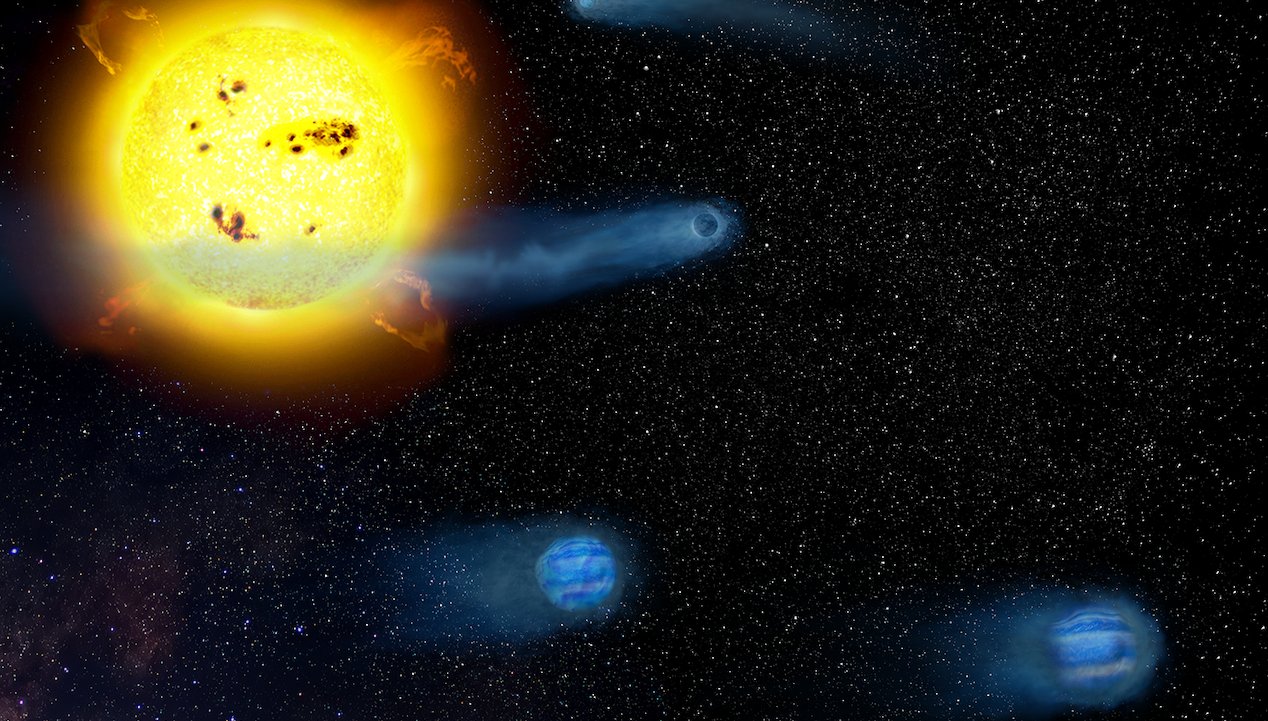
Artist’s impression of four orbiting exoplanets. Intense radiation from the host star may be heating their puffy atmospheres, causing atmospheric escape into space. (Credit: Astrobiology Center) One of the biggest
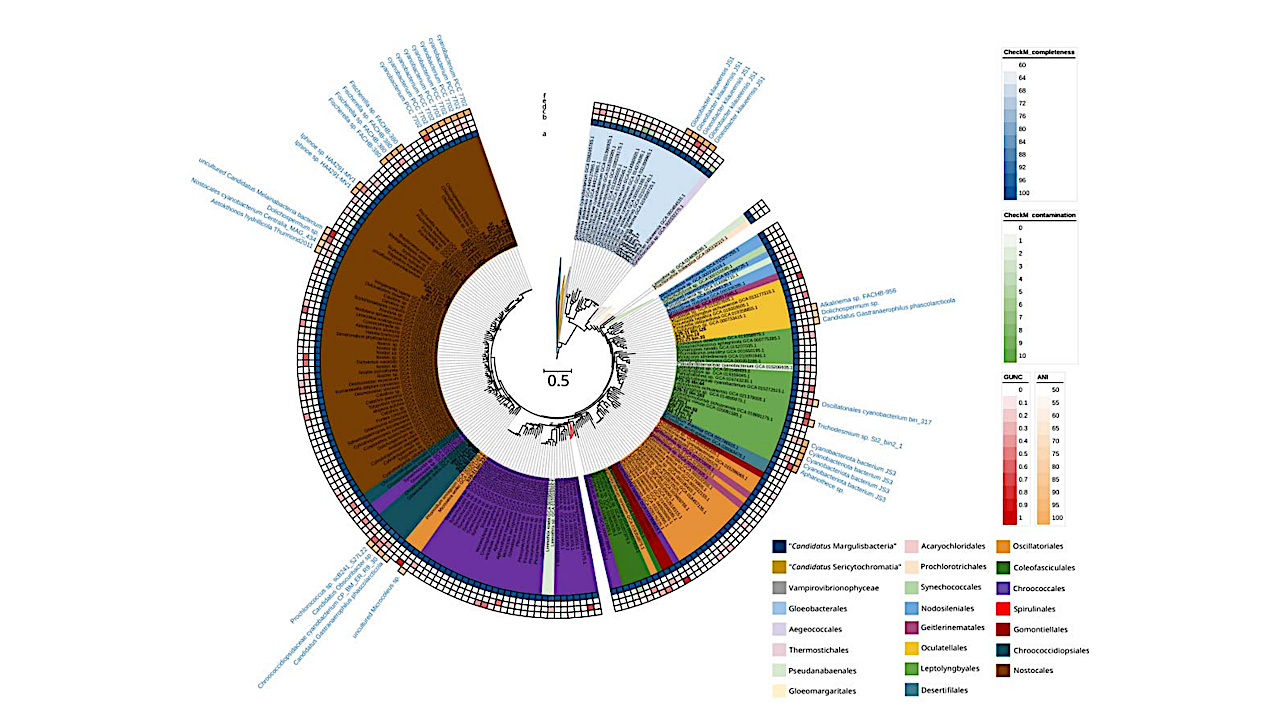
Maximum likelihood phylogenomic tree of 381 cyanobacterial genomes, including newly sequenced genomes labeled in bold. The tree was inferred from 46,754 unambiguously aligned sites under the best-fit model (LG+F+I+R10) and
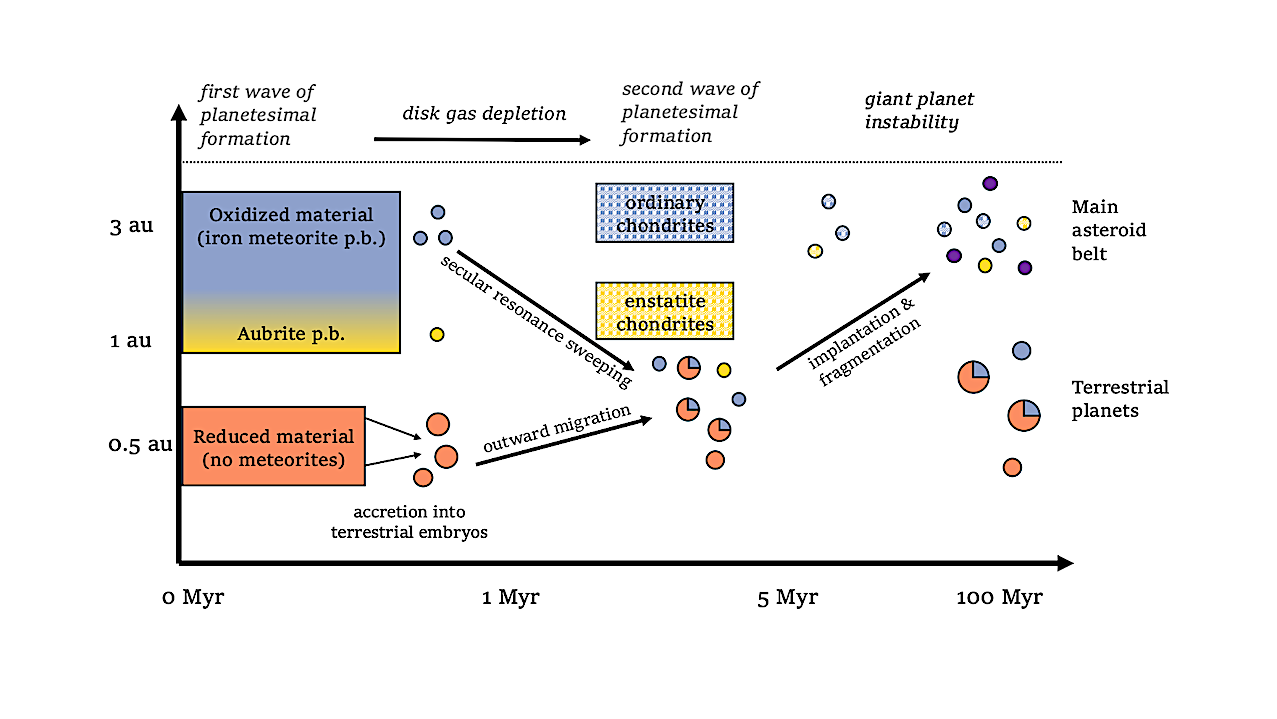
A sketch of the proposed scenario. Oxidized planetesimals decay to near 1 au, accreting onto proto-Earth and proto-Venus as well as forming Mars. Some oxidized planetesimals and aubrite-like planetesimals remain