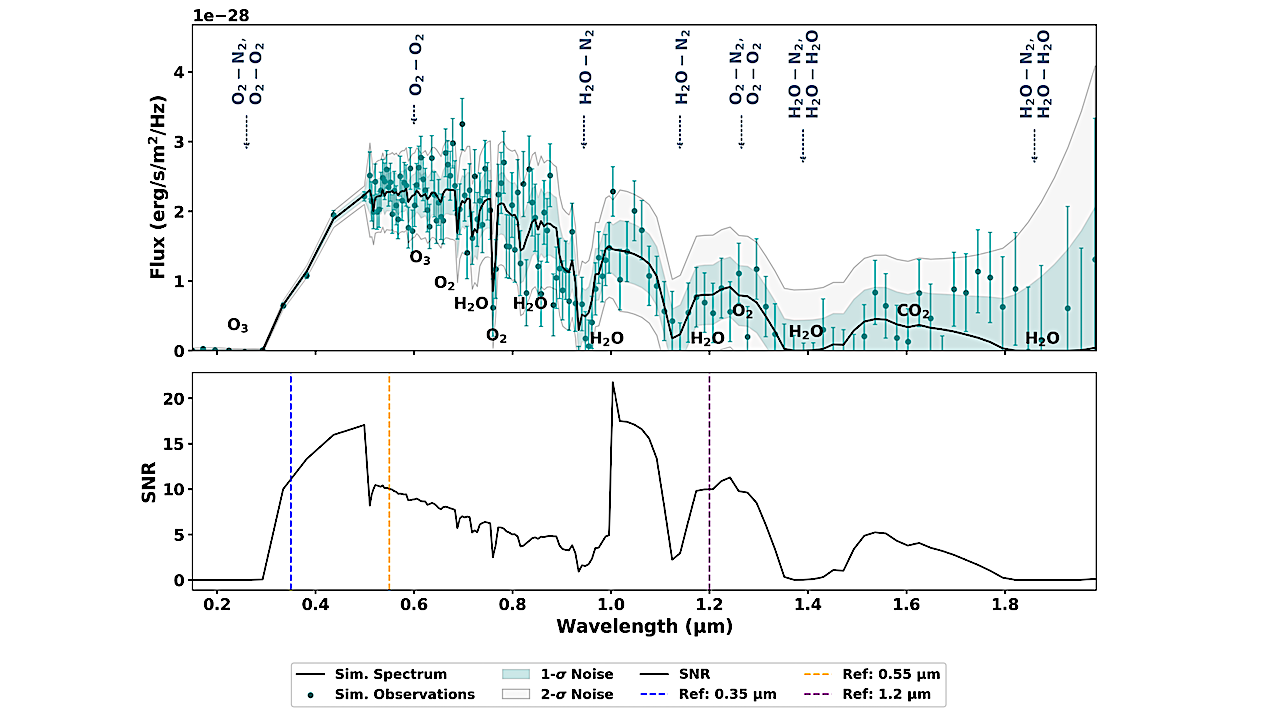
Top: simulated reflection spectra observation of modern Earth analog for the HWO mission concept. The simulated flux is considered for a planetary system at 10 pc distance. The wavelength is

Top: simulated reflection spectra observation of modern Earth analog for the HWO mission concept. The simulated flux is considered for a planetary system at 10 pc distance. The wavelength is
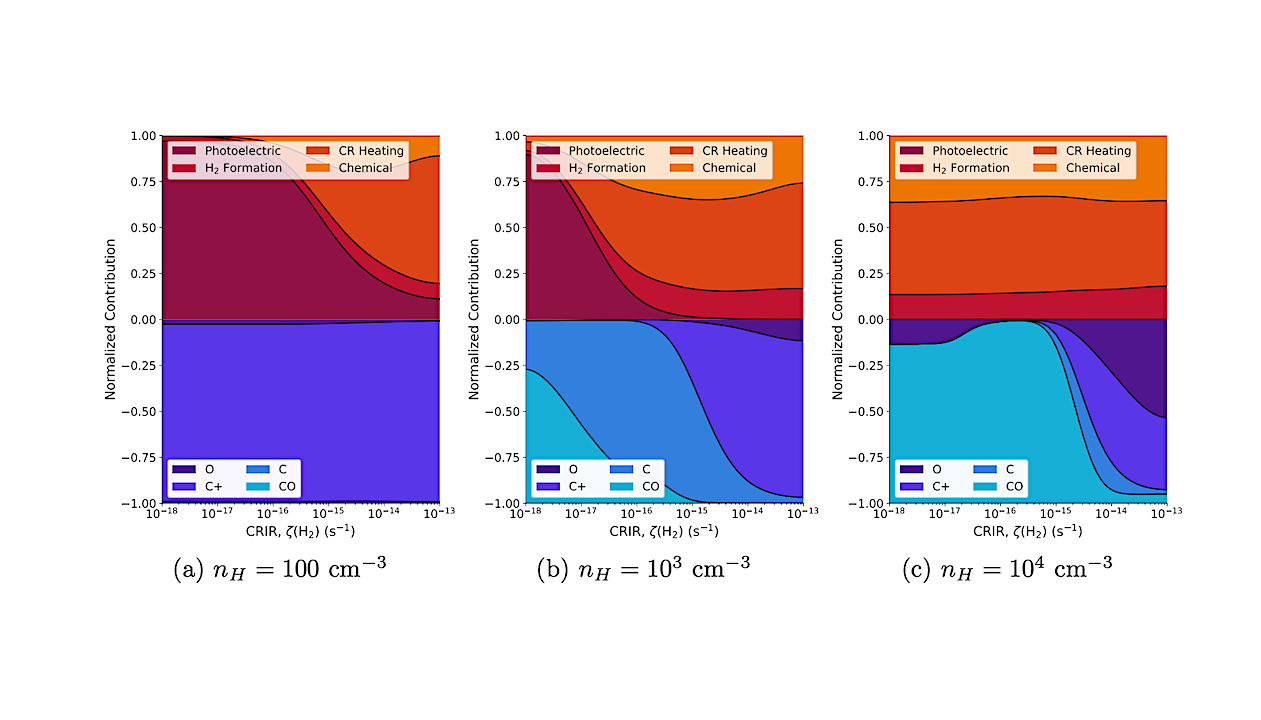
The normalized contributions of different heating (top) and cooling mechanisms (bottom) for three different densities, nH = 10, 103, 104 cm−3 (a, b, c, respectively) as a function of H2
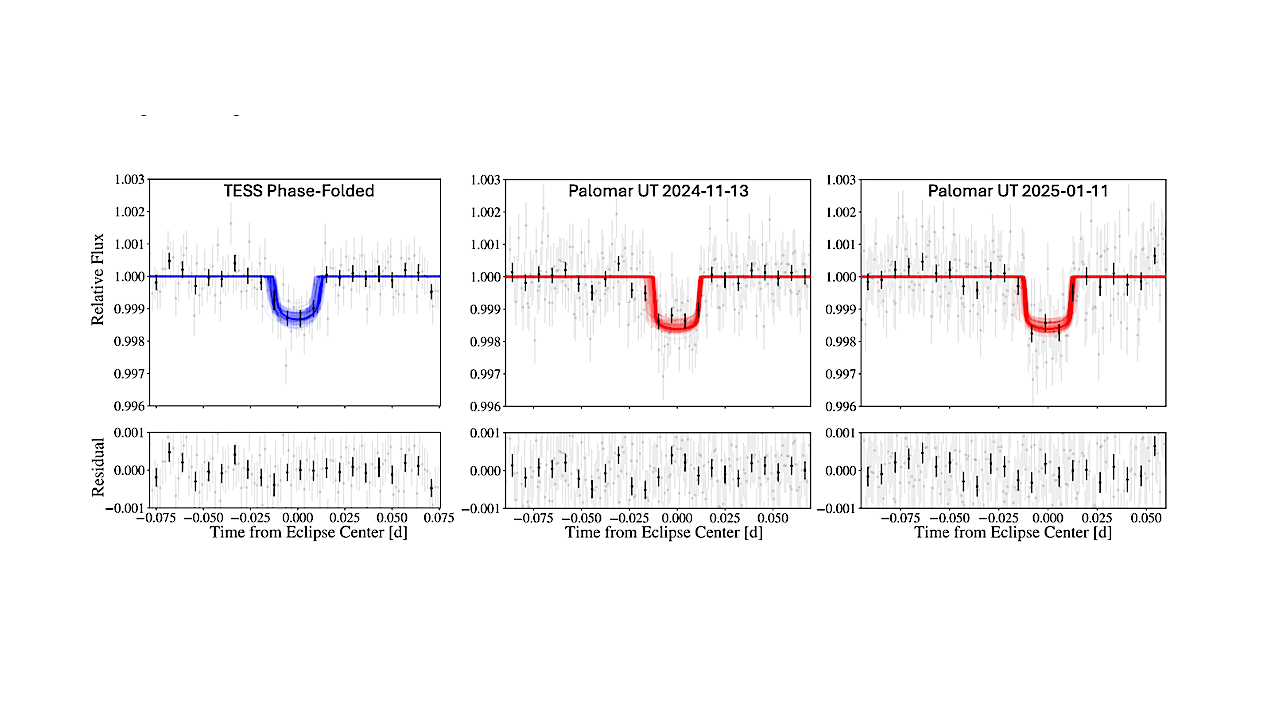
Phased-folded and 2-minute binned TESS light curve (left panel) and detrended Palomar/WIRC light curves (middle and right panels) for the two transit observations of TOI-2267 d. Residuals after the best-fit

Outer Planets Assessment Group (OPAG) — NASA The Outer Planets Assessment Group (OPAG) will hold a Town Hall at the AGU meeting in New Orleans, LA. Please join us for
Keith Cowing Explorers Club Fellow, ex-NASA Space Station Payload manager/space biologist, Away Teams, Journalist, Lapsed climber, Synaesthete, Na’Vi-Jedi-Freman-Buddhist-mix, ASL, Devon Island and Everest Base Camp veteran, (he/him) 🖖🏻 Follow on
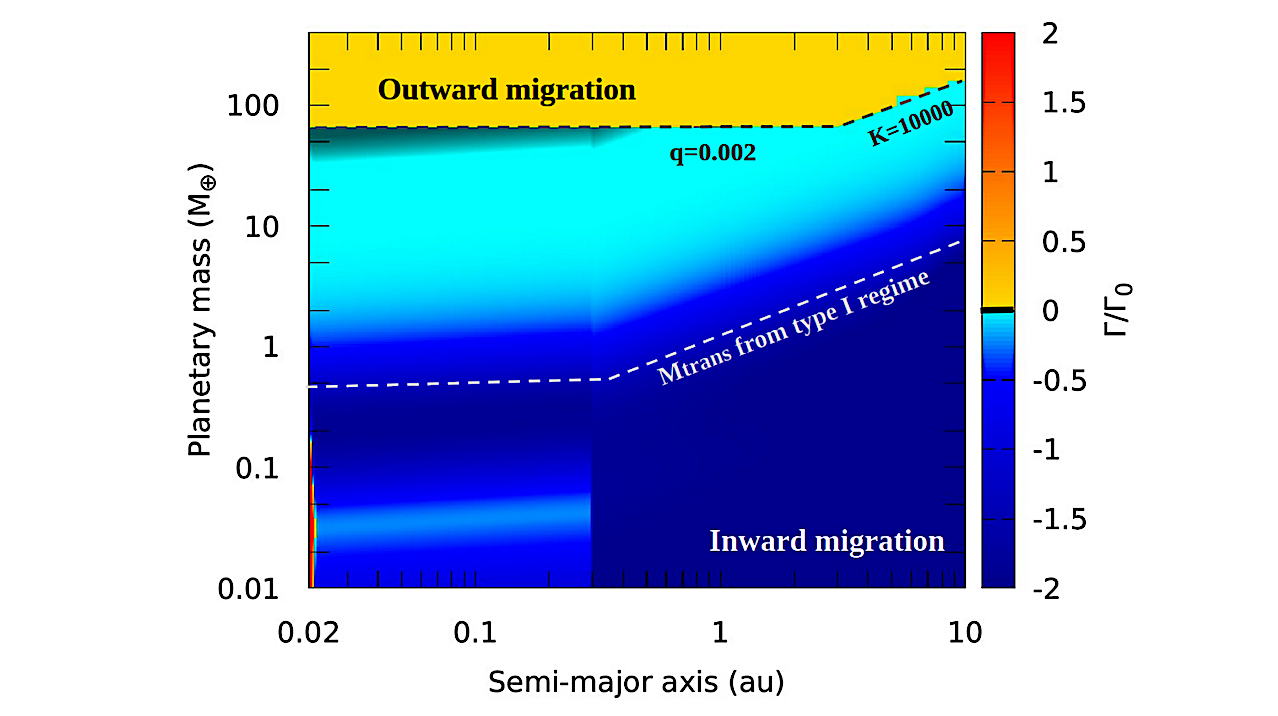
Normalized torques as a function of planetary mass and semimajor axis, assuming circular and coplanar orbits. The different migration regimes are indicated, separating inward from outward migration. The mass required
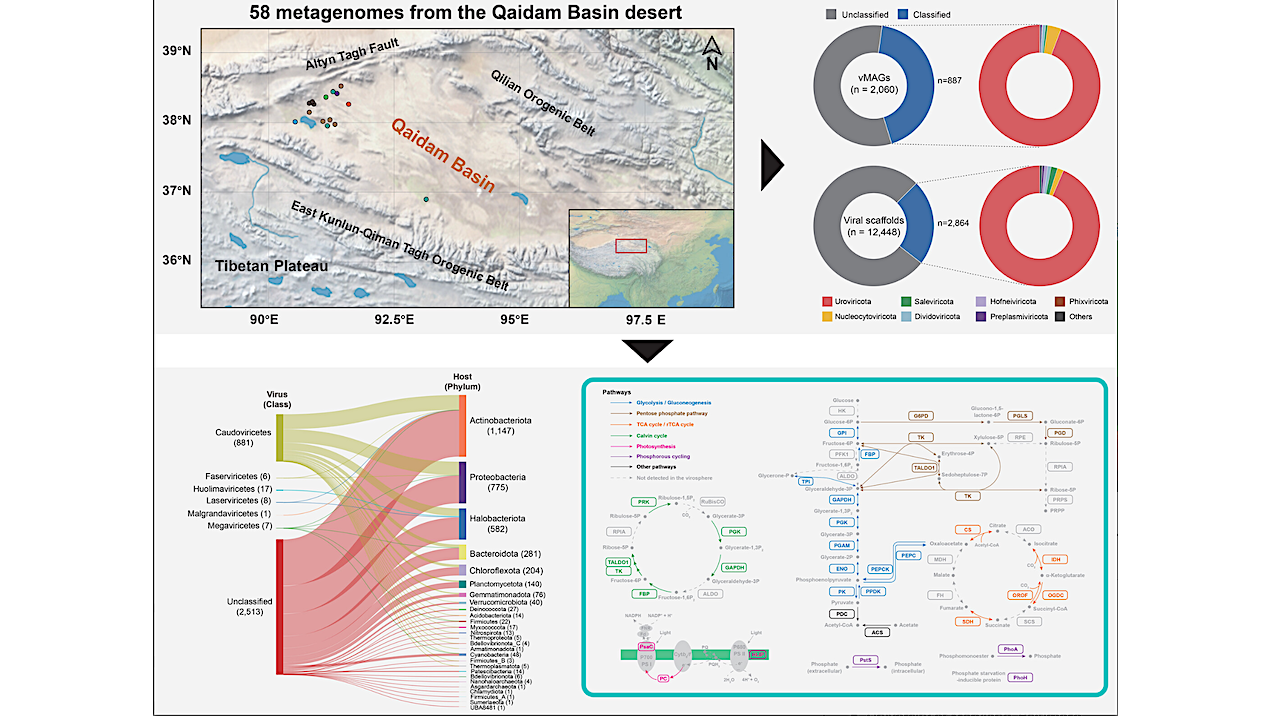
Graphical Abstract Viruses play essential roles in shaping the structure and function of microbial communities, including those inhabiting extreme environments. The Qaidam Basin is a unique Mars-analog desert characterised by
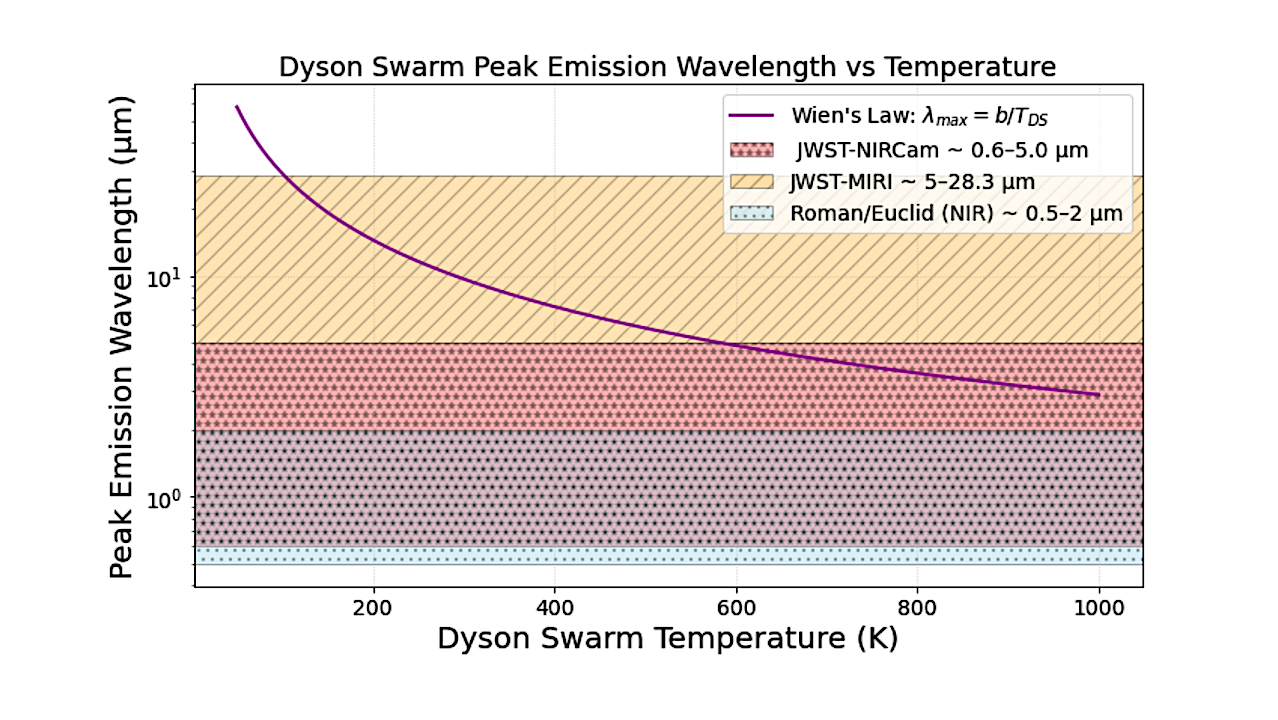
Peak emission wavelength of a Dyson Swarm as a function of swarm temperature, following Wien’s displacement law, λmax = b/TDS. The shaded regions indicate the approximate wavelength coverage of key
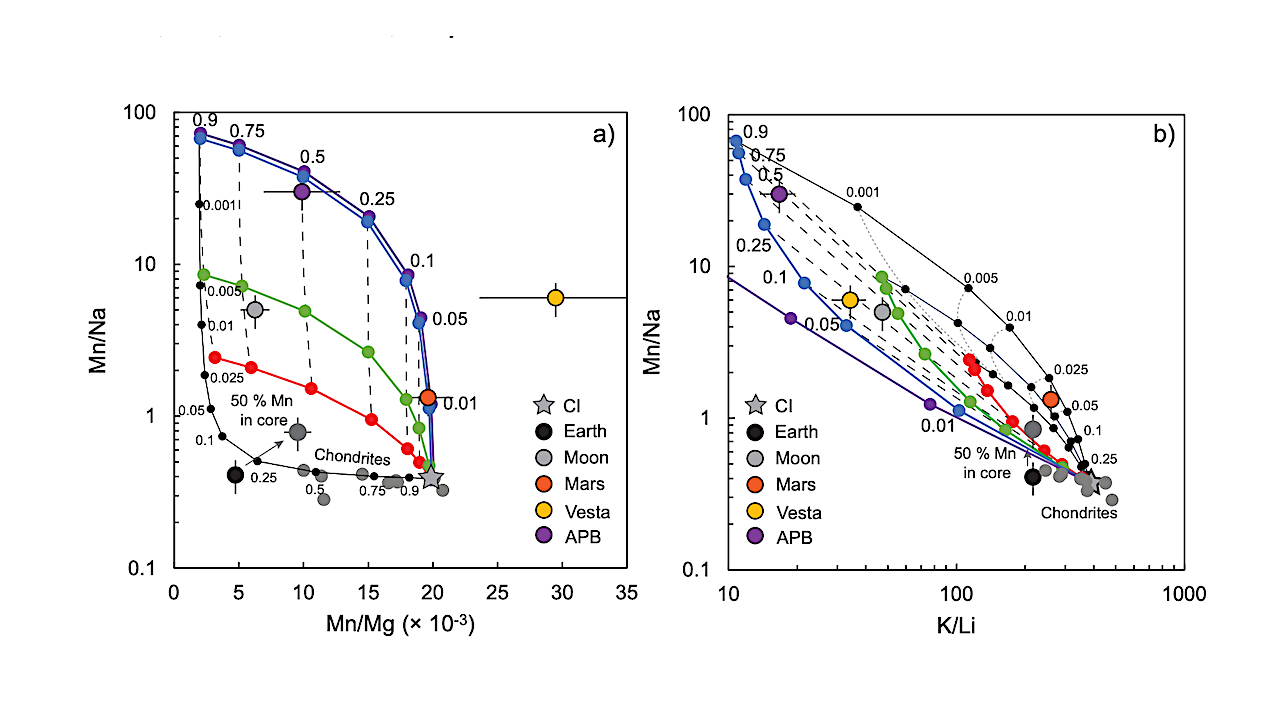
a) Mn/Na vs. Mn/Mg and b) Mn/Na vs. K/Li ratios among planetary bodies. The coloured curves denote the evolution of the composition of an evaporation residue calculated using eq. 35
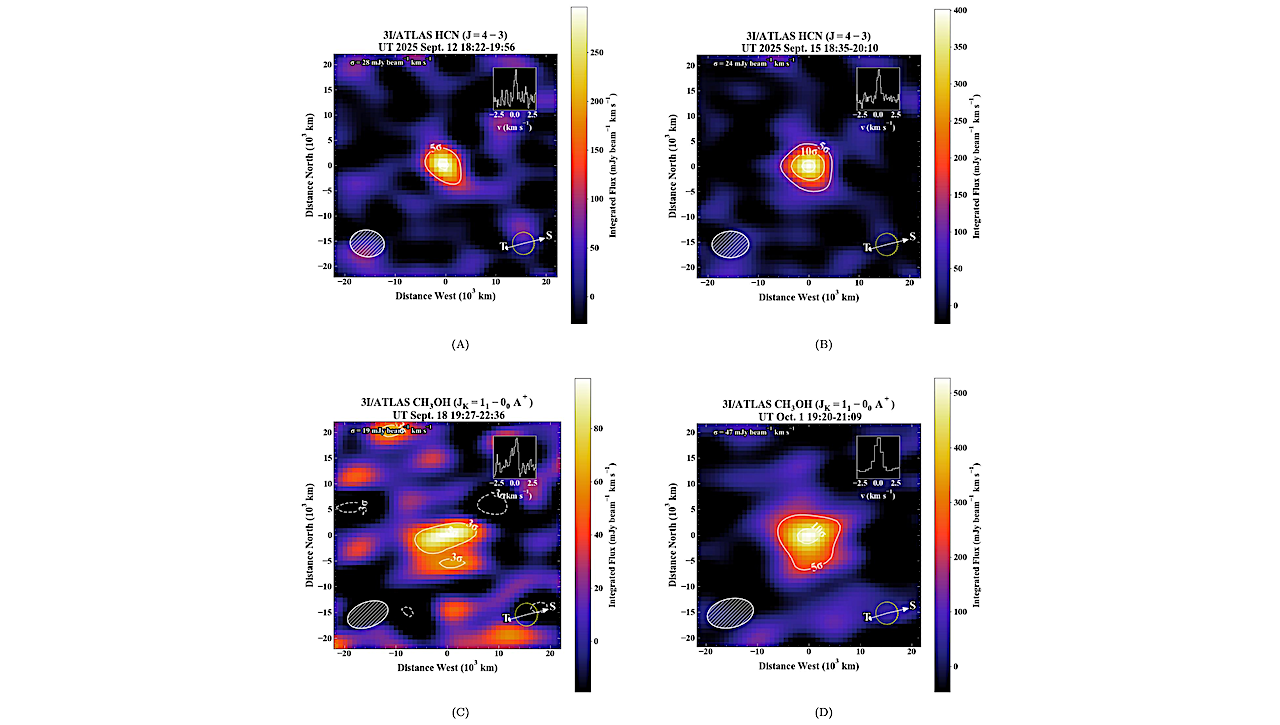
(A)–(D). Spectrally integrated flux maps for HCN on September 12 and 15 and for CH3 on September 18 and October 1. Contour intervals in each map are given in multiples