
Now Reading: Celeste: Countdown to Launch 1
-
01
Celeste: Countdown to Launch 1


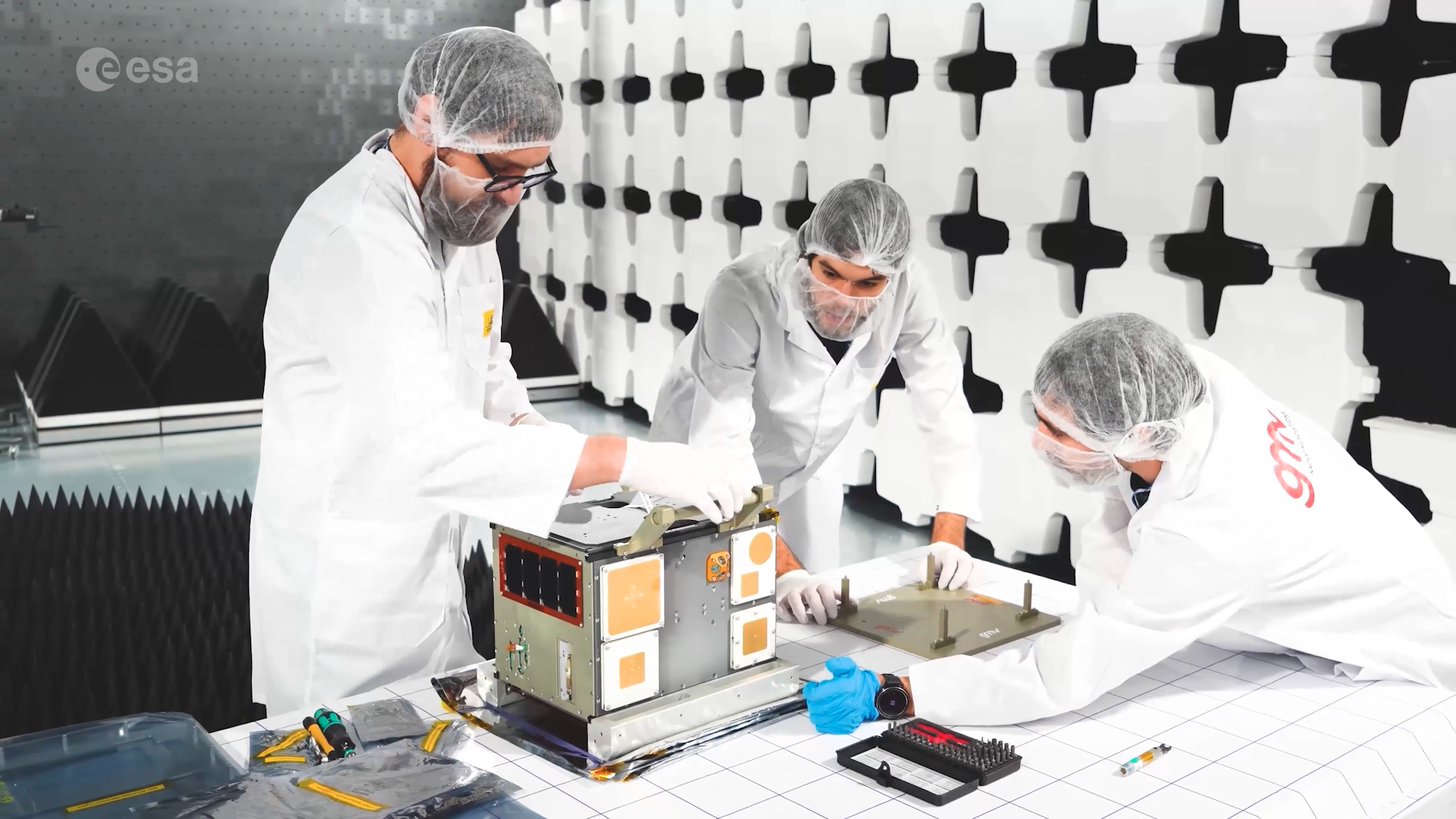

On 25 March, the first two satellites of the Celeste in-orbit demonstration mission will lift off aboard Rocket Lab’s Electron rocket from the company’s Māhia Launch Complex in New Zealand.
Celeste will play a pioneering role in elevating the future of Europe’s satellite navigation capabilities.
As ESA’s initiative for satellite navigation in low Earth orbit (LEO-PNT), the mission will be testing next-generation technologies and add new frequency bands for satellite navigation to inform the deployment of a future European operational navigation system in low Earth orbit.
The mission will begin with two demonstrator satellites, IOD1-2, to secure and test the assigned frequency filings and transmit representative navigation signals until the end of the year.
The two satellites consist of two CubeSats (12U and 16U respectively), both developed by two consortia composed by a wide set of European players, one led by GMV (Spain) and the other led by Thales Alenia Space (France).
Learn more about Celeste: https://www.esa.int/Celeste/










Related Posts


Stay Informed With the Latest & Most Important News
Previous Post
Next Post




Advertisement
-
 01Two Black Holes Observed Circling Each Other for the First Time
 -
 02From Polymerization-Enabled Folding and Assembly to Chemical Evolution: Key Processes for Emergence of Functional Polymers in the Origin of Life
 -
 03Astronomy 101: From the Sun and Moon to Wormholes and Warp Drive, Key Theories, Discoveries, and Facts about the Universe (The Adams 101 Series)
 -
 04True Anomaly hires former York Space executive as chief operating officer
 -
 05Φsat-2 begins science phase for AI Earth images
 -
 06Hurricane forecasters are losing 3 key satellites ahead of peak storm season − a meteorologist explains why it matters
 -
 07Binary star systems are complex astronomical objects − a new AI approach could pin down their properties quickly