
Now Reading: China designates space sector an “emerging pillar industry,” sets deep space ambitions in new economic blueprint
-
01
China designates space sector an “emerging pillar industry,” sets deep space ambitions in new economic blueprint

China designates space sector an “emerging pillar industry,” sets deep space ambitions in new economic blueprint

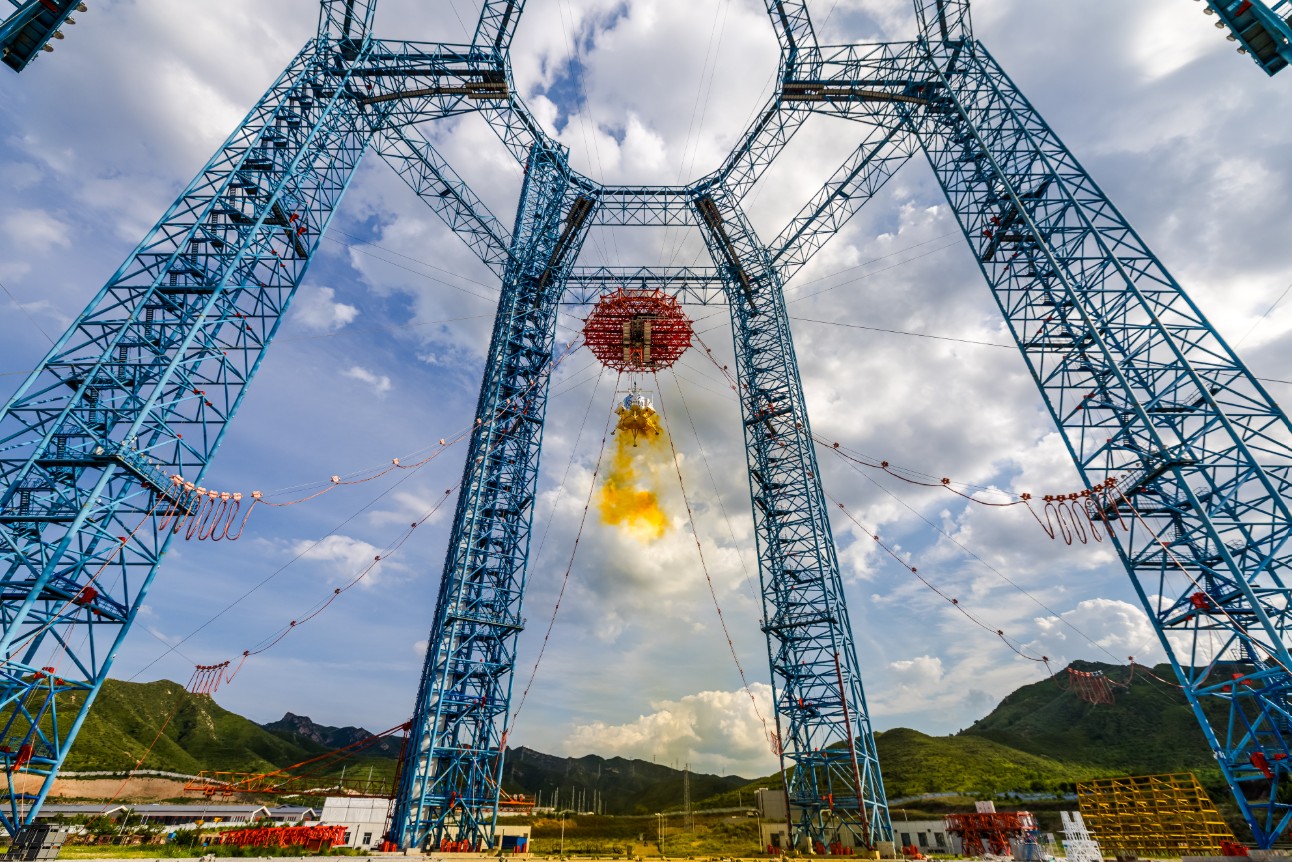

HELSINKI — China has designated aerospace to be an “emerging pillar industry” in a draft national economic plan, also setting major objectives for the five years ahead.
The designation appeared in the annual government Work Report delivered by Premier Li Qiang at the opening of the National People’s Congress (NPC) in Beijing March 5. The report says China will “foster emerging pillar industries such as integrated circuits, aviation and aerospace, biomedicine and the low-altitude economy,” placing aerospace alongside sectors considered central to the country’s long-term technological and industrial development.
These are sectors expected to become foundational drivers of economic growth, likely meaning they will benefit from strong policy support, state financing and industrial development programs. The move suggests Beijing intends to expand the space sector beyond strategic state programs toward a larger industrial ecosystem encompassing launch services, satellites and downstream data applications.
The Work Report also stated China would “encourage central government enterprises and other state-owned enterprises to take the lead in making application scenarios more accessible.” China’s main space contractor, CASC, earlier this year indicated plans to push into emerging domains such as space resources and on-orbit digital infrastructure during the 15th Five-year plan period (2026-2030).
This move appears to align with the recent emergence of the concept of “space+” in China, which envisions space treated less as a separate, standalone sector, and more as an enabling infrastructure to be integrated with other economic and strategic domains and national priorities.
Commercial aerospace was previously identified as a strategic emerging industry in recent government work reports, indicating policy support for the sector’s development. The designation as an emerging pillar industry suggests a further elevation of its importance.
Deep space ambitions
The NPC is part of China’s annual political sessions, held in March each year in Beijing. Once every five years, the NPC approves a new Five-year plan, outlining the country’s objectives and strategy for the coming five years. A draft of China’s 15th Five Year-plan national economic plan, covering the period 2026-2030, has circulated online following the opening of the NPC. The draft will be debated ahead of official approval later in the Congress.
An unofficial translated draft of the 15th Five-year plan posted online by NPC Observer, an independent research website, shows a number of space-related programs and objectives.
A column on frontier technology breakthroughs, including the areas of AI, quantum science and biotechnology, includes a segment on China’s deep space ambitions. The passage identifies implementing a second phase of planetary exploration projects, near-earth asteroid defense projects and solar system edge exploration projects.
China launched its second interplanetary mission, Tianwen-2, in May 2025, with the spacecraft now approaching the near-Earth asteroid Kamoʻoalewa. Tianwen-3 is a Mars sample return mission scheduled to launch in late 2028, while Tianwen-4, slated for around 2030, will target Jupiter. The country has also announced plans for a planetary defense mission around 2027. SpaceNews reported earlier this year that plans for dual solar system boundary missions were advancing, with the draft text suggesting this is now close to approval.
The section on deep space also notes objectives to develop reusable heavy-lift launch vehicles. This could refer to the Long March 10 series and larger Long March 9. The text also notes the construction of an international lunar research station (ILRS) and “implementation of lunar exploration projects.” The latter may be a reference to China’s stated objective of landing its first astronauts on the moon before 2030.
Satellite internet, commercial space
China will also comprehensively advance satellite internet, according to the draft, including the launch segment and satellite constellations. Plans include constructing what is termed an integrated sky-Earth-ground, communication-navigation-sensing-computing fused comprehensive service system. China has previously signaled an intent to build a unified national space infrastructure architecture, though this latest statement includes the addition of computing, following the emergence of Chinese plans to establish orbital data centers. It will also expand applications and internationalization of the Beidou navigation system, with the first new-generation Beidou satellites to launch around 2027.
A section on commercial space calls for breakthroughs related to space-based computing, rocket and satellite design and reusable launchers, formation flying and space situation awareness.
While not approved, the draft provides an early indication of China’s key objectives for space up to 2030. A space white paper, published by the China National Space Administration (CNSA), typically follows later in the year after the approval of a new Five-year plan, which will provide a more detailed outline of China’s plans to the end of the decade and beyond.










Related Posts

Stay Informed With the Latest & Most Important News
Previous Post
Next Post
Previous Post

Next Post



Advertisement
-
 01Two Black Holes Observed Circling Each Other for the First Time
 -
 02From Polymerization-Enabled Folding and Assembly to Chemical Evolution: Key Processes for Emergence of Functional Polymers in the Origin of Life
 -
 03Astronomy 101: From the Sun and Moon to Wormholes and Warp Drive, Key Theories, Discoveries, and Facts about the Universe (The Adams 101 Series)
 -
 04True Anomaly hires former York Space executive as chief operating officer
 -
 05Φsat-2 begins science phase for AI Earth images
 -
 06Hurricane forecasters are losing 3 key satellites ahead of peak storm season − a meteorologist explains why it matters
 -
 07Binary star systems are complex astronomical objects − a new AI approach could pin down their properties quickly