
Now Reading: China eyes space resources, space tourism and on-orbit digital infrastructure
-
01
China eyes space resources, space tourism and on-orbit digital infrastructure


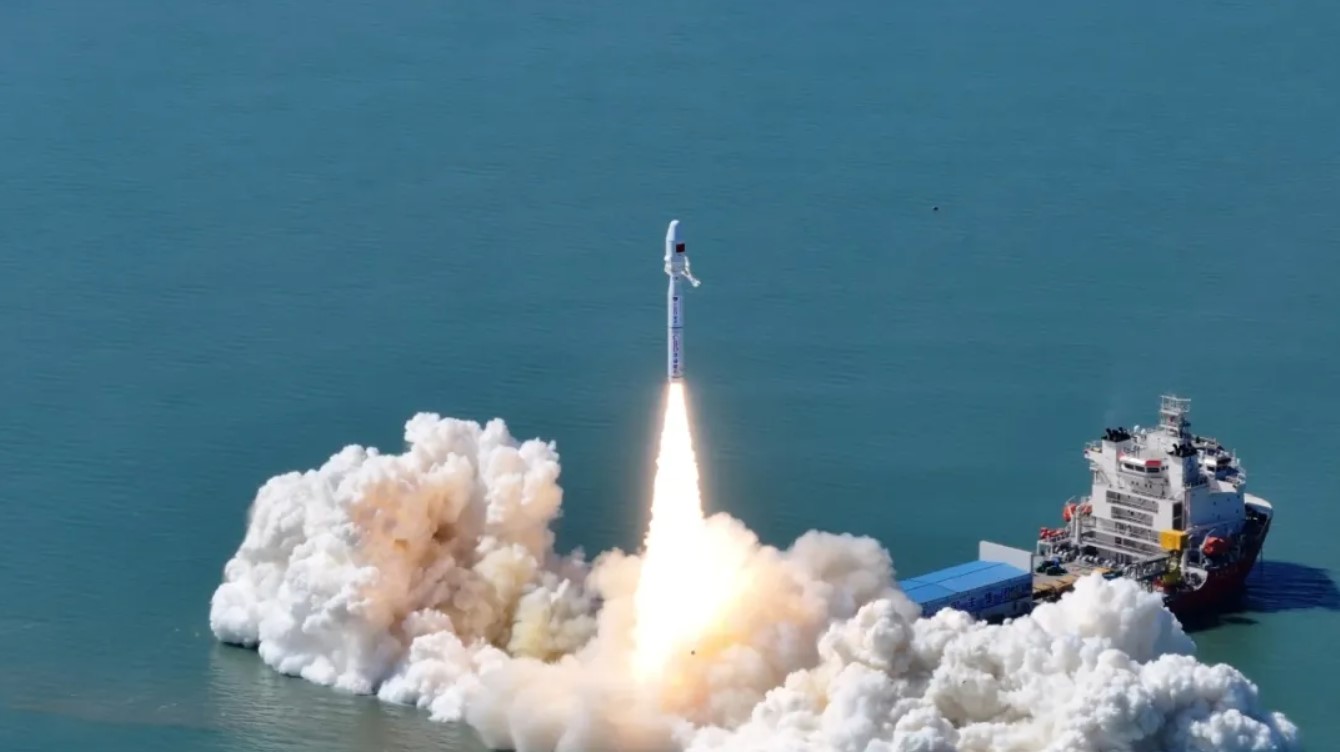

HELSINKI — China’s main space contractor says it will push into new commercial space domains in the coming years as the country formulates its latest Five-year plan.
The China Aerospace Science and Technology Corporation (CASC), the country’s state-owned main space contractor, outlined plans for space tourism, digital infrastructure, resource development and space traffic management, state media China Central Television (CCTV) reported Jan. 29.
The statement comes as China prepares for annual political sessions in Beijing in March at which the country’s 15th Five-year plan (2026-2030) will be approved. The CASC statements indicate the corporation’s broad strategic intent rather than confirmed funding and schedules, but appears to fit into the Chinese government’s wider support for commercial space and strategic areas such as digital and AI infrastructure.
On space resources, CASC calls for feasibility studies for a proposed “Tiangong Kaiwu” major initiative, referring to an earlier-proposed, multi-decade roadmap for solar system-wide resource utilization. It will also seek breakthroughs for technology needed for celestial small body resource prospecting, autonomous extraction technologies and low-cost transport and on-orbit processing. While vague and in some cases far off in terms of implementation, the calls reflect China’s already known longer-term interests in asteroid exploration, cislunar infrastructure and space resource governance.
Regarding space-based digital infrastructure, CASC proposes gigawatt-scale space-based computing infrastructure, envisioning integrated cloud-edge-terminal architecture in orbit. Concepts include space data processed in space and joint space-ground computing. This aligns with Chinese interests in reducing reliance on downlink bandwidth, autonomous satellite operations and space-based AI and data processing, as demonstrated by experimental satellites and push to develop capabilities including optical inter-satellite links.
CASC is also outlining planned development of suborbital and orbital space tourism vehicles, including uncrewed and crewed verification flights and establishing an operational framework for space tourism. No timelines or participants were disclosed in reporting.
Another area of focus is space traffic management, with plans for research on key technologies for space debris monitoring, early warning systems and debris removal technologies. It sees these initiatives as laying the groundwork for taking the initiative in the formulation of international rules for space traffic management and providing a guarantee for the safe operation of space infrastructure. China late last year took first steps to coordinate with the U.S. to avoid a collision, while the salience of the debris issue was highlighted by a suspected debris impact damaging the Shenzhou-20 spacecraft.
The areas of interest were framed as “space+,” a concept that treats space systems less as a separate, standalone sector and more as enabling infrastructure to be integrated with other economic and strategic domains and national priorities.
Further reports on CASC plans indicate that it aims to achieve reusable 20-ton to low Earth orbit (LEO) and 100-ton to LEO launch capabilities—likely referring to the Long March 9 project—while also constructing new commercial launch pads or launch sites at Jiuquan, Hainan and the eastern coastal areas. China is constructing two megaconstellations, requiring a huge growth in launch capacity and cadence, while also laying the groundwork for even larger LEO projects.










Related Posts

Stay Informed With the Latest & Most Important News
Previous Post
Next Post


Advertisement
-
 01Two Black Holes Observed Circling Each Other for the First Time
 -
 02From Polymerization-Enabled Folding and Assembly to Chemical Evolution: Key Processes for Emergence of Functional Polymers in the Origin of Life
 -
 03Astronomy 101: From the Sun and Moon to Wormholes and Warp Drive, Key Theories, Discoveries, and Facts about the Universe (The Adams 101 Series)
 -
 04True Anomaly hires former York Space executive as chief operating officer
 -
 05Φsat-2 begins science phase for AI Earth images
 -
 06Hurricane forecasters are losing 3 key satellites ahead of peak storm season − a meteorologist explains why it matters
 -
 07Binary star systems are complex astronomical objects − a new AI approach could pin down their properties quickly