
Now Reading: China faces temporary emergency launch gap after space station lifeboat crisis
-
01
China faces temporary emergency launch gap after space station lifeboat crisis


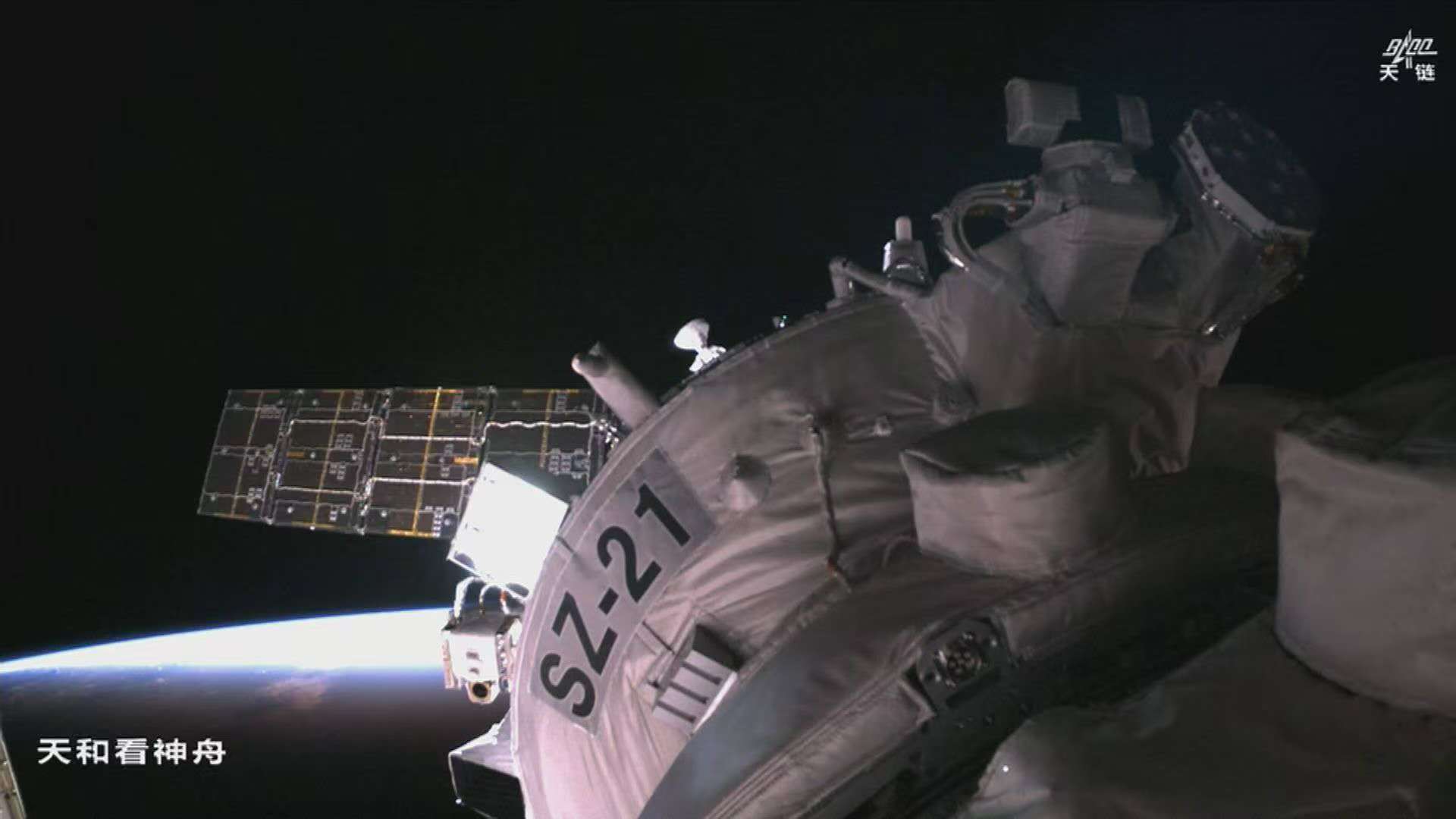

HELSINKI — China could be without emergency launch capability to Tiangong space station for months, leaving no rapid-response option for any new crisis following the Shenzhou-20 incident.
The Shenzhou-22 spacecraft launched to Tiangong Nov. 25 (UTC), providing a lifeboat for the Shenzhou-21 astronauts. It had been on standby at Jiuquan spaceport along with its Long March 2F rocket, originally intended to support a crewed mission around April–May 2026.
That contingency was triggered days after damage to a portview window of Shenzhou-20, docked at Tiangong, had been discovered Nov. 5 during checks ahead of the spacecraft carrying the outgoing Shenzhou-20 crew to Earth. With Shenzhou-20 assessed to be unsafe, the three Shenzhou-20 astronauts later returned to Earth Nov. 14 aboard Shenzhou-21, leaving the recently-arrived Shenzhou-21 crew without a lifeboat for a period of days until the arrival of Shenzhou-22.
China’s human spaceflight agency, CMSEO, operates a “one launch, one on standby” protocol. With the backup Shenzhou-22 launched, China faces a gap in emergency capabilities until Shenzhou-23 can be delivered and readied at Jiuquan.
A recent report by state media China Central Television (CCTV) on the Shenzhou-20 incident reveals that the Shenzhou-23 spacecraft was initially planned to be completed in March 2026, for delivery to Jiuquan to provide a backup to Shenzhou-22, which was originally expected to launch around May.
Shenzhou-23 is now expected to be completed two months ahead of schedule, according to CCTV, meaning it could be delivered to Jiuquan sometime in January. The spacecraft and its Long March 2F rocket—the status of which was not revealed—would then need to be assembled and tested before being ready and on standby, reestablishing a “one launch, one on standby” situation. A standard launch campaign for a Shenzhou mission is around 30 days, and was accelerated to around 16 days for the launch of Shenzhou-22.
The Shenzhou-20 emergency has thus had knock-on effects in terms of emergency readiness and for production of spacecraft and launch vehicles for future missions.
Shenzhou-20 to return to Earth uncrewed
Meanwhile, the Shenzhou-20 spacecraft will make an uncrewed return to Earth, according to Ji Qiming, a spokesperson with CMSEO, though no timeframe was stated.
The crack to the portview window was found to be over 10 millimeters in size, with the crack assessed to have penetrated the glass, which is the outer layer of three layers of glass for the window.
“From one corner, it looks like it has been pierced through. But as the spaceship is still in orbit, we can’t see it with our own eyes. We may be able to observe it more closely after the Shenzhou-20 spacecraft returns,” Jia said.
The Shenzhou-22 spacecraft also carried a “device,” potentially a patch, for the window for Shenzhou-20 window. CMSEO announced Dec. 4 that the Shenzhou-21 crew were set to embark on their first extravehicular activity in the coming days. The spacewalk would provide an opportunity to assess the crack from the outside, adding to assessments enabled by Tiangong’s robotic arm, and potentially patch the crack ahead of the spacecraft’s reentry and return.
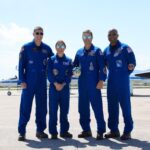
The Shenzhou-21 astronauts—commander Zhang Lu and crewmates Zhang Hongzhang and Wu Fei—arrived at Tiangong Oct. 31, 3.5 hours after liftoff from Jiuquan in the Gobi Desert. They are expected to stay in orbit around six months. The next crew will launch around April-May, flying on the Shenzhou-23 spacecraft, the manufacture of which is currently being accelerated.










Related Posts


Stay Informed With the Latest & Most Important News
Previous Post
Next Post

Advertisement
-
 01Two Black Holes Observed Circling Each Other for the First Time
 -
 02From Polymerization-Enabled Folding and Assembly to Chemical Evolution: Key Processes for Emergence of Functional Polymers in the Origin of Life
 -
 03Astronomy 101: From the Sun and Moon to Wormholes and Warp Drive, Key Theories, Discoveries, and Facts about the Universe (The Adams 101 Series)
 -
 04True Anomaly hires former York Space executive as chief operating officer
 -
 05Φsat-2 begins science phase for AI Earth images
 -
 06Hurricane forecasters are losing 3 key satellites ahead of peak storm season − a meteorologist explains why it matters
 -
 07Binary star systems are complex astronomical objects − a new AI approach could pin down their properties quickly