
Now Reading: China files ITU paperwork for megaconstellations totaling nearly 200,000 satellites
-
01
China files ITU paperwork for megaconstellations totaling nearly 200,000 satellites


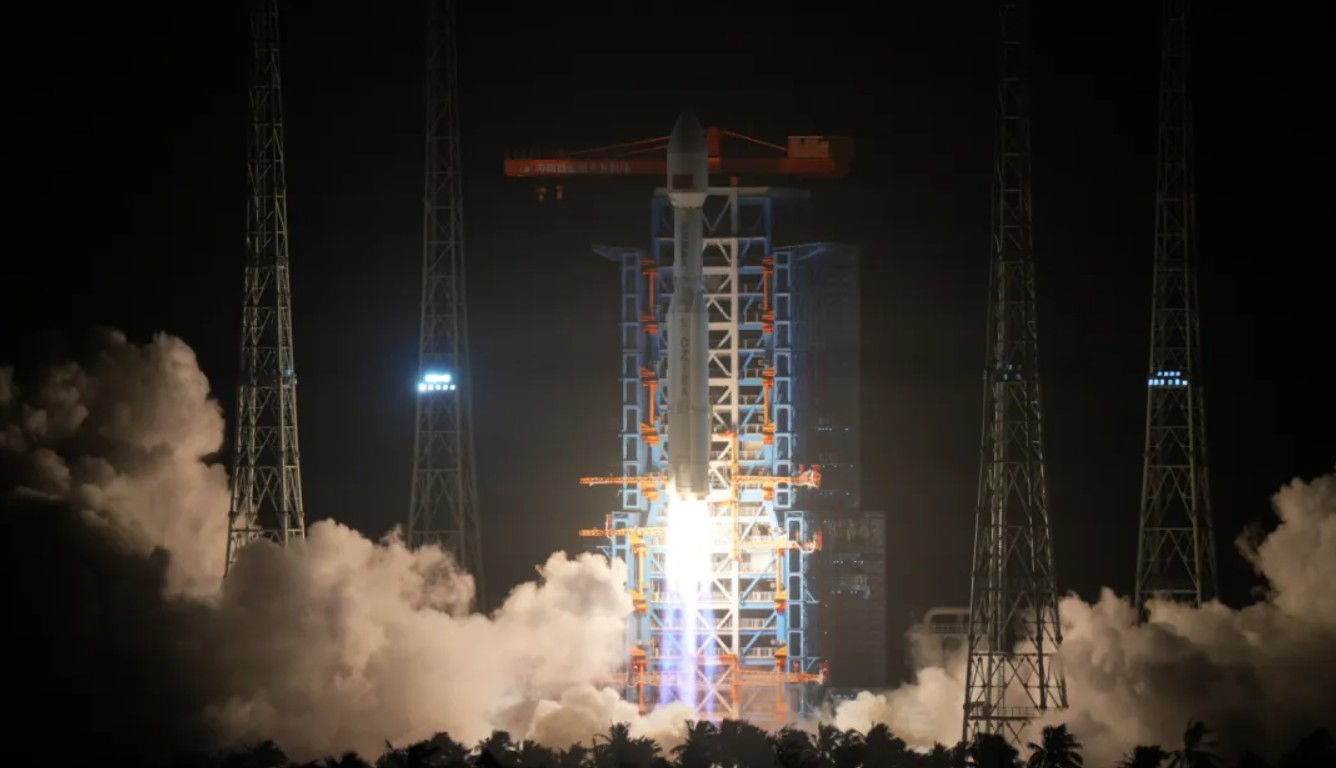

HELSINKI — China has submitted two filings for huge non-geostationary satellite networks to the International Telecommunication Union, indicating moves to secure options for next-generation megaconstellations.
The filings, submitted to the ITU in late December 2025, are designated CTC-1 (CHN2025-79441) and CTC-2 (CHN2025-79398), each covering 96,714 satellites in 3,660 orbital planes, according to documents posted in the Union’s “as-received” database.
CTC-1 includes both advance publication information (API) and a more detailed coordination request, reflecting progression through different stages of the ITU regulatory process for a single notional Non-Geostationary Orbit (NGSO) system, while CTC-2 currently remains at the API-only stage. Both reference a “new operating agency” as a placeholder for their operating agencies.
Together, the pair represent one of the largest constellation filings ever made, highlighting the growing competition over orbital and spectrum resources.
CTC-1 and CTC-2 are early-stage ITU regulatory filings for a proposed NGSO satellite network, providing priority dates but not constituting authorization to deploy satellites. Although filed as two separate NGSO networks under ITU rules, CTC-1 and CTC-2 appear to form part of a single strategic effort to secure spectrum and orbital priority for a future next-generation Chinese megaconstellation. The move could be aimed at securing long-term spectrum priority, preserving China’s options for multiple future constellations, while also avoiding being crowded out by earlier Western filings.
The filings have not yet been examined and currently have no regulatory standing, but signal China’s intent to secure the priority for spectrum and orbits for two constellations up to the scale of 96,714 satellites, subject to milestones and national authorization. What will follow is technical examination by the ITU Radiocommunication Bureau and potential objections or coordination requests from other administrations.
Further filings from China indicate intentions for China Satcom to launch 24 satellites into medium Earth orbit, linked to the low Earth orbit Guowang project as broader architecture, and two constellations for China Mobile of 144 satellites and 2,520 satellites each. The latter applied to China’s Ministry of Industry and Information Technology (MIIT) for a license to provide direct-to-satellite services last year. Commercial outfit Galaxy Space also submitted plans for a constellation of 91 satellites.
China is already constructing its national Guowang and Shanghai-backed Qianfan (Thousand Sails) constellations, each planned to consist of more than 10,000 satellites. The CTC-1 and CTC-2 appear to represent an early next-generation constellation plan, seeking to secure orbits and spectrum amid the construction of constellations such as SpaceX’s Starlink and Amazon Leo (formerly known as Project Kuiper).
SpaceX initially filed paperwork for Starlink to comprise up to around 12,000 satellites, before expanding this to up to roughly 42,000 in later filings.
China last year launched a national record 92 times, with some of the growth led by launches for Guowang and Qianfan. The country is supporting the development of state-owned and commercially-developed reusable launch vehicles as well as expanding its spaceports to support more launch activity.










Related Posts
Stay Informed With the Latest & Most Important News
Previous Post
Next Post

Advertisement
-
 01Two Black Holes Observed Circling Each Other for the First Time
 -
 02From Polymerization-Enabled Folding and Assembly to Chemical Evolution: Key Processes for Emergence of Functional Polymers in the Origin of Life
 -
 03Astronomy 101: From the Sun and Moon to Wormholes and Warp Drive, Key Theories, Discoveries, and Facts about the Universe (The Adams 101 Series)
 -
 04True Anomaly hires former York Space executive as chief operating officer
 -
 05Φsat-2 begins science phase for AI Earth images
 -
 06Hurricane forecasters are losing 3 key satellites ahead of peak storm season − a meteorologist explains why it matters
 -
 07Binary star systems are complex astronomical objects − a new AI approach could pin down their properties quickly