
Now Reading: China launches reusable spaceplane on fourth secretive orbital mission
-
01
China launches reusable spaceplane on fourth secretive orbital mission


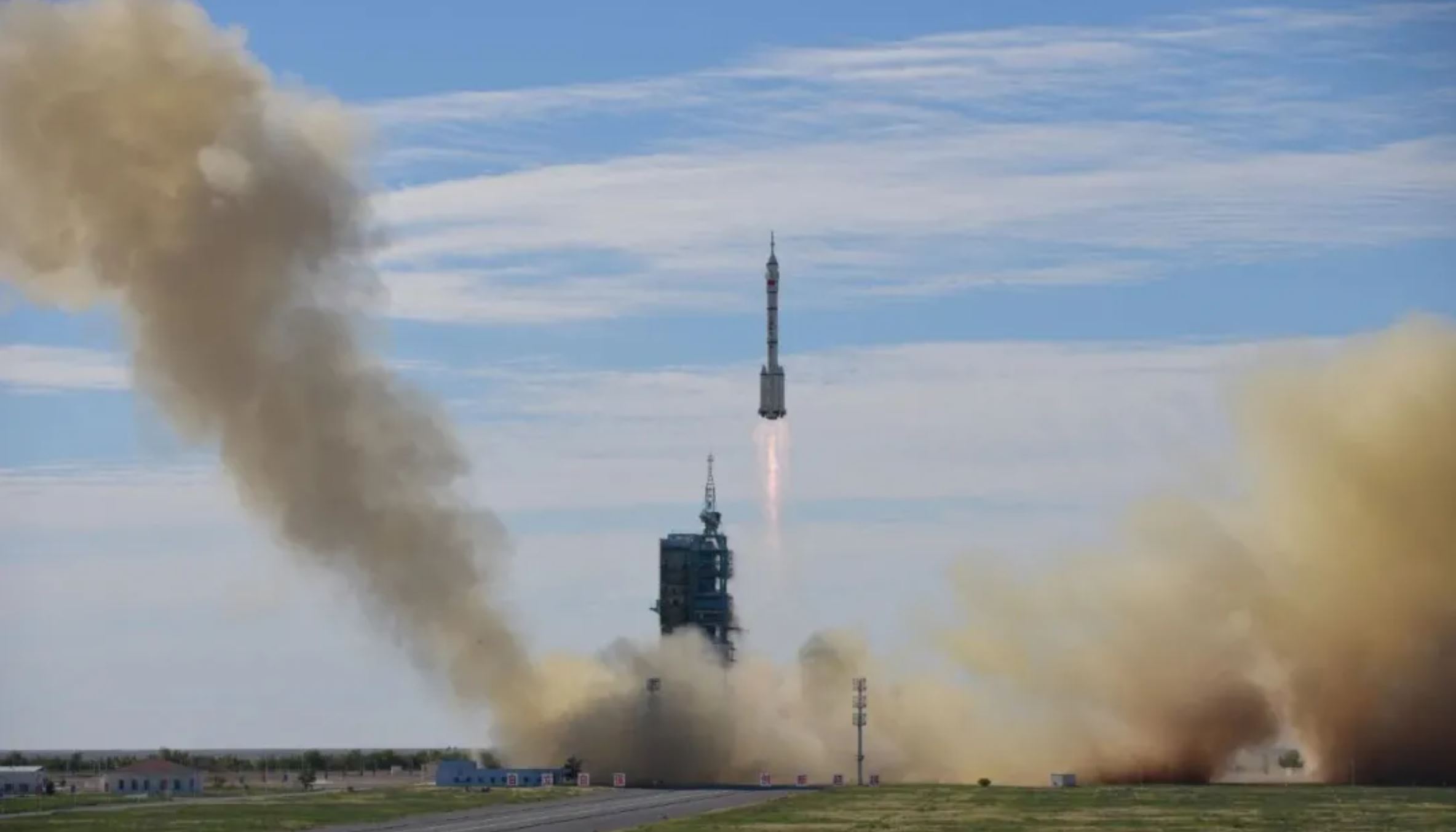
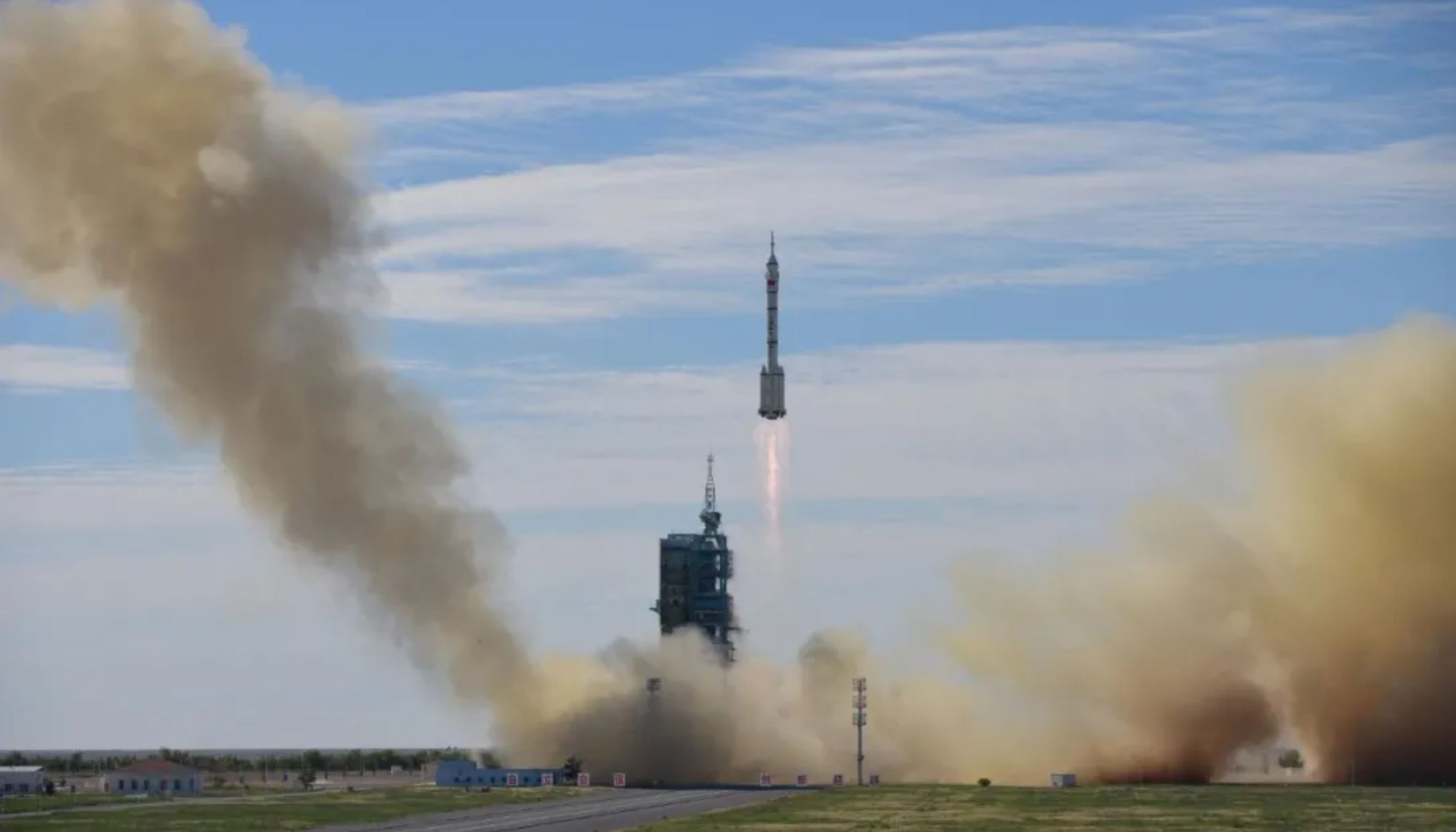
HELSINKI — China launched its experimental reusable spacecraft for the fourth time late Friday, once again maintaining strict secrecy around the mission.
State media Xinhua announced the launch of reusable experimental spacecraft via a Long March 2F rocket from Jiuquan Satellite Launch Center Feb. 7 local time without providing a time for liftoff.
Airspace close notices with drop zones matching those of the three previous flights were published early February, suggesting a launch window of between 10:50 and 11:10 p.m. Eastern, Feb. 6 (0350–0410 UTC, Feb. 7).
“The experimental spacecraft will conduct technological verification for reusable spacecraft, providing technical support for the peaceful use of space,” Xinhua reported, similar to statements for the spacecraft’s earlier missions. No further details were released.
U.S. Space Force catalog tracking will later reveal the orbit of the spaceplane. The mission will attract interest and scrutiny, particularly in terms of future maneuvers, the release of subsatellites and any subsequent rendezvous and proximity operations (RPOs).
The launch comes approximately 519 days after the previous mission ended with a landing at Lop Nur landing site in Xinjiang Autonomous Region, northwestern China. The gap between mission 1 and mission 2 was 697 days, and 220 days between missions 2 and 3.
All three earlier missions involved releasing a small satellite or object into orbit. The second and third missions involved the main spacecraft appearing to conduct RPOs with the object it released.
China has not provided images or information about its reusable spaceplane project. The Long March 2F launcher has a payload capacity of just over eight metric tons to low Earth orbit. This suggests that the spacecraft could be somewhat similar in size and function to U.S. Space Force’s X-37B spaceplane. Images of an apparent payload fairing for an earlier launch further this notion. Amateur optical imagery has also revealed images of the spacecraft in orbit.
The launch used a Long March 2F T variant rocket, a modified payload variant of the human-rated Long March 2F used to launch Shenzhou spacecraft. The mission was prepared and launched despite a temporary gap in emergency launch capabilities to Tiangong, namely a standby Long March 2F and Shenzhou spacecraft, in the wake of the Shenzhou 20 debris strike crisis triggered in early November.
The orbital reusable spacecraft may be intended to work in conjunction with a reusable suborbital first stage. This suborbital craft, which uses vertical takeoff and horizontal landing, was first tested in 2021. A second mission flew in August 2022.
The China Aerospace Science and Technology Corporation (CASC), which developed the spacecraft, announced plans for a fully reusable, two-stage-to-orbit (TSTO) space transportation system before the first launch. In 2022, CASC’s spaceplane project received national funding from the Natural Science Foundation of China.
The system’s development fits into a broader trend of China pushing to increase its access to space and developing reusable solutions for spaceflight, including recent tests of vertical takeoff, vertical landing Zhuque-3 and Long March 12A launchers.
Friday’s was China’s ninth orbital launch attempt of 2026, which includes two failures. CASC is preparing for an in-flight abort test of its Mengzhou crew spacecraft from Wenchang no earlier than Feb. 11.










Related Posts

Stay Informed With the Latest & Most Important News



Advertisement
-
 01Two Black Holes Observed Circling Each Other for the First Time
 -
 02From Polymerization-Enabled Folding and Assembly to Chemical Evolution: Key Processes for Emergence of Functional Polymers in the Origin of Life
 -
 03Astronomy 101: From the Sun and Moon to Wormholes and Warp Drive, Key Theories, Discoveries, and Facts about the Universe (The Adams 101 Series)
 -
 04True Anomaly hires former York Space executive as chief operating officer
 -
 05Φsat-2 begins science phase for AI Earth images
 -
 06Hurricane forecasters are losing 3 key satellites ahead of peak storm season − a meteorologist explains why it matters
 -
 07Binary star systems are complex astronomical objects − a new AI approach could pin down their properties quickly