
Now Reading: Cold weather delays earliest Artemis 2 launch opportunity
-
01
Cold weather delays earliest Artemis 2 launch opportunity


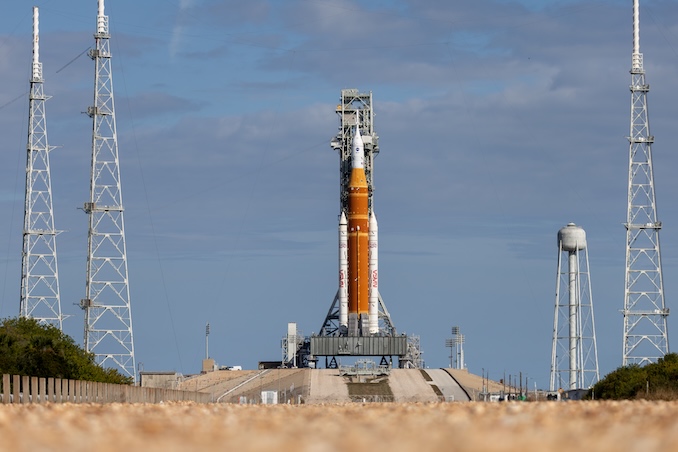
Abnormally cold weather forecast over the weekend for Florida delayed both the earliest possible launch date for the Artemis 2 mission and a crucial fueling test for the Space Launch System rocket.
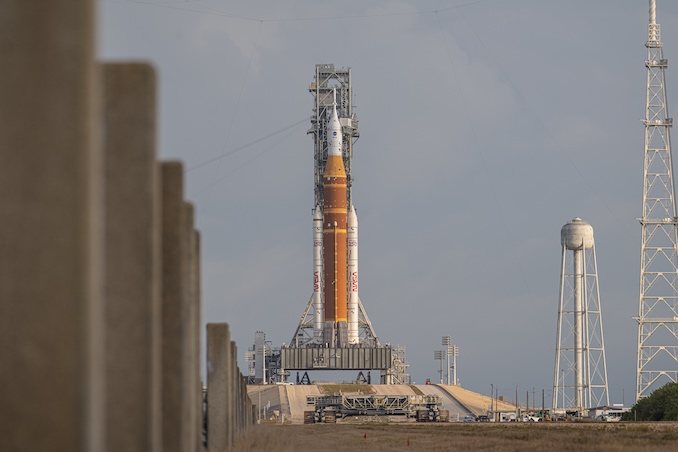
On Friday, NASA said in a statement that the plan to load the 322-foot-tall rocket with more than 730,000 gallons of liquid oxygen and liquid hydrogen would have to wait until the weather conditions improve. The agency is now aiming for Monday, Feb. 2 for the tanking portion of what’s known as the wet dress rehearsal.
“Over the past several days, engineers have been closely monitoring conditions as cold weather and winds move through Florida,” NASA said in a statement. “Managers have assessed hardware capabilities against the projected forecast given the rare arctic outbreak affecting the state and decided to change the timeline. Teams and preparations at the launch pad remain ready for the wet dress rehearsal.”
The testing delay also means that the first possible launch date for Artemis 2 will come no earlier than Feb. 8. The change reduces the available dates to launch Artemis 2 in February down to three options: Feb. 8, 10, or 11.
NASA said any additional delays to the start of the 49-hour countdown for the wet dress rehearsal would result in a “day for day change” to the possible launch schedule. A launch date won’t be finalized until after the data from the tanking test is analyzed.
The Artemis 2 mission will be the first crewed flight of the Orion spacecraft and will see humans attempt the closest approach to the Moon in more than 50 years.
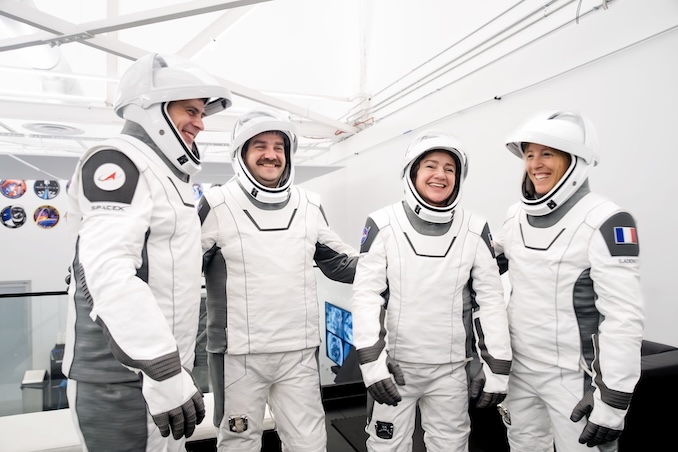
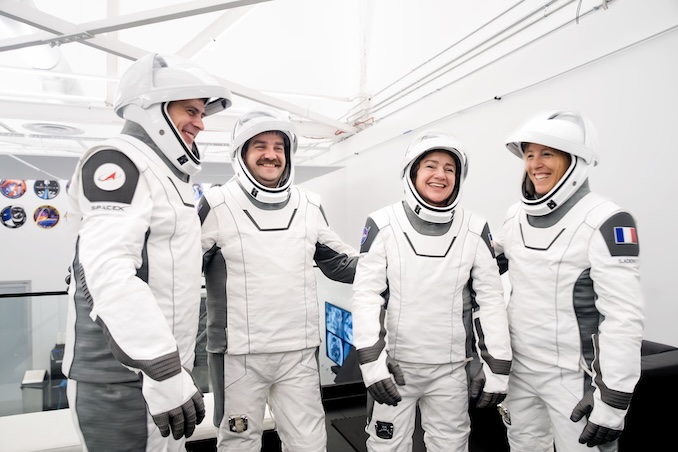
Simultaneous to the Artemis 2 schedule shuffling, NASA and SpaceX are in the final stretches of preparing for the slightly accelerated launch of the Crew-12 mission to the International Space Station. Two NASA astronauts, Jessica Meir and Jack Hathaway, will fly to the orbiting outpost alongside European Space Agency (ESA) astronaut Sophie Adenot and Roscosmos cosmonaut Andrey Fedyaev.
However, the flight date for that mission remains fluid as teams assess the upcoming launch opportunities for Artemis 2.
“We always think about how we can operate our missions safely and I just want to reassure you that that’s always in the front of our minds as we’re working these missions and trying to maximize the capabilities of our crews and maximize our opportunities to launch into space,” said Ken Bowersox, NASA’s associate administrator for its Space Operations Mission Directorate, during a media briefing on Friday.
Steve Stich, NASA’s Commercial Crew Program manager, said that while Feb. 11 is the earliest possible date that Crew-12 could fly, the priority for the agency will be giving as many opportunities for the Artemis 2 mission to launch. He said if the tanking test of the SLS rocket goes well and the flight readiness review clears Artemis 2 for launch on Feb. 8, it creates a couple different scenarios.
“If they launch or are in orbit, then we would defer all the way to the 19th. We would then stand down, let them have their operation,” Stich said. “If they get into a countdown and they attempt on the 8th and then have an issue where they stand down, then we could go a few days later, as early as the 13th.”
Additionally, a launch on either Feb. 10 or 11 would see a launch of Crew-12 no earlier than 11 days after. The priority then will be to see the planned 10-day Artemis 2 mission conclude before Crew-12 launches.
If NASA ultimately decides to forego the launch of Artemis 2 during the February window, then Crew-12 could launch as soon as Feb. 11 or 12.
“Depending on what launch date they (Artemis 2) launch on, we know what our earliest launch date would be. And then we also know, if they get into a countdown and were to have an issue, how early we can go,” Stich said. “We’ve laid out all the timelines relative to crew quarantine, when SpaceX will move their hardware to [Space Launch Complex 40], when we get into a static fire, dry dress.
“I would say those timelines will be a little dynamic because, in particular, if we get out to the launch pad and we’re trying to static fire around Artemis operations, we will work around Artemis in all those scenarios.”
One of the areas where NASA is trying to separate the missions is concerning the suit up room in the Neil Armstrong Operations and Checkouts building at the Kennedy Space Center in Florida. That’s where crews don their flight and entry suits and perform leak checks prior to heading out to the launch pad.
Another area for deconfliction is in the Department of Defense assets that are positioned in the unlikely event that there were an in-flight abort during ascent. Both the Artemis program and the Commercial Crew Program use similar capabilities provided by the DoD before reaching orbit.
Crew-12 will fly on the Dragon Freedom spacecraft, which will be its fifth flight. The Falcon 9 rocket first stage booster supporting the mission, tail number 1101, will make its second flight after launching the Starlink 6-88 mission at the beginning of January.
Lee Echerd, the senior mission manager for SpaceX’s Human Spaceflight Mission Management division, said B1101 will be the first to use the newly finished Landing Zone 40 (LZ-40) adjacent to the launch pad. Following stage separation during flight, the booster will flip and return to Cape Canaveral Space Force Station less than eight minutes after liftoff.
“This will be our primary landing site for Falcon 9 boosters that perform return to launch site going forward and we’ve completed all of the (Eastern) Range and Space Force certification to be ready for this mission,” Echerd said. “We still have access to Landing Zone 2, if we ever need it, but that would be primarily for Falcon Heavy launches, where we have two return to launch site side boosters.”
Whenever it launches, Crew-12 will dock to the zenith — or space-facing — port on the Harmony module to begin their roughly eight-month, long-duration mission.
Speaking from their pre-launch quarantine at the Johnson Space Center in Texas, Crew-12 Commander Jessica Meir said that she’s looking forward to speaking with the Artemis 2 crew, if they happen to be in space simultaneously.
“It would be really exciting to talk to Christina […] and also my classmate, Victor Glover and kind of my astronaut uncles, Reid Wiseman and Jeremy Hansen,” Meir said. “So hopefully, we’ll have the opportunity to do that connection.”










Related Posts
Stay Informed With the Latest & Most Important News
Previous Post
Next Post


Advertisement
-
 01Two Black Holes Observed Circling Each Other for the First Time
 -
 02From Polymerization-Enabled Folding and Assembly to Chemical Evolution: Key Processes for Emergence of Functional Polymers in the Origin of Life
 -
 03Astronomy 101: From the Sun and Moon to Wormholes and Warp Drive, Key Theories, Discoveries, and Facts about the Universe (The Adams 101 Series)
 -
 04True Anomaly hires former York Space executive as chief operating officer
 -
 05Φsat-2 begins science phase for AI Earth images
 -
 06Hurricane forecasters are losing 3 key satellites ahead of peak storm season − a meteorologist explains why it matters
 -
 07Binary star systems are complex astronomical objects − a new AI approach could pin down their properties quickly