
Now Reading: Congress’s SBIR standoff is slowing Space Force innovation — it must act now
-
01
Congress’s SBIR standoff is slowing Space Force innovation — it must act now


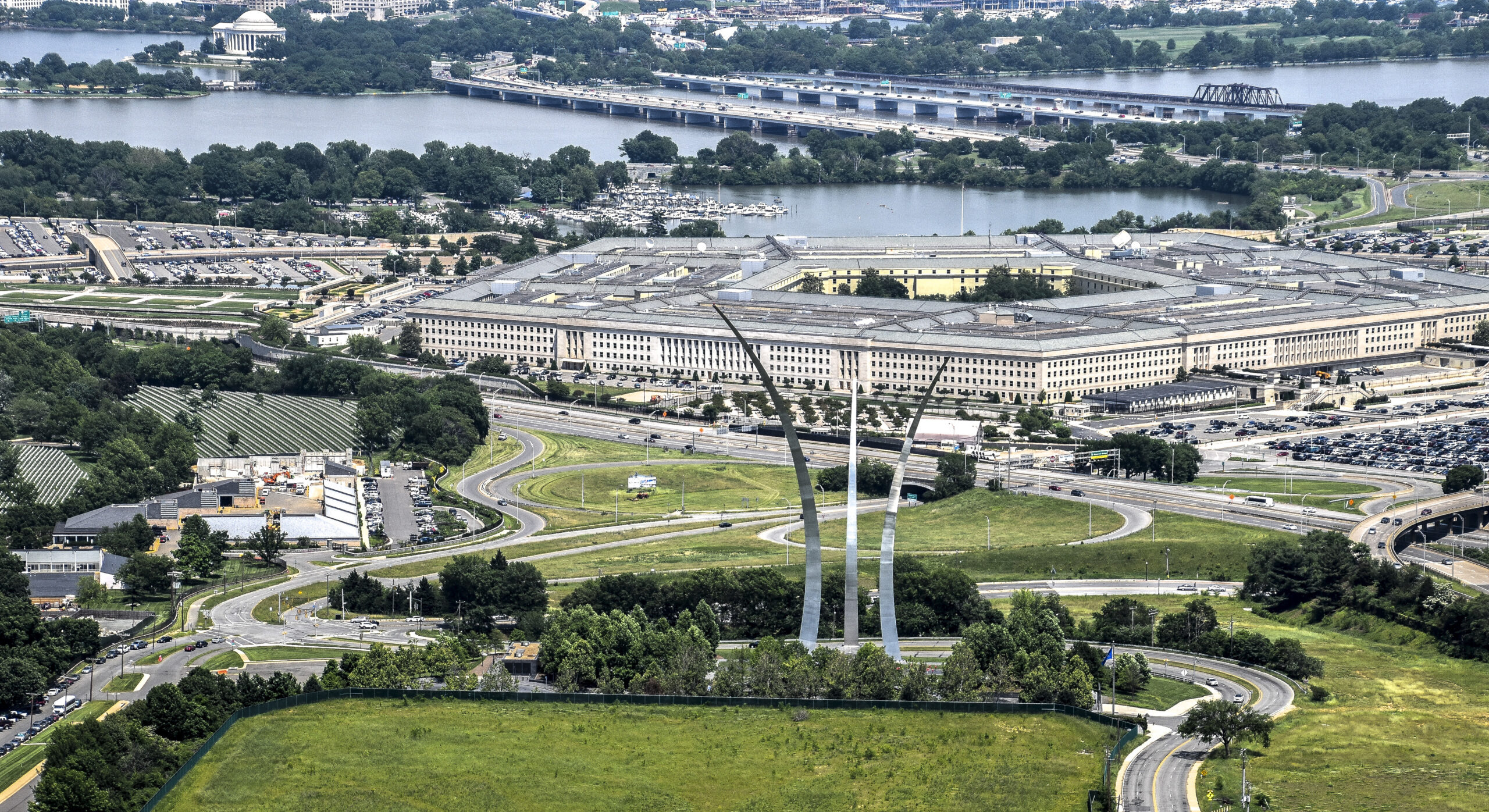

At a time when space is unmistakably a contested warfighting domain, the United States risks slowing its own progress not because of a lack of technology or talent, but because Congress has failed to act on renewing authority for critical small business innovation funding.
Senior Space Force acquisition officials have publicly warned that the lapse in the Small Business Innovation Research (SBIR) and Small Business Technology Transfer (STTR) programs is already putting space acquisition timelines at risk. Maj. Gen. Stephen Purdy, acting head of space acquisition for the Department of the Air Force, said at the Space Force Association’s Spacepower 2025 conference in Orlando, “I’m actually very concerned.” His concern captures the real-world impact of the current legislative impasse.
SBIR and STTR are essential enablers of defense innovation particularly for organizations like the Space Force that depend on small businesses and startups to push the technological frontier. But their funding ran out months ago, leaving the Space Force unable to effectively and rapidly leverage the agility and innovation of small businesses to meet critical national security needs in space. Congress needs to reauthorize them as soon as possible.
SBIR/STTR: America’s innovation bridge for space technology
Since their establishment, SBIR and STTR have served as America’s seed funding engines for high-risk, high-reward research and development. These programs funnel early capital to small firms exploring technologies that large primes often overlook. They help startups take ideas from concept to prototype and, importantly, signal credibility that attracts private investment.
For the Space Force, these awards are particularly valuable because they support technologies such as agile and maneuverable satellite buses, autonomous on-orbit operations, pace domain awareness tools and resilient networking and command systems.
Because SBIR/STTR funding dried up when the authority expired on September 30, 2025, new solicitations and awards are effectively on hold. Federal agencies cannot issue new funding until Congress reauthorizes these programs.
Space Force innovation is stalling while Congress debates structure
The SBIR/STTR lapse did not occur because the programs lack value or support. A bipartisan extension passed the House and was supported by many members of both parties in the Senate. However, competing legislative visions from a clean short-term extension to proposals for major reforms have left the issue unresolved.
With the lapse, many Space Force and Department of Defense acquisition offices have no choice but to halt new small business awards. That includes programs in rapid prototyping and agile space capabilities, where small firms are often the source of breakthrough ideas. In some cases, requests for proposals tied to maneuverable satellite platforms have been delayed because the funding authority simply isn’t there.
The warning Maj. Gen. Purdy issued at Spacepower is straightforward: parts of these programs may “need to be fixed,” but “let’s not throw the baby out with the bath water.” He emphasized that SBIR, along with related funds, “have been very beneficial to the Space Force” because of its large and innovative commercial ecosystem.
Why delay is a strategic risk — not a technical one
Space is no longer a domain where the U.S. enjoys uncontested dominance. Adversaries are fielding increasingly sophisticated space assets with capabilities that challenge U.S. satellites and space infrastructure. Responding effectively requires speed not just in acquisition processes, but in the science and technology pipeline itself.
SBIR/STTR are foundational to that pipeline because they:
- Lower barriers for nontraditional defense innovators
- Help small companies survive long enough to scale
- Improve the diversity of technologies available to military planners
- Signal to private capital markets that defense innovation is worth investing in.
When those authorities are inactive, both industry and government lose momentum and in a field where decades can define strategic advantage, that’s a steep price to pay.
A call to action for members of Congress
Congress can and must act now and members should hear this from constituents, defense stakeholders and national security professionals alike. Specifically, lawmakers should:
- Immediately reauthorize SBIR and STTR authorities for the Department of Defense even as part of a short-term measure to restore the ability to issue new awards as soon as possible.
- Pass a clean extension that prevents further gaps while broader reforms are debated, preserving continuity for small businesses and Space Force acquisition programs.
- Ensure any longer-term reforms maintain the program’s core strengths: broad participation, access for nontraditional firms, and clear pathways to commercialization and integration into defense systems.
A clear legislative vehicle already exists. Bills such as the SBIR/STTR Reauthorization Act of 2025 (e.g., H.R. 3169) have been introduced to extend these programs’ authority, but they need action from both chambers and swift passage.
Members of Congress should hear from constituents in the defense industrial base, particularly small firms and startups, that innovation authority in limbo threatens both economic competitiveness and national security.
Innovation delayed is capability denied
The Space Force was established to ensure that the United States maintains freedom of action in, from, and to space. That mission demands forward-leaning innovation pipelines that are responsive, resilient, and robust. Small businesses are essential partners in that effort.
As Maj. Gen. Purdy’s concern makes clear, the lapse in SBIR/STTR authority is not an issue of bureaucracy, but a real obstacle to progress. Proposals will slow up, and investment will stop. These issues and more will create a level of uncertainty for companies that might otherwise be powering the next generation of space capabilities.
Congress can fix this quickly by reauthorizing these programs and giving innovators the certainty they need to continue strengthening America’s edge in space. The alternative is to hand pause and possibly advantage to our strategic competitors.
In national security space, innovation delayed is capability denied. There is no time to waste
Brent Page is the Western Region Vice President of the Space Force Association.
SpaceNews is committed to publishing our community’s diverse perspectives. Whether you’re an academic, executive, engineer or even just a concerned citizen of the cosmos, send your arguments and viewpoints to opinion (at) spacenews.com to be considered for publication online or in our next magazine. If you have something to submit, read some of our recent opinion articles and our submission guidelines to get a sense of what we’re looking for. The perspectives shared in these opinion articles are solely those of the authors and do not necessarily represent their employers or professional affiliations.










Related Posts



Stay Informed With the Latest & Most Important News
Previous Post
Next Post





Advertisement
-
 01Two Black Holes Observed Circling Each Other for the First Time
 -
 02From Polymerization-Enabled Folding and Assembly to Chemical Evolution: Key Processes for Emergence of Functional Polymers in the Origin of Life
 -
 03Astronomy 101: From the Sun and Moon to Wormholes and Warp Drive, Key Theories, Discoveries, and Facts about the Universe (The Adams 101 Series)
 -
 04True Anomaly hires former York Space executive as chief operating officer
 -
 05Φsat-2 begins science phase for AI Earth images
 -
 06Hurricane forecasters are losing 3 key satellites ahead of peak storm season − a meteorologist explains why it matters
 -
 07Binary star systems are complex astronomical objects − a new AI approach could pin down their properties quickly