
Now Reading: Crew-12 launches to ISS
-
01
Crew-12 launches to ISS


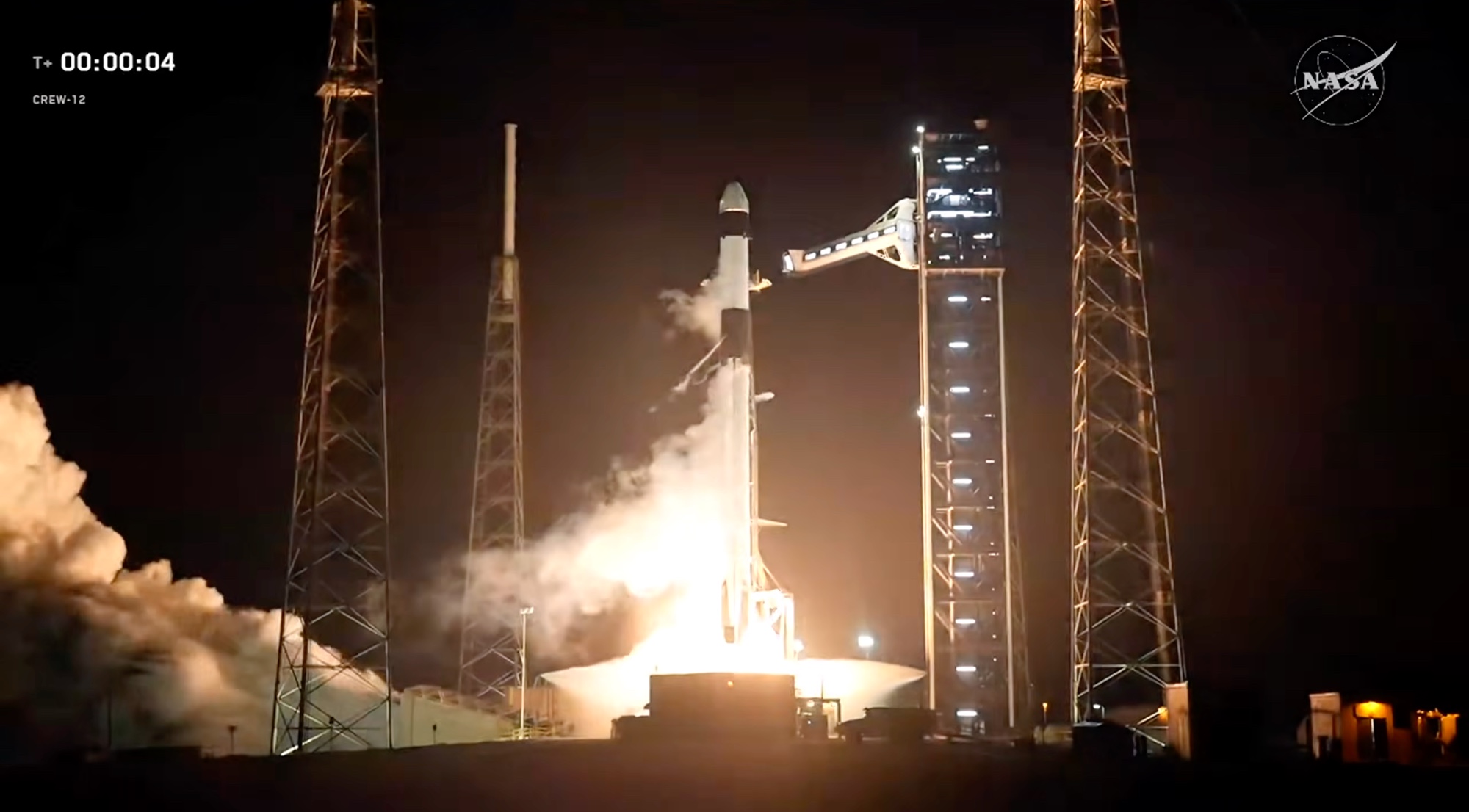

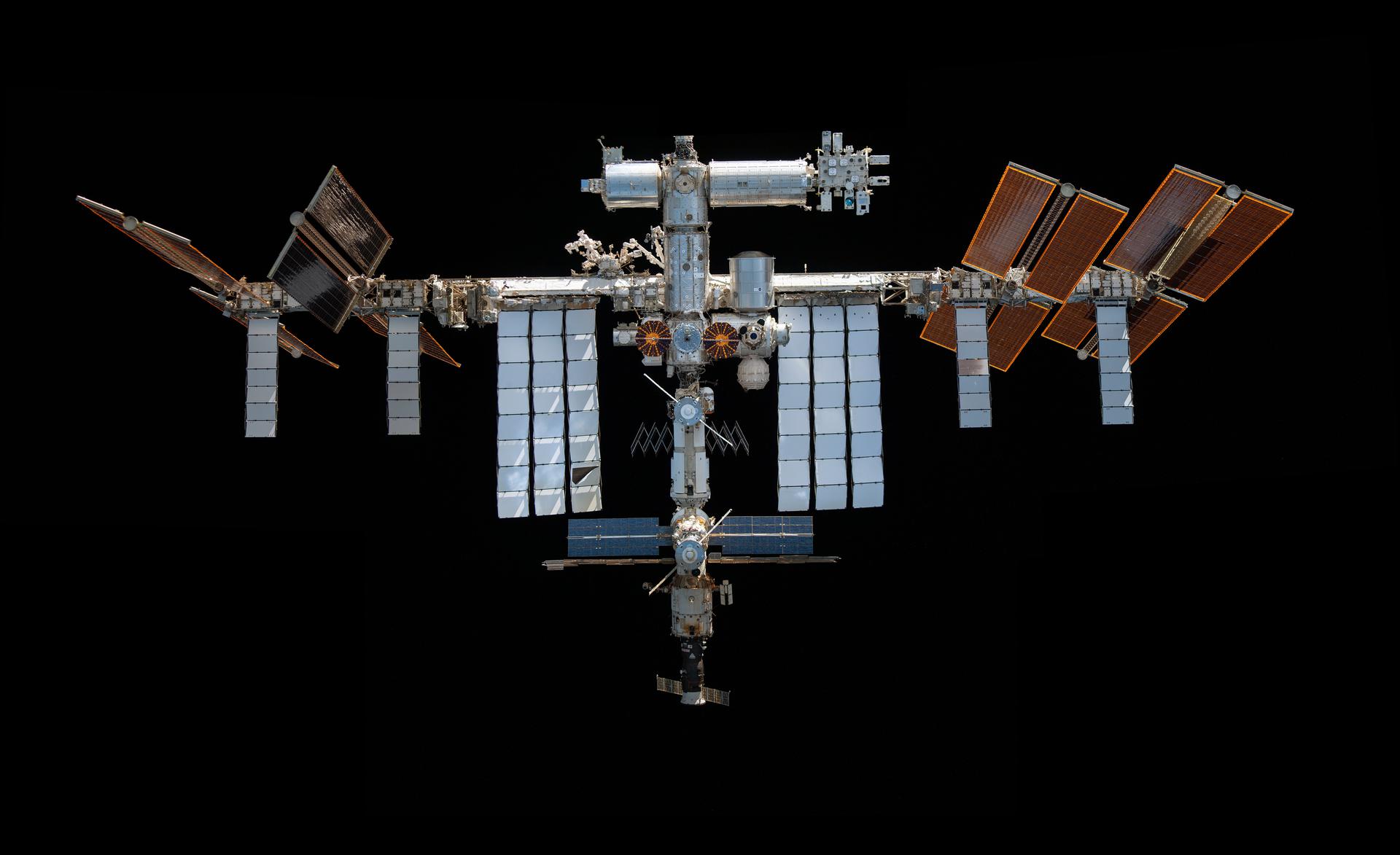
SAN FRANCISCO — A Falcon 9 launched a new crew to the International Space Station Feb. 13 to start a busy schedule of arriving and departing vehicles at the station.
A Falcon 9 launched from Space Launch Complex 40 at Cape Canaveral Space Force Station in Florida at 5:15 a.m. Eastern. The spacecraft placed into orbit the Crew Dragon spacecraft Freedom on the Crew-12 mission.
Crew-12 is commanded by NASA astronaut Jessica Meir with fellow NASA astronaut Jack Hathaway as pilot. European Space Agency astronaut Sophie Adenot and Roscosmos cosmonaut Andrey Fedyaev are mission specialists.
The spacecraft is scheduled to dock with the station at about 3:15 p.m. Eastern Feb. 14. It will remain there for eight months, longer than the six-month missions that have been typical for the last several years.
The launch was the second crewed mission from SLC-40, after Crew-9 launched from there in September 2024. NASA is moving all of its Falcon 9 launches, including Dragon crew and cargo missions that traditionally launched from Launch Complex 39A, to SLC-40 so that LC-39A can be devoted to Falcon Heavy and future Starship launches.
As part of that shift, crews recently removed the crew access arm from LC-39A. During a Feb. 9 briefing, Bill Gerstenmaier, vice president of build and flight reliability at SpaceX, said that was done to perform repairs on the arm, but once those repairs are complete the arm will not be reinstalled.
He added that the arm could be reinstalled if NASA required a Dragon launch from LC-39A. “In the timeframe it takes to get Falcon and Dragon we can be ready to get the pad up and operating,” he said.
The launch also featured the first Falcon 9 booster landing at a new pad at SLC-40, dubbed Landing Zone (LZ) 40. It replaces LZ-1, the original Falcon 9 landing site several kilometers away at Cape Canaveral. The Space Force has reassigned that pad, part of what it designated Launch Complex 13, to other launch providers.
“We’re going to land the first stage of the Falcon rocket right next to the launch pad. That makes for easier processing for us,” Gerstenmaier said. “It keeps launch and landing in the same general area.” The company has a similar setup at Space Launch Complex 4 at Vandenberg Space Force Base in California, with the landing pad next to the launch site.
SpaceX does still have access to LZ-2, a pad adjacent to LZ-1 at the Cape, which can be used for Falcon booster landings. It will also be used along with LZ-40 for the dual Falcon Heavy side booster landings.
Busy ISS schedule
The Crew-12 astronauts will join NASA astronaut Chris Williams and Roscosmos cosmonauts Sergey Kud-Sverchkov and Sergei Mikaev, who have been on the station since late November. They have been alone on the station since the early departure of Crew-11 a month ago, triggered by an unspecified medical condition with one of the four members of that mission.
Typically, crewed missions to the ISS overlap, a so-called direct handover where the departing crew can brief the arriving crew on station activities. Those briefings have instead taken place on the ground after Crew-11’s return.
Meir downplayed the importance of a direct handover at a Feb. 8 briefing. “There is nothing magic in it,” she said of a direct handover, noting her crew has talked with both Williams and the Crew-11 astronauts ahead of the launch. Meir also previously flew on the ISS, along with Fedyaev.
There are also advantages to an indirect handover. “During that direct handover it’s actually quite crowded on the space station,” she said, with 11 people on board. “It can make life a little bit more difficult.”
Once Crew-12 arrives there will be a busy schedule of arriving and departing vehicles. Dina Contella, NASA deputy ISS manager, said at the Feb. 9 briefing that the CRS-33 cargo Dragon spacecraft is expected to depart the station in late February. That spacecraft has been at the ISS since late August on an extended mission that included tests of station reboost using Dragon’s thrusters.
That will be followed in early March by the departure of the Japanese HTV-X1 cargo spacecraft and the Cygnus NG-23 cargo spacecraft in mid-March. Another Cygnus, NG-24, will launch to the station in early April.
Contella said NASA expected Roscosmos to launch a new Progress cargo spacecraft to the station in late March. Progress launches have been on hold after the sole Baikonur launch pad configured for Soyuz and Progress cargo spacecraft launch was damaged in a Soyuz launch to the ISS in November.
“They are still targeting March 22” for the next Progress launch, she said, deferring details on the launch pad repairs to Roscosmos. “We’ve not heard of any schedule changes associated with that.”
An uncrewed Boeing CST-100 Starliner spacecraft could also launch to the ISS as soon early April, NASA officials said at that briefing. That schedule depends on the readiness of the spacecraft as engineers work to complete and test modifications to the Starliner thrusters to correct issues seen on a crewed test flight in 2024.
At a Feb. 10 briefing, United Launch Alliance officials said they are holding a slot on its launch manifest in early April for that Starliner-1 mission, which will launch on an Atlas 5.










Related Posts
Stay Informed With the Latest & Most Important News
Previous Post
Next Post


Advertisement
-
 01Two Black Holes Observed Circling Each Other for the First Time
 -
 02From Polymerization-Enabled Folding and Assembly to Chemical Evolution: Key Processes for Emergence of Functional Polymers in the Origin of Life
 -
 03Astronomy 101: From the Sun and Moon to Wormholes and Warp Drive, Key Theories, Discoveries, and Facts about the Universe (The Adams 101 Series)
 -
 04True Anomaly hires former York Space executive as chief operating officer
 -
 05Φsat-2 begins science phase for AI Earth images
 -
 06Hurricane forecasters are losing 3 key satellites ahead of peak storm season − a meteorologist explains why it matters
 -
 07Binary star systems are complex astronomical objects − a new AI approach could pin down their properties quickly