
Now Reading: Earth observation’s adoption gap is a supply design problem
-
01
Earth observation’s adoption gap is a supply design problem


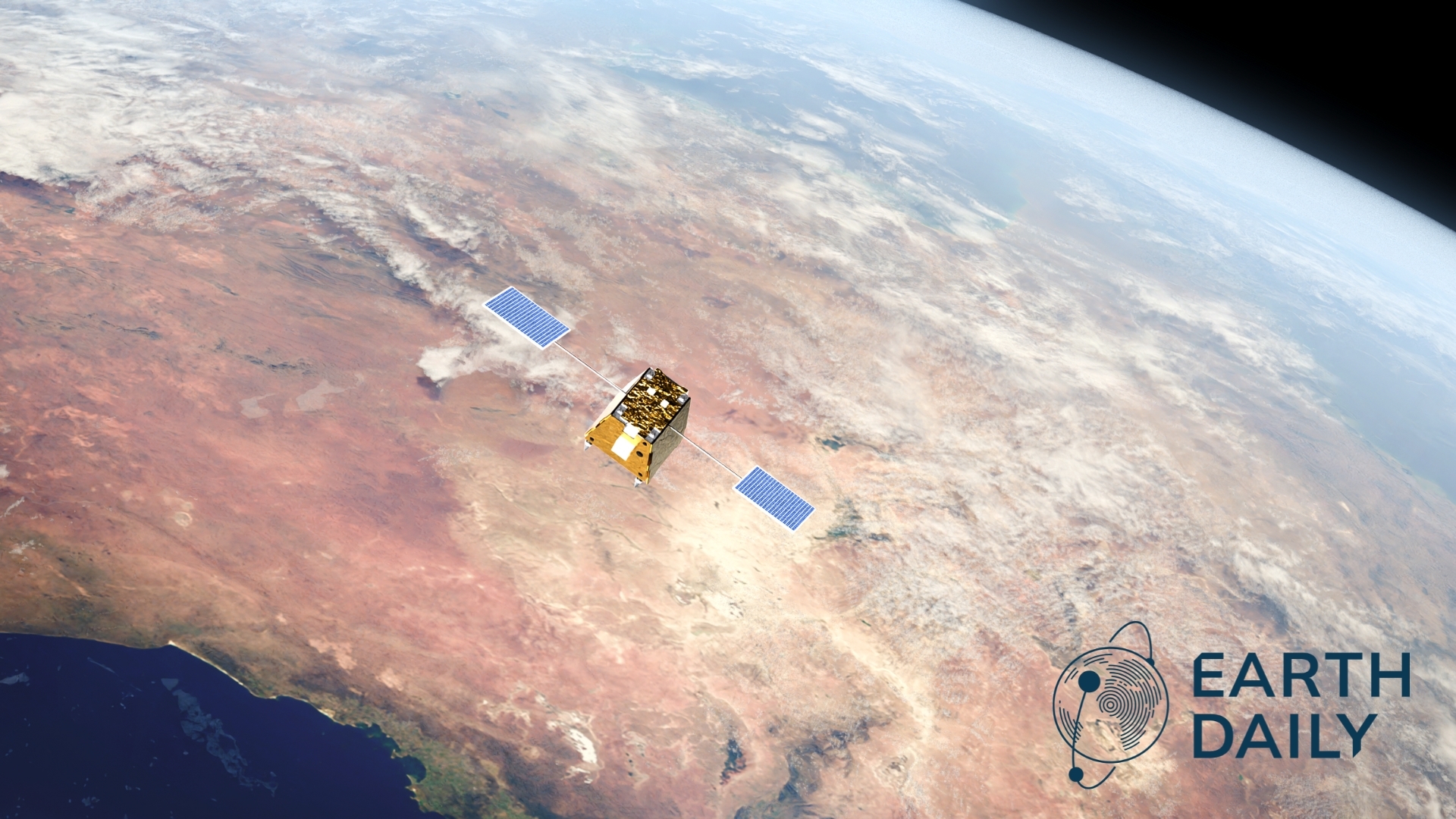

For more than a decade, the Earth observation industry has insisted that commercial adoption is just around the corner. Yet adoption outside defense remains limited, uneven, and difficult to sustain. The question is no longer whether EO is valuable, but whether the industry is delivering it in a form commercial users can actually use.
The market numbers make the contradiction clear. The global EO market is worth roughly $5 billion today and is projected to grow modestly over the next decade. At the same time, the World Economic Forum estimates that Earth observation could unlock more than $700 billion in annual economic value by 2030.
That value is concentrated in sectors such as agriculture, insurance, infrastructure and emergency response — domains where environmental conditions directly shape operational and financial outcomes.
And yet the gap between potential and reality remains stubbornly wide. The gap reflects how EO data is built, delivered and packaged, in ways that still reflect an earlier era optimized for defense users.
Much of the EO industry approached the commercial market as supply-first rather than problem-first. New sensors, constellations and spectral capabilities were launched with the assumption that use cases would emerge organically. In practice, commercial users were left trying to reverse-engineer solutions from raw data streams.
That dynamic did not arise by accident. It was shaped by who built and paid for Earth observation in the first place.
Defense gravity that shaped the industry
Defense and intelligence have long been anchor customers for commercial EO. But defense didn’t buy EO as a feature. It built the teams and infrastructure required to make raw imagery usable, and then embedded that capability directly into GEOINT and operational planning.
The economic incentives for suppliers followed naturally. Satellite operators and data providers optimized for high-resolution tasking, episodic collection, bespoke formats and delivery models suited to highly specialized users. That supply model worked exceptionally well for defense customers who could absorb complexity internally and treat imagery as a flexible input rather than a finished product.
But those same assumptions carried forward into the commercial market, one with very different constraints, capacities and expectations.
Where continuity meets a capacity gap
Agriculture, insurance, utilities and environmental agencies all depend on information that behaves consistently over time. In practice, EO supply often does the opposite. Sensors change. Revisit patterns vary. Cloud cover interrupts collection. Time series break just when continuity matters most.
In agriculture, the challenge is easy to see. Crop-modelling depends on multi-year, multi-sensor records that remain comparable across seasons. Outside research settings, that continuity is rare, and most commercial users lack the staff or infrastructure to operationalize it.
This is not a failure of analytics or imagination. It is a mismatch between how EO data is delivered and how decisions are actually made. Adoption studies and multilateral assessments have repeatedly shown that non-expert operational users struggle when EO arrives as raw inputs rather than usable information. The Group on Earth Observations’ Post-2025 Strategy reflects this reality, calling for a shift toward user-driven “Earth intelligence” that prioritizes relevance, continuity, and usability.
What commercial organizations need are solutions that fit into everyday workflows, not data streams that require rebuilding expertise for every use case.
Why pilots rarely become products
This mismatch explains why EO has produced waves of pilots but few scaled deployments. Pilots often succeed because they rely on curated datasets: hand-cleaned imagery, manually harmonized time series or one-off analytic pipelines built specifically for demonstration.
As long as pilots are designed to succeed under ideal conditions rather than survive real operations, they will continue to be mistaken for progress. The minute a pilot is pushed into full operational use, the cracks show. Models trained on inconsistent data stop working across contexts.
A recent FAO report reinforces this point, emphasizing that Earth observation only delivers sustained value for food systems when data is continuous over long time horizons, comparable across regions and years, and integrated into institutional decision-making, rather than deployed through short-term projects or isolated pilots.
Rebuilding the EO supply stack
If commercial adoption is going to scale, it won’t be determined by launch cadence alone. More satellites will expand the market, but adoption ultimately depends on whether organizations can use Earth observation in routine decisions.
Most commercial users need information they can combine across sources, compare season to season and trust year after year. Achieving that depends largely on work done on the ground: calibration, cloud handling, gap filling and maintaining time series that don’t break as sensors change.
This exposes a structural limitation in how most EO systems are built. Constellations are typically optimized for individual capabilities, not long-term comparability. Over time, that shows up as uneven revisit, spectral mismatches and datasets that can’t be reliably compared from one period to the next. This can be addressed by treating constellation design as part of the supply model, not a separate technical layer.
Our planned constellation at EarthDaily, for example, is designed around repeatability rather than one-off tasking, aimed at delivering consistent observations that hold up over long horizons.
Fix the supply model to fix the adoption problem
If Earth observation is going to scale commercially, the industry needs to change how supply is designed and evaluated, with a clear focus on how data can be integrated into institutional decision-making. That responsibility does not sit with any single actor, but with the EO ecosystem as a whole.
First, data providers need to design offerings around operational continuity, not individual scenes or sensors. That means choosing continuity over novelty — keeping data comparable across years and sensors, even when that limits rapid iteration.
Second, operators and integrators need to recognize that usability is not a downstream fix. If data only works after heavy customization, it was never designed for scale.
Third, buyers and procurement teams need to change how they evaluate EO. Instead of asking only about resolution or revisit, they should be asking whether outputs remain comparable year to year and whether products can survive real operational conditions without constant rework.
Environmental volatility is only raising the stakes. Agriculture, insurance, infrastructure and environmental management already depend on consistent, trustworthy insight to function.
Only once the supply model is aligned with how decisions are made can Earth observation move from promise to practice over the next decade.
Eric von Eckartsberg is Chief Revenue Officer at EarthDaily. He works closely with enterprise, government and commercial users focused on turning Earth observation data into operational capabilities.
SpaceNews is committed to publishing our community’s diverse perspectives. Whether you’re an academic, executive, engineer or even just a concerned citizen of the cosmos, send your arguments and viewpoints to opinion (at) spacenews.com to be considered for publication online or in our next magazine. If you have something to submit, read some of our recent opinion articles and our submission guidelines to get a sense of what we’re looking for. The perspectives shared in these opinion articles are solely those of the authors and do not necessarily represent their employers or professional affiliations.










Related Posts

Stay Informed With the Latest & Most Important News
Previous Post
Next Post


Advertisement
-
 01Two Black Holes Observed Circling Each Other for the First Time
 -
 02From Polymerization-Enabled Folding and Assembly to Chemical Evolution: Key Processes for Emergence of Functional Polymers in the Origin of Life
 -
 03Astronomy 101: From the Sun and Moon to Wormholes and Warp Drive, Key Theories, Discoveries, and Facts about the Universe (The Adams 101 Series)
 -
 04True Anomaly hires former York Space executive as chief operating officer
 -
 05Φsat-2 begins science phase for AI Earth images
 -
 06Hurricane forecasters are losing 3 key satellites ahead of peak storm season − a meteorologist explains why it matters
 -
 07Binary star systems are complex astronomical objects − a new AI approach could pin down their properties quickly