
Now Reading: Evolutionary Stasis And Homogeneous Selection Structure Microbial Communities In The Deep Subseafloor Sedimentary Biosphere
-
01
Evolutionary Stasis And Homogeneous Selection Structure Microbial Communities In The Deep Subseafloor Sedimentary Biosphere

Evolutionary Stasis And Homogeneous Selection Structure Microbial Communities In The Deep Subseafloor Sedimentary Biosphere

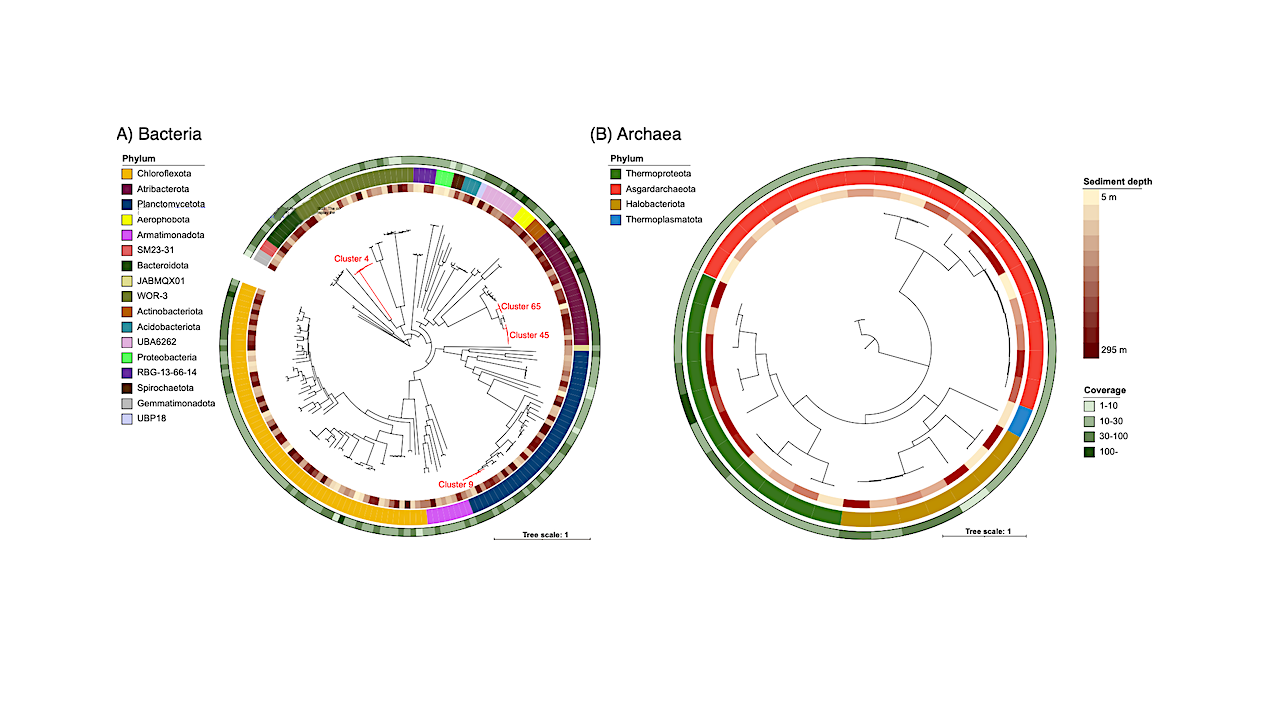
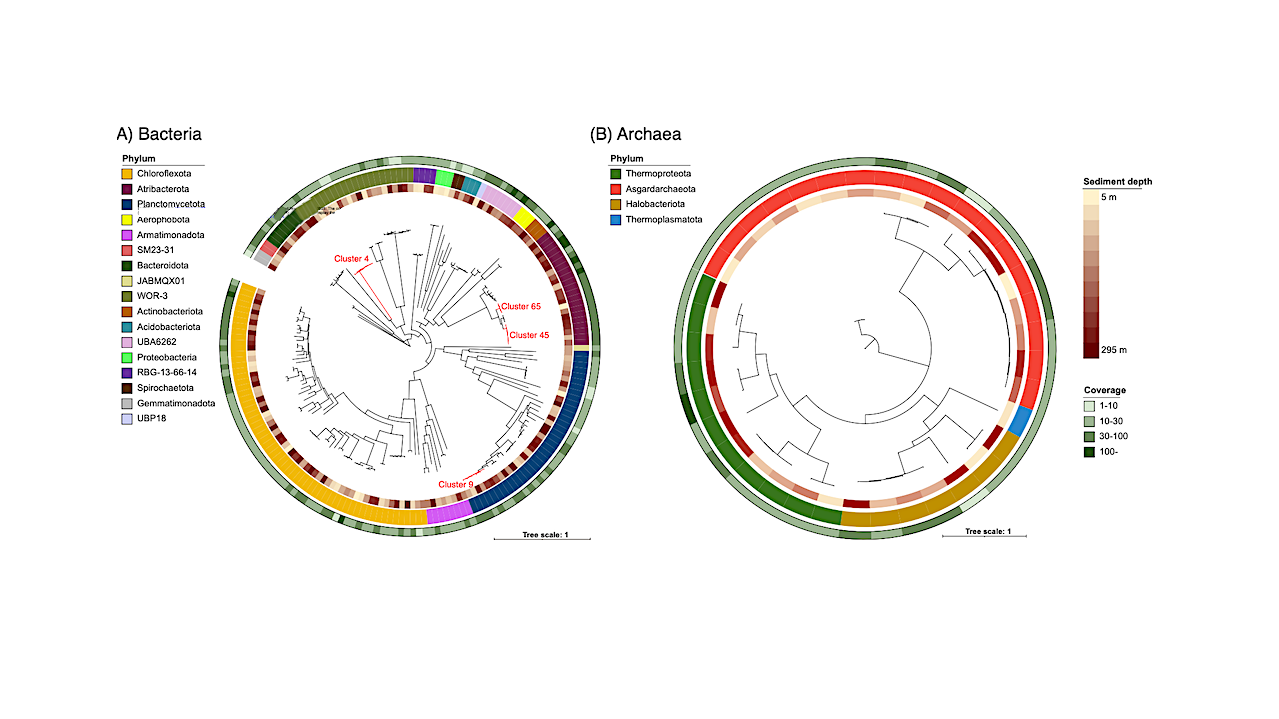
Phylogenetic trees constructed using the GTDB-Tk. The trees of (a) 197 bacterial and (b) 27 archaeal high-quality MAGs obtained in this study. The concentric rings surrounding each tree represent, from innermost to outermost, the sediment depth from which the MAG was recovered (5 m to 295 m), the phylum-level classification, and the average MAG coverage. In the bacterial tree (a), clusters marked in red text indicate groups of six or more MAGs with an ANI>97%, which were selected to analyse recombination-to-mutation ratios. The scale bar indicates the expected number of substitutions per site. ANI average nucleotide identity, GTDB-Tk Genome Taxonomy Database Toolkit, MAG metagenome-assembled genome. — biorxiv.org
The subseafloor biosphere, one of the Earth’s largest and most stable microbial habitats, mainly consists of energy-limited sediments where microbial life persists over geological timescales.
However, the mechanisms governing microbial community assembly and evolution under condition of extreme energy limitation remains unclear. Here, we analysed a 296 m sediment core off the Shimokita Peninsula using amplicon sequencing, metagenomics, and genome-resolved analyses from 31 depth intervals spanning ∼480 kyr.
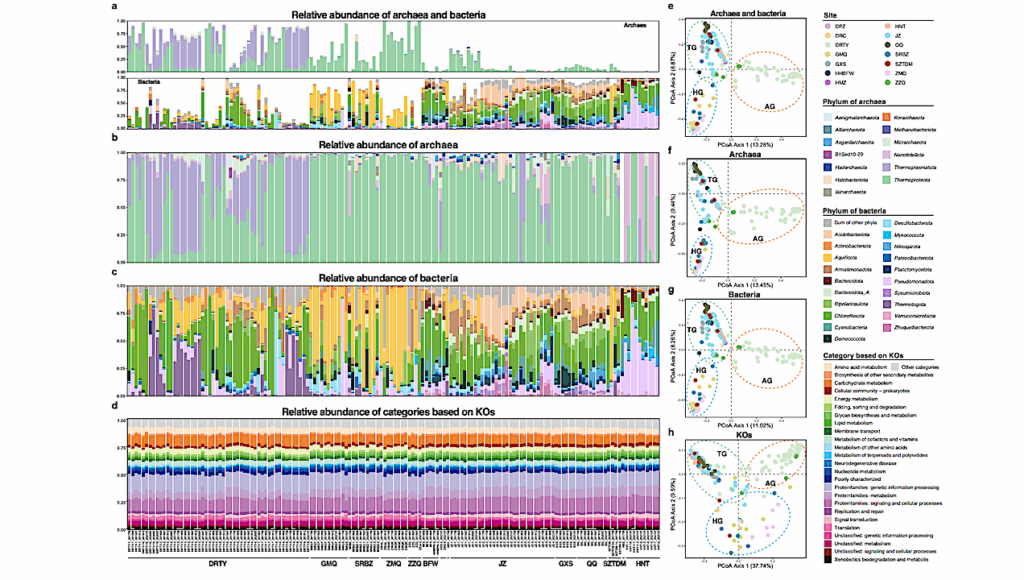
The microbial community composition was governed primarily by homogeneous selection, consistent with persistent environmental uniformity during burial. Genome-resolved analyses of 224 high-quality metagenome-assembled genomes revealed highy conserved gene repertoires and uniformly low ratios of non-synonymous-to-synonymous substitutions, suggesting strong purifying selection with minimal genomic changes over this timescale.
Our results indicate that evolutionary stasis is a pervasive feature of microbial life in deep subseafloor sediments, and propose a conceptual framework linking long-term environmental stability to genomic preservation in the Earth’s most persistent biosphere.

Sediment core from Site C9001. Left: Lithology of the core (adapted from 38). Red circles indicate the depths of the samples used in this study. Middle: Sulphate concentration in the pore water of the sediment samples. Concentration data have been reported previously39. The blue dashed line indicates the sulphate concentration of seawater (28 mM). Right: Microbial cell concentration in the sediment samples determined by fluorescence microscopy using SYBR Green I staining1 . mbsf m below the seafloor. — biorxiv.org
Astrobiology,











Related Posts
Stay Informed With the Latest & Most Important News




Advertisement
-
 01Two Black Holes Observed Circling Each Other for the First Time
 -
 02From Polymerization-Enabled Folding and Assembly to Chemical Evolution: Key Processes for Emergence of Functional Polymers in the Origin of Life
 -
 03Astronomy 101: From the Sun and Moon to Wormholes and Warp Drive, Key Theories, Discoveries, and Facts about the Universe (The Adams 101 Series)
 -
 04True Anomaly hires former York Space executive as chief operating officer
 -
 05Φsat-2 begins science phase for AI Earth images
 -
 06Hurricane forecasters are losing 3 key satellites ahead of peak storm season − a meteorologist explains why it matters
 -
 07Binary star systems are complex astronomical objects − a new AI approach could pin down their properties quickly