
Now Reading: Experimental Insights Into The Azotosome Hypothesis In Titan’s Lake Fluid
-
01
Experimental Insights Into The Azotosome Hypothesis In Titan’s Lake Fluid


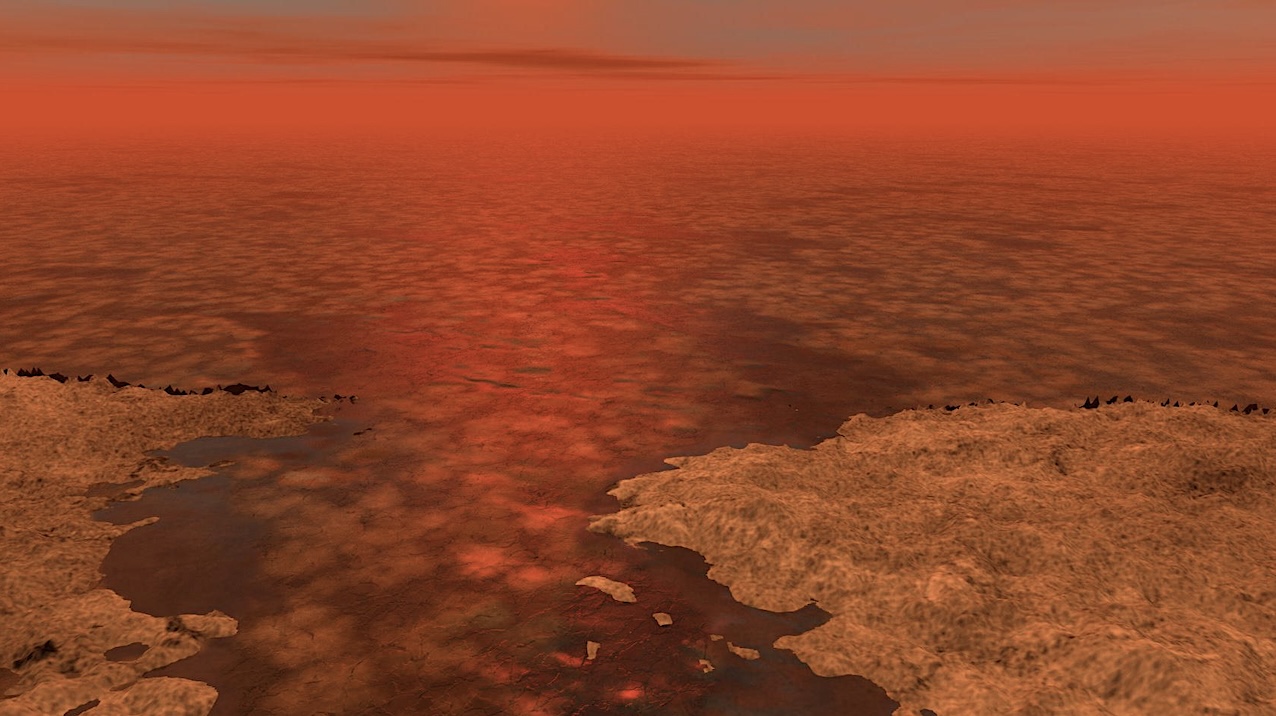
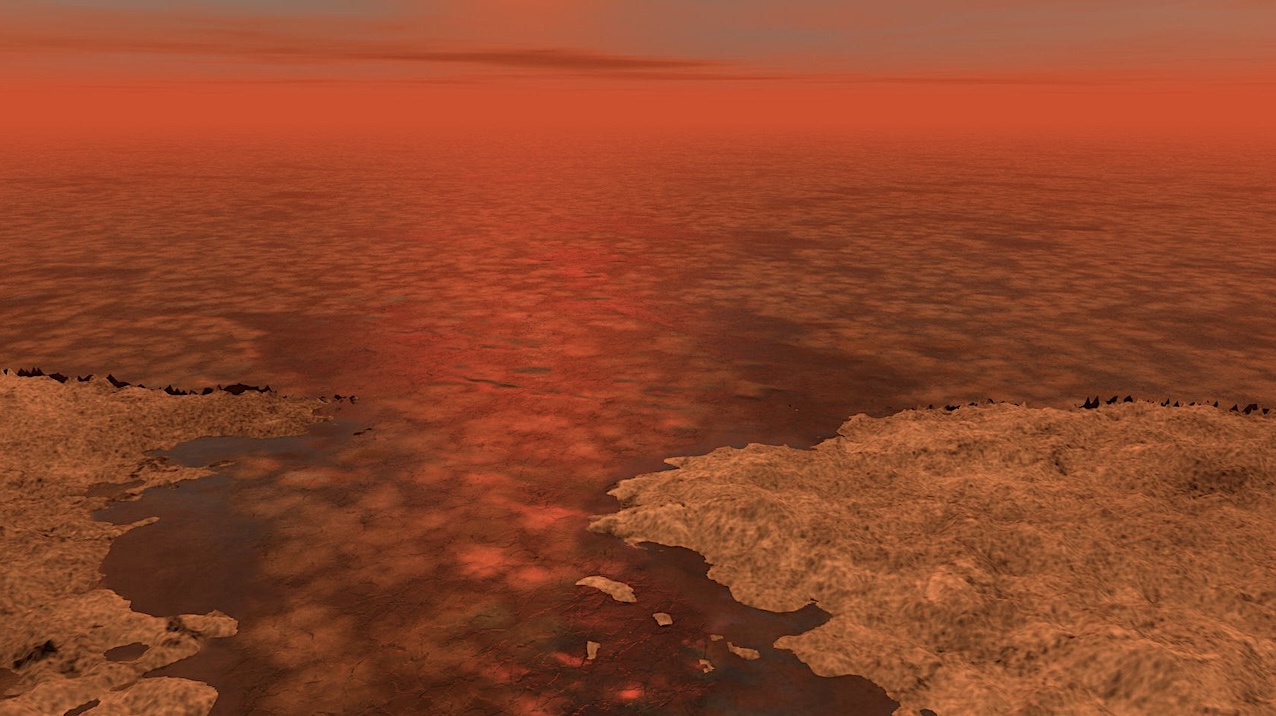
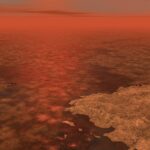
Hydrocarbon lakes on Titan – NASA
Since the discovery of hydrocarbon lakes and seas on Saturn’s moon Titan, there has been much speculation on whether these could serve as suitable environments to host exotic life.
A decade ago, molecular dynamic simulations suggested that amphiphilic cyanide species such as acrylonitrile could self-assemble in these cold, nonpolar liquids to form stable closed membranes known as azotosomes, potentially compartmentalizing complex biochemical reactions.
A subsequent thermodynamic study in 2020, however, concluded that azotosomes cannot exist under Titan’s conditions. Motivated by these incongruent computational results, this work undertakes the first experimental test of the azotosome hypothesis where we characterize acrylonitrile-methane and acrylonitrile-ethane mixtures under simulated Titan conditions using a combination of differential scanning calorimetry and Raman microscopy.
The results indicate that acrylonitrile forms a stable molecular cocrystal with ethane while exhibiting little changes in the presence of liquid methane under experimental timescales.
These findings suggest that the acrylonitrile-based azotosome structure would be unlikely to form in Titan’s lake fluids.
Astrobiology, Astrochemistry,











Related Posts
Stay Informed With the Latest & Most Important News
Previous Post
Next Post


Advertisement
-
 01Two Black Holes Observed Circling Each Other for the First Time
 -
 02From Polymerization-Enabled Folding and Assembly to Chemical Evolution: Key Processes for Emergence of Functional Polymers in the Origin of Life
 -
 03Astronomy 101: From the Sun and Moon to Wormholes and Warp Drive, Key Theories, Discoveries, and Facts about the Universe (The Adams 101 Series)
 -
 04True Anomaly hires former York Space executive as chief operating officer
 -
 05Φsat-2 begins science phase for AI Earth images
 -
 06Hurricane forecasters are losing 3 key satellites ahead of peak storm season − a meteorologist explains why it matters
 -
 07Binary star systems are complex astronomical objects − a new AI approach could pin down their properties quickly