
Now Reading: Extreme Environmental Tolerance And Space Survivability Of The Moss, Physcomitrium patens
-
01
Extreme Environmental Tolerance And Space Survivability Of The Moss, Physcomitrium patens

Extreme Environmental Tolerance And Space Survivability Of The Moss, Physcomitrium patens

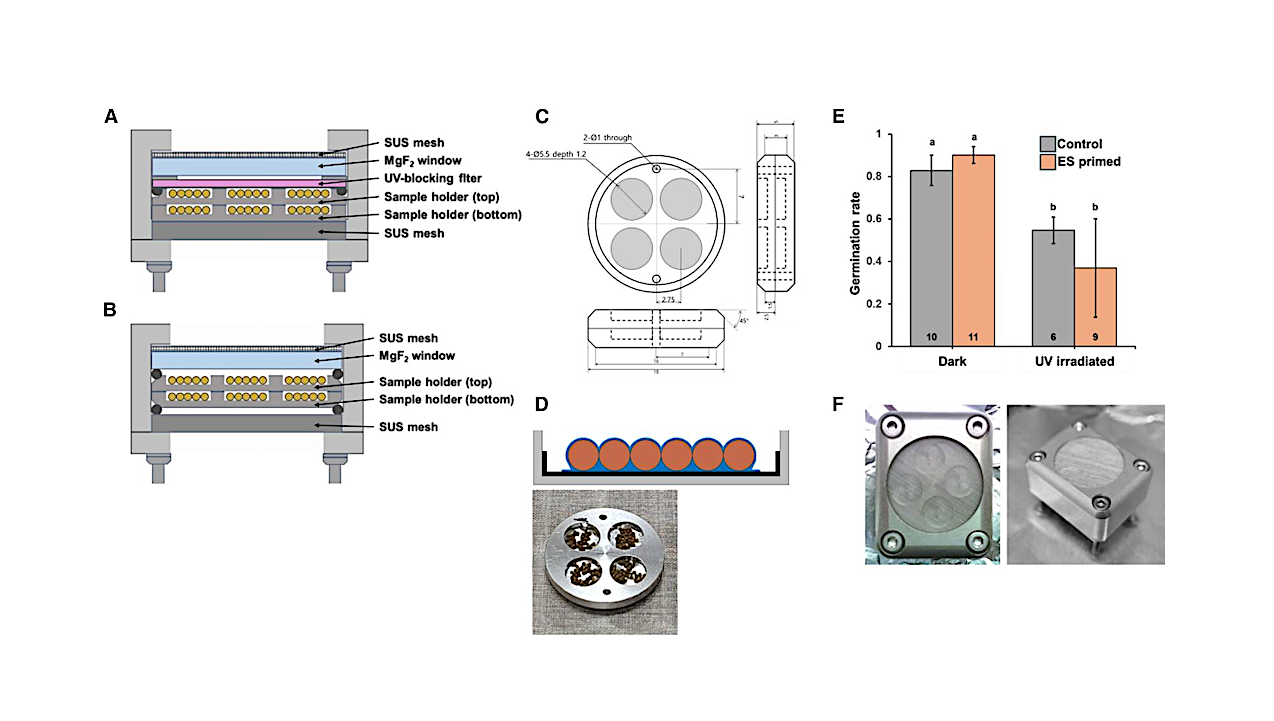
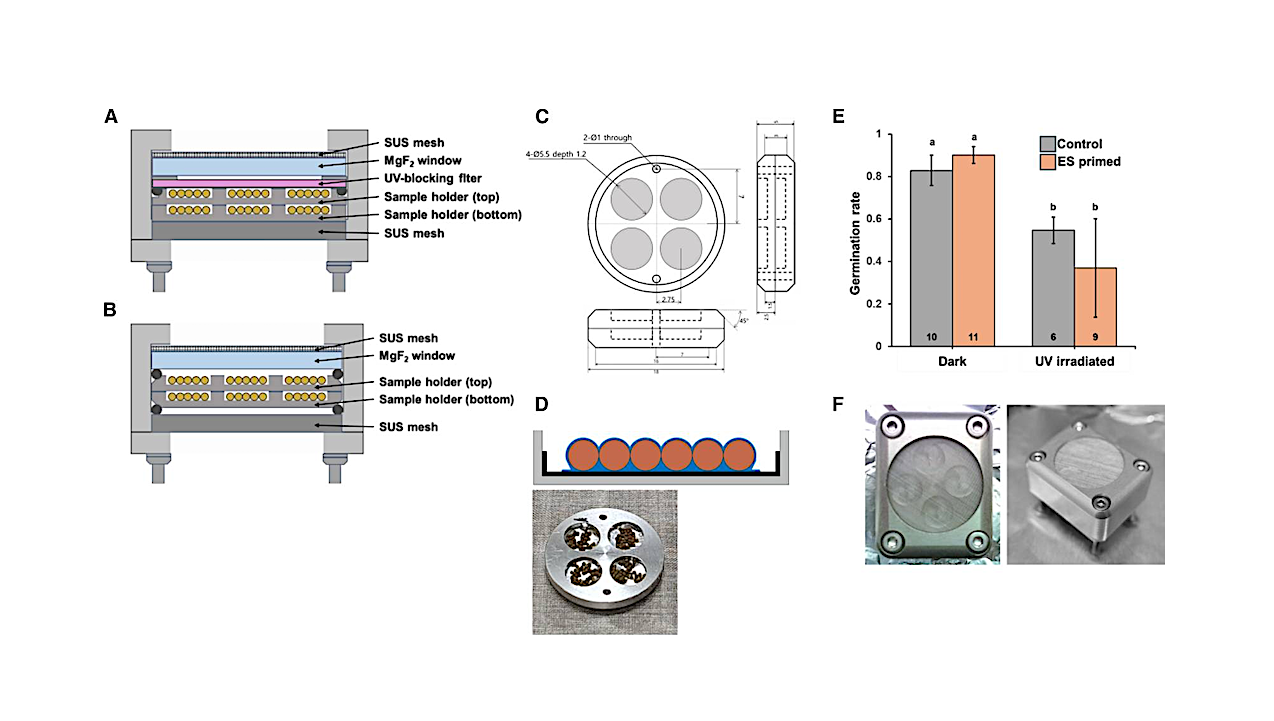
Design of the space exposure unit and assemblage of samples for the space exposure experiment (A) The space exposure unit with a UV-blocking filter installed. A UV-blocking filter, which only allows light above 400 nm to pass, was added below the MgF2 window. A double-layered sample holder was installed, designed so that the samples placed in the lower section would not be exposed to light. (B) The space exposure unit without a UV-blocking filter installed.(C) Design of sample holder (unit: mm). (D) Top: a schematic showing a single well (5.5 mm in diameter) with samples (sporophytes) installed. Brown: sporophytes, blue: ES of cyanobacteria as adhesive, black: aluminum foil, gray: sample holder. Bottom: the actual appearance of the sporophytes installed in the sample holder. (E) Impact assessment of ES. After treating both ES-primed sporophytes and control sporophytes with dark conditions or 2 MJ/m2 of UVC (254 nm), the germination rate was observed. Different letters indicate statistically significant differences as determined by ANOVA with Tukey’s HSD post hoc test. The numbers inside the bar graphs represent the sample sizes. Error bar: SD. (F) The completed space exposure unit. — iScience via PubMed
Climate change highlights the importance of understanding life’s survival limits for addressing global challenges and supporting future human habitation beyond Earth. Plants, as photosynthetic organisms, play a vital role in sustaining life.
Bryophytes, such as mosses, show notable extremotolerance, but despite studies on environmental responses in the model moss Physcomitrium patens, its survival under extreme conditions in space remains unclear.
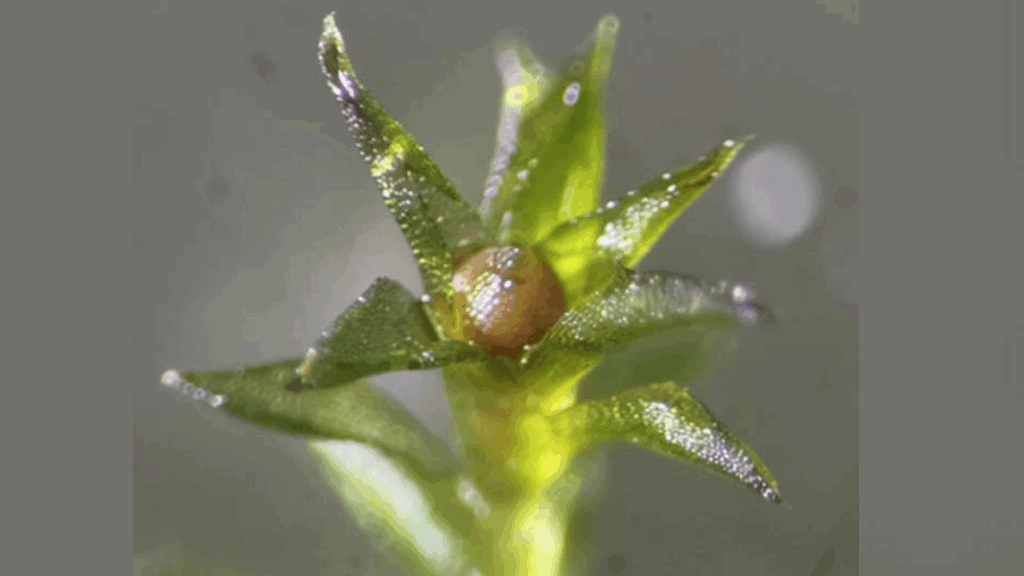
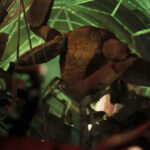
A reddish-brown sporophyte can be seen at the top center of a leafy gametophore. This capsule contains numerous spores inside. Mature sporophytes like these were individually collected and used as samples for the space exposure experiment conducted on the exposure facility of the International Space Station (ISS). CREDIT Tomomichi Fujita
We tested protonemata, brood cells, and spores encased in sporangium under simulated space environments, identifying spores as the most resilient, and subsequently exposed them to the space environment outside the International Space Station. After 9 months in space, over 80% of the spores survived, retaining their ability to germinate.
These results demonstrate the remarkable resilience of P. patens spores in space and reveal the potential of terrestrial plants to endure extreme environments, providing insight into bryophyte adaptation and offering a foundation for future applications in space exploration and extraterrestrial habitats.
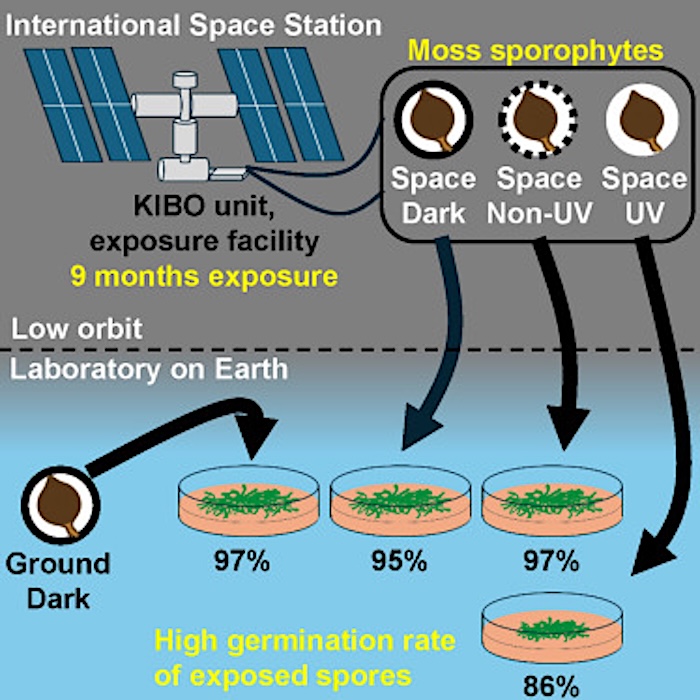
Graphical abstract
Extreme environmental tolerance and space survivability of the moss, Physcomitrium patens,
iScience via PubMed (open access)
Astrobiology,











Related Posts
Stay Informed With the Latest & Most Important News
Previous Post
Next Post


Advertisement
-
 01Two Black Holes Observed Circling Each Other for the First Time
 -
 02From Polymerization-Enabled Folding and Assembly to Chemical Evolution: Key Processes for Emergence of Functional Polymers in the Origin of Life
 -
 03Astronomy 101: From the Sun and Moon to Wormholes and Warp Drive, Key Theories, Discoveries, and Facts about the Universe (The Adams 101 Series)
 -
 04True Anomaly hires former York Space executive as chief operating officer
 -
 05Φsat-2 begins science phase for AI Earth images
 -
 06Hurricane forecasters are losing 3 key satellites ahead of peak storm season − a meteorologist explains why it matters
 -
 07Binary star systems are complex astronomical objects − a new AI approach could pin down their properties quickly