
Now Reading: FAA projects continuing growth in commercial space transportation
-
01
FAA projects continuing growth in commercial space transportation


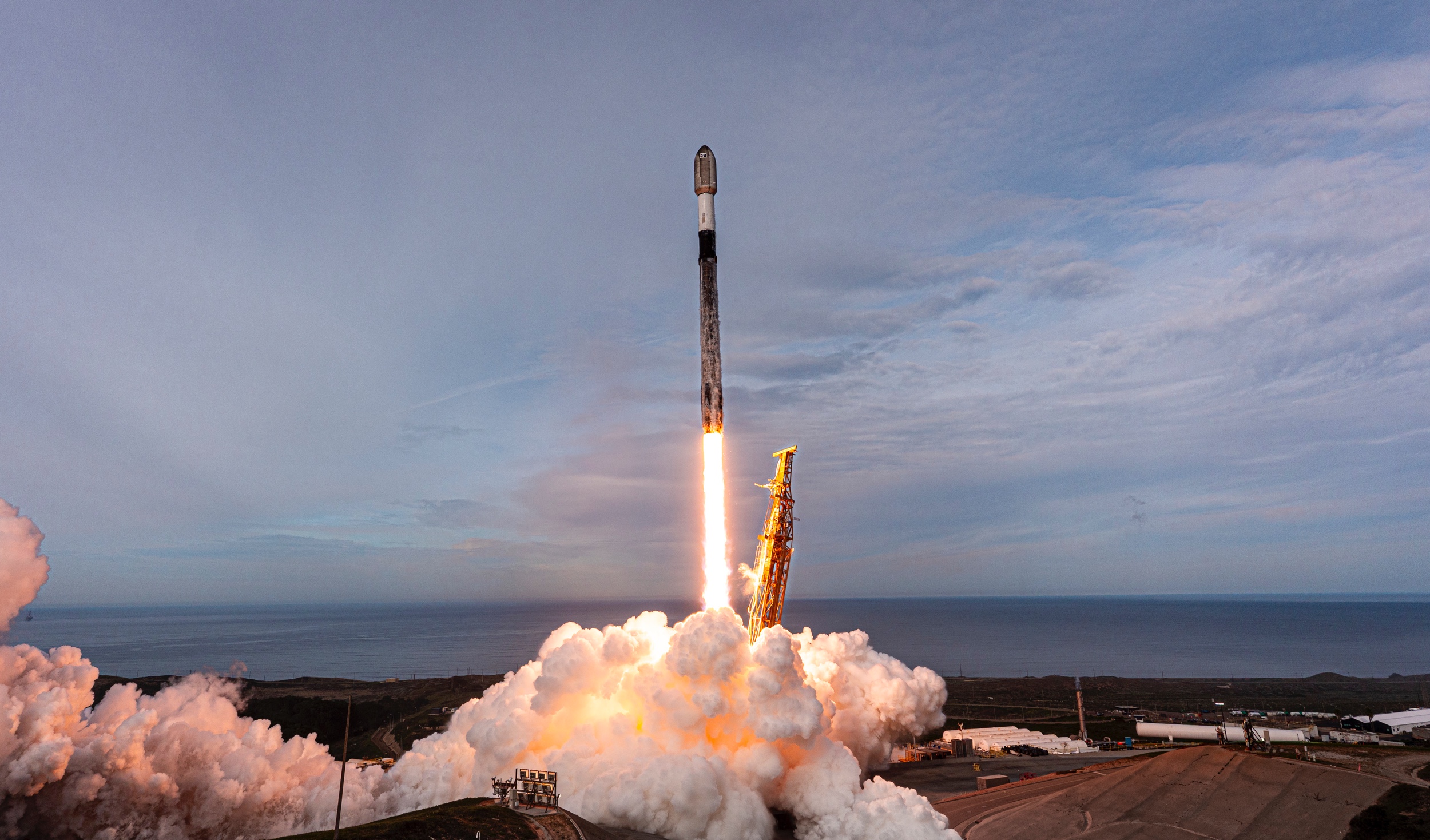

ORLANDO, Fla. — The Federal Aviation Administration office that regulates commercial spaceflight expects continued growth in launches, despite industry concerns about whether the office can keep pace.
Speaking at the Global Spaceport Alliance’s Spaceport Summit here Jan. 27, Minh Nguyen, deputy associate administrator for commercial space transportation at the FAA, said his office licensed 205 operations in 2025, including launches and reentries, a 25% increase from 2024.
“The acceleration in commercial space transportation has consistently exceeded our expectations. We’re seeing remarkable growth year after year,” he said. The 2025 total, he added, was 12% above the high end of the FAA’s forecast for the year, and licensed operations have exceeded agency forecasts in four of the last five years.
The FAA expects that growth to continue, with projections showing the number of licensed operations could double by 2029. The agency marked its 1,000th licensed operation last August, half of which occurred in the previous four years. “We’re looking at more than 1,000 launches and reentries within the next four years,” Nguyen said.
That growth has put pressure on the FAA’s Office of Commercial Space Transportation, known as AST. Despite the increase in launch activity, the office’s budget has remained relatively flat. AST would receive $41.755 million in a minibus appropriations bill for fiscal year 2026 approved by the House on Jan. 22 and awaiting Senate action. That would be slightly less than the $42.018 million AST received in fiscal year 2025.
“Demand for our licensing services has grown a great deal, and my office has adapted to meet these surging needs,” Nguyen said.
A near-term priority is completing the transition to a new set of launch regulations known as Part 450. Those rules went into effect in early 2021, with the FAA giving companies licensed under previous regulations five years to move to the new rules.
Nguyen said launch operators have until March 10 to move their licenses to Part 450. “Operators that have future flights planned are well on their way to transitioning to Part 450,” he said.
The intent of the Part 450 regulations was to streamline the licensing process, but many in the industry have cited difficulties complying with the performance-based rules. At a 2023 Senate hearing, Bill Gerstenmaier, a SpaceX vice president, warned that “the entire regulatory system is at risk of collapse” because of the workload required to meet Part 450 requirements.
A White House executive order in August directed the transportation secretary, who oversees the FAA, to “reevaluate, amend, or rescind, as appropriate and consistent with applicable law,” the Part 450 rules. The order called on the secretary to report the actions taken to the White House within 120 days.
“We’re evaluating a number of ways to ensure our regulatory framework isn’t unnecessarily burdensome,” Nguyen said of its response to the executive order, but did not elaborate.
One streamlining effort is an online licensing system called the Licensing Electronic Applications Portal, or LEAP. Nguyen said the system will make it easier for both applicants and the FAA to submit and review licensing materials. LEAP has completed beta testing with a “soft launch” of the system planned in the spring.
AST has also been without a permanent leader since Kelvin Coleman resigned last year as part of buyout programs offered by the FAA. Nguyen noted that he only recently assumed the deputy associate administrator role on a full-time basis after serving in an acting capacity for eight months.
The office is now overseen by FAA Deputy Administrator Chris Rocheleau. That change is part of an FAA reorganization announced Jan. 26 by FAA Administrator Bryan Bedford and Transportation Secretary Sean Duffy. Under the reorganization, AST and several other offices now report directly to Rocheleau, while other offices, including those responsible for air traffic control and aviation safety, report directly to Bedford.
“Commercial space transportation is a priority for FAA Administrator Bryan Bedford,” Nguyen said. Bedford’s plans for the FAA in 2026 include “notable recognition of the importance of this industry,” including efforts to support increasing launch and reentry activity.
The August executive order also directed that the associate administrator for commercial space transportation be a senior executive noncareer position. That role has not yet been filled, but Nguyen said the FAA still expects the White House to appoint someone to the post.










Related Posts
Stay Informed With the Latest & Most Important News
Previous Post
Next Post





Advertisement
-
 01Two Black Holes Observed Circling Each Other for the First Time
 -
 02From Polymerization-Enabled Folding and Assembly to Chemical Evolution: Key Processes for Emergence of Functional Polymers in the Origin of Life
 -
 03Astronomy 101: From the Sun and Moon to Wormholes and Warp Drive, Key Theories, Discoveries, and Facts about the Universe (The Adams 101 Series)
 -
 04True Anomaly hires former York Space executive as chief operating officer
 -
 05Φsat-2 begins science phase for AI Earth images
 -
 06Hurricane forecasters are losing 3 key satellites ahead of peak storm season − a meteorologist explains why it matters
 -
 07Binary star systems are complex astronomical objects − a new AI approach could pin down their properties quickly