
Now Reading: Final proposals leave SpaceX and Amazon with 4% of $20 billion rural broadband subsidies
-
01
Final proposals leave SpaceX and Amazon with 4% of $20 billion rural broadband subsidies

Final proposals leave SpaceX and Amazon with 4% of $20 billion rural broadband subsidies

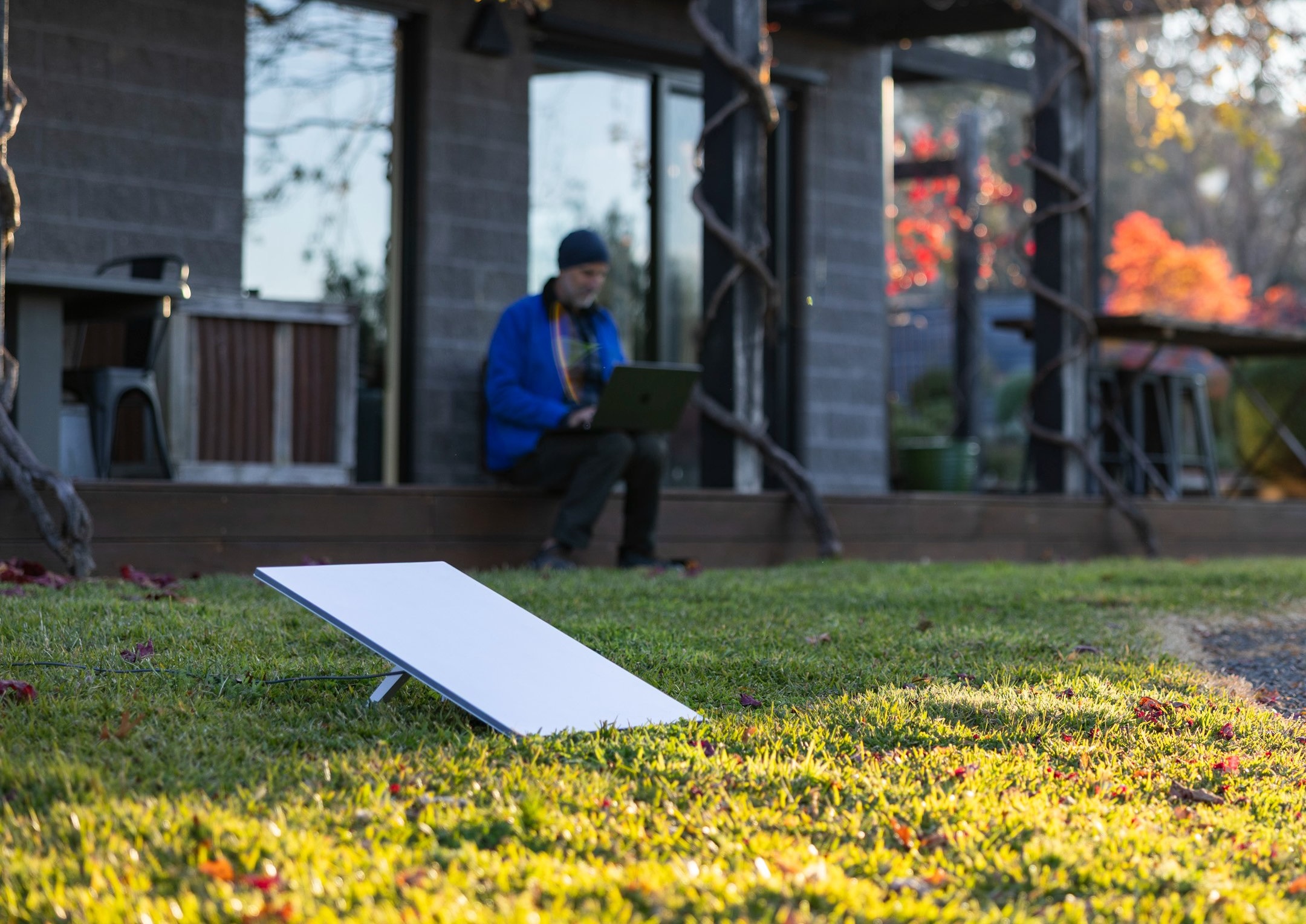

TAMPA, Fla. — SpaceX and Amazon’s satellite constellations stand to get about 4% of the nearly $20 billion that states have proposed for rural broadband buildouts, representing roughly 21% of the locations under the federal BEAD program.
California was the last state to publish a final proposal for BEAD, or Broadband Equity, Access, and Deployment, subject to approval from the U.S. Department of Commerce’s National Telecommunications and Information Administration (NTIA).
The state’s $1.57 billion plan is currently in a seven-day comment period that runs to Dec. 9, New Street Research analyst Bruno Marin said.
Despite being months away from an operational network, Amazon is earmarked for 6% of the funding and 27% of BEAD locations in California, beating SpaceX’s 14% and 4% in the state it called home before moving to Texas.
The New Street Research analysis shows fiber remained the most preferred technology in California, as it is in 40 of the other 54 states and territories seeking to use BEAD funds for deployment.
Fiber dominance
In total across all states, fiber players such as Comcast and AT&T won 86% of funding and 65% of locations.
Even still, the analysis shows SpaceX and Amazon won more locations than any wired operator at around 464,000 and 410,000, respectively. SpaceX was allocated 3% of the total funding, with Amazon’s share close to half of that, or about a third of the grants going to low Earth orbit.
SpaceX has previously sent letters to protest state decisions that sidelined satellites in favor of terrestrial technologies, after NTIA said in June it would apply a technology-neutral approach for the $42.5 billion Biden-era program that previously favored fiber.
The roughly $21 billion that remains unassigned for broadband buildouts has become a point of tension between NTIA and states, which want flexibility to direct the money to non-deployment priorities.
Arielle Roth, Assistant Secretary of Commerce for Communications and Information, said Dec. 2 that NTIA will share details about using leftover funds early next year.
“Our approach to the BEAD savings will complement the program and reflect the same principles that made the reforms successful,” she said.
“We haven’t made any decisions yet but stay tuned.”
Roth hailed a “huge diversity in state technology mixes” for BEAD funding, “with states like Rhode Island leaning more on fiber, others like Nebraska leaning more on fixed wireless, and some like Montana leaning more on satellite.”
NTIA has signed off on proposals from 29 states and territories so far, with a goal to “approve as many states as possible by year’s end.”
Investment costs
New Street Research said the cost for SpaceX to deploy broadband across 45 states is estimated to be around $1.24 billion, of which 52% will be funded by the government.
The buildout cost for Amazon Leo across 27 states is estimated to be about $574 million, with 60% government support.
While New Street Research director Vikash Harlalka said there are requirements around reserving capacity and supplying free user terminals, it remains unclear how the satellite operators intend to spend these funds.
“Similar to SpaceX, we aren’t sure where [Amazon] will be investing these funds,” he said, adding that the company is likely “being more aggressive with its bids than SpaceX to win more locations.”










Related Posts

Stay Informed With the Latest & Most Important News


Advertisement
-
 01Two Black Holes Observed Circling Each Other for the First Time
 -
 02From Polymerization-Enabled Folding and Assembly to Chemical Evolution: Key Processes for Emergence of Functional Polymers in the Origin of Life
 -
 03Astronomy 101: From the Sun and Moon to Wormholes and Warp Drive, Key Theories, Discoveries, and Facts about the Universe (The Adams 101 Series)
 -
 04True Anomaly hires former York Space executive as chief operating officer
 -
 05Φsat-2 begins science phase for AI Earth images
 -
 06Hurricane forecasters are losing 3 key satellites ahead of peak storm season − a meteorologist explains why it matters
 -
 07Binary star systems are complex astronomical objects − a new AI approach could pin down their properties quickly