
Now Reading: Fireball sightings are surging across the US — here’s what’s really going on
-
01
Fireball sightings are surging across the US — here’s what’s really going on


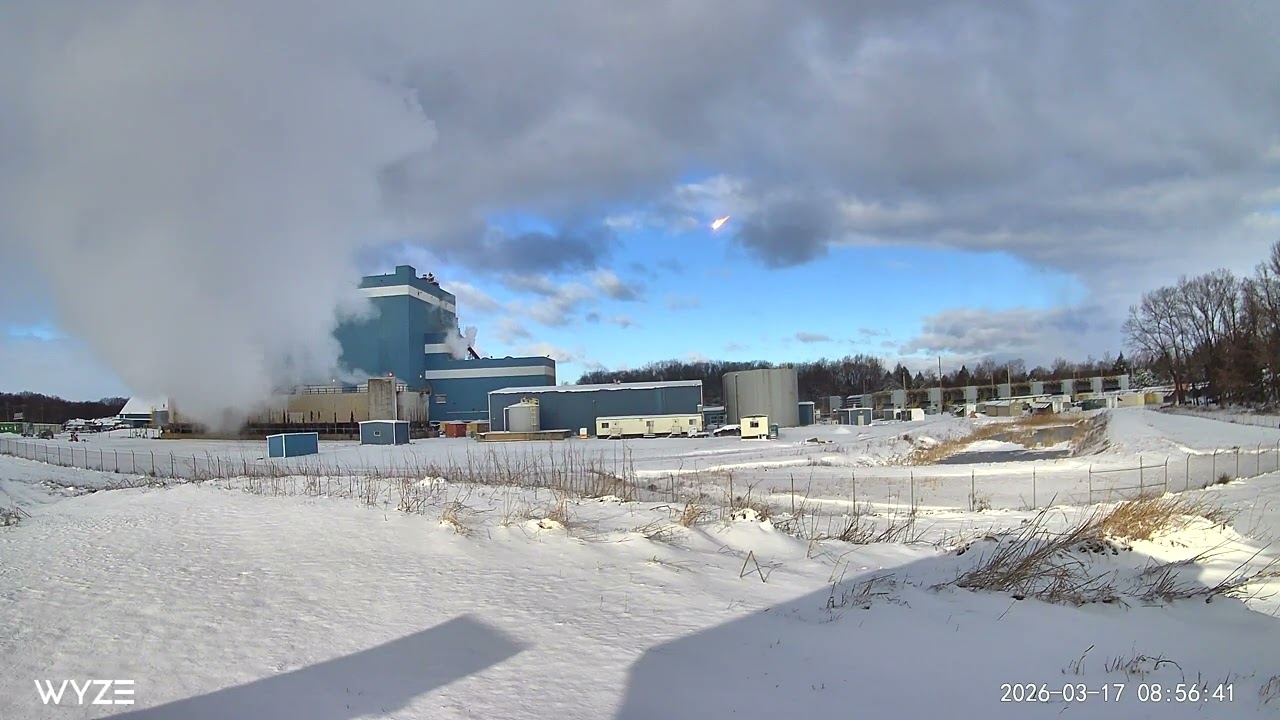
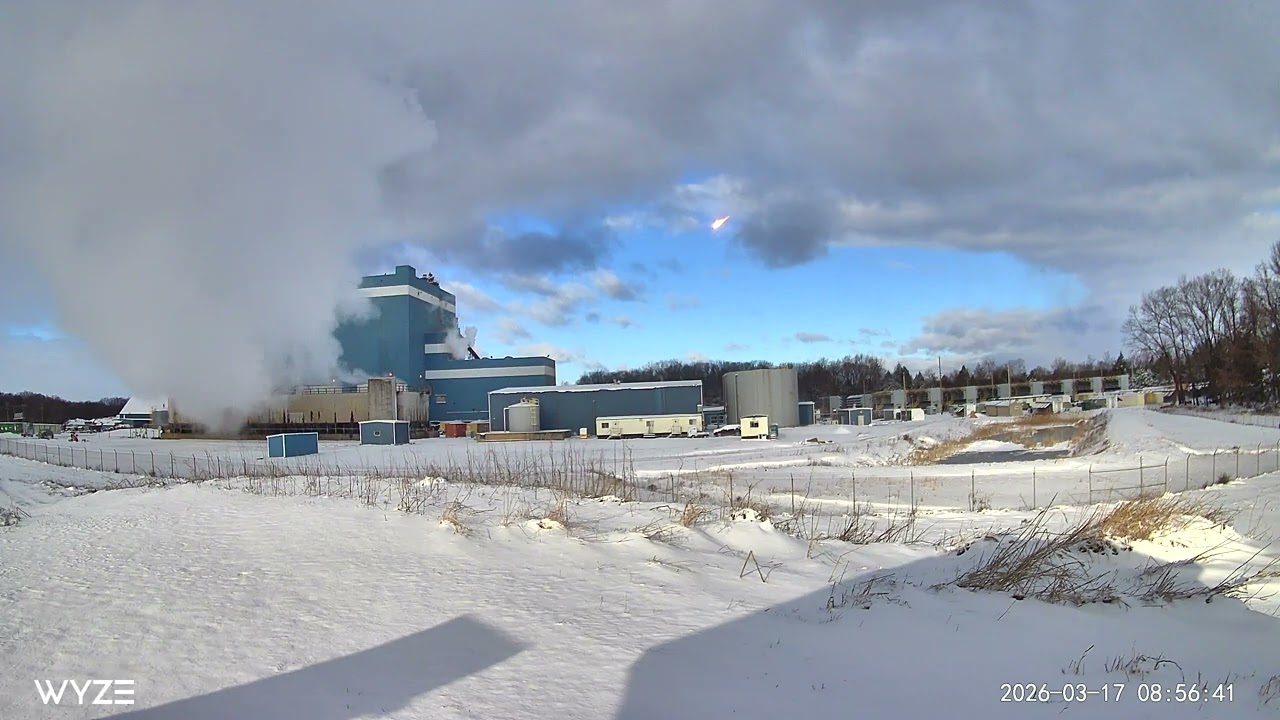
A series of fireballs — very bright meteors — were spotted across North America from March 17-23, 2026. People in Ohio reported one on March 17. The next sightings were in California on March 19, Michigan and Georgia on March 20, and Texas on March 21, where a fragment crashed through a house roof.
It’s happening beyond the U.S. Vancouver saw a fireball on March 3. France and Germany reported sightings on March 8 and 11. Many fireballs lasted a long time and were seen across wide areas. Some caused pressure waves and sonic booms.
Article continues below
A clustering of fireballs
There’s definitely been a clustering in fireball sightings. The American Meteor Society‘s fireball reporting database reported 1,587 reports in the U.S. in January, 1,425 in February and over 2,369 in March at the time of writing. Are meteor rates genuinely increasing, or are there mitigating factors that make all of this action a mere statistical anomaly, or primarily a reporting effect?
“This is the question everybody wants answered,” said Nick Moskovitz, a planetary scientist at Lowell Observatory in Flagstaff, Arizona, to Space.com. “I think we are looking at slightly elevated meteor activity, though still well within statistical expectations, and increased awareness and reporting, which happens whenever big events occur.” The event Moskovitz is referring to occurred on March 21, when a 1-ton, 3-foot-wide meteor exploded over Texas, with a cannonball-sized fragment crashing through the roof of a house in Bammel, near Cypress Station, north of Houston, Texas. The massive fireball traveled at 35,000 mph and was accompanied by a loud sonic boom, according to NASA. The fragment landed in a bedroom, causing a surge in media coverage.
What the American Meteor Society data reveals
Has fireball activity increased? A detailed analysis by the American Meteor Society, led by Mike Hankey, says the trend may be real — but not straightforward. The March 24 report notes that while total fireball counts are only slightly higher than recent years, large, widely witnessed events have surged.
March 2026 stands out for the intensity and number of fireballs. Several produced meteorites in a short time — an uncommon event. “We might see 10 meteorite recoveries a year worldwide,” said Hankey. “We had three recoveries in a week or ten days.”
Instead of a uniform increase, the AMS found events with 50 or more reports have more than doubled. Events with over 100 reports have also doubled compared to recent averages. Smaller events remain about the same as before. This pattern suggests a genuine change in incoming material, not just more people reporting. Something unusual appears to have occurred in the distribution of large events.
The recent increase in reports may also be linked to advancements in technology and widespread camera use, prompting the question of whether these tools are amplifying the apparent surge.
Fireballs: AI and dash cams
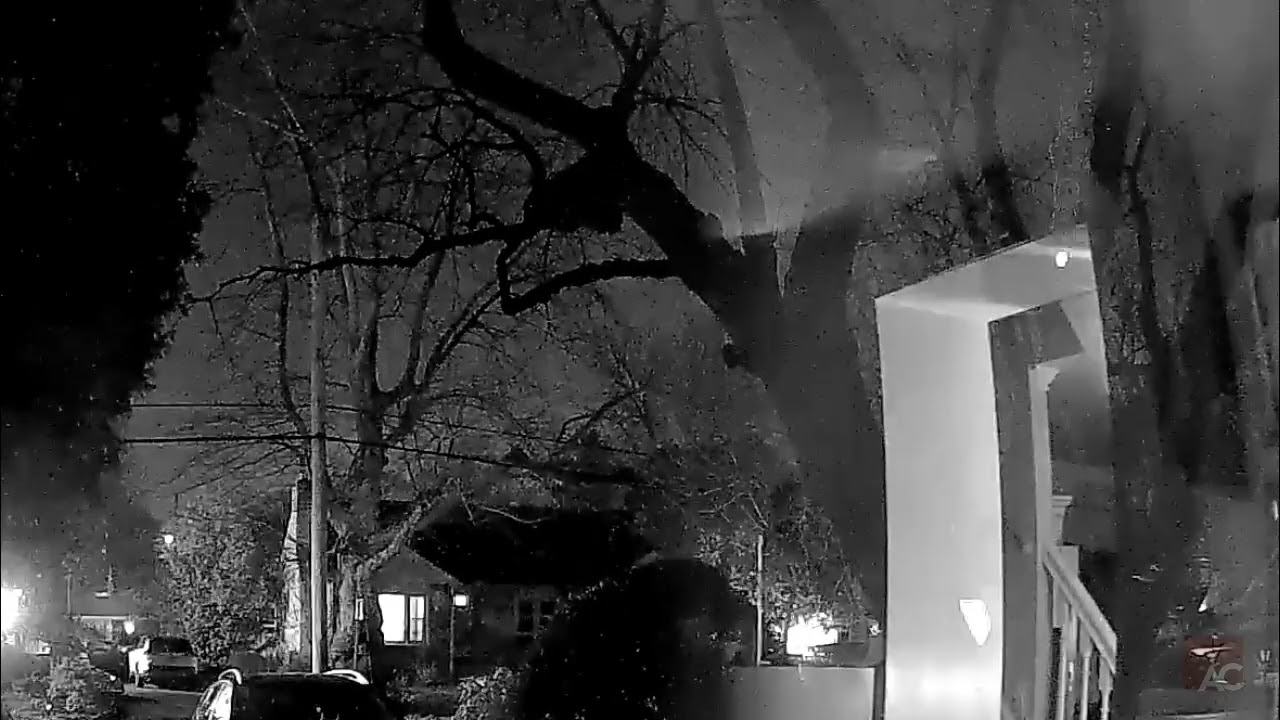
One possible reason for more fireball reports is the growing role of technology — like video uploads to the AMS from dash cams, Ring doorbells, and security cameras. “It’s not just serendipitous captures from these devices, but also their increasing affordability over the past 10 years that makes them accessible for scientific uses,” said Moskovitz.
The Global Meteor Network, an international array of cameras pointed at the night sky 24/7, is overseen by a dedicated group of scientists and amateurs. “The data volume is now so large that no human could review it all, so automated routines find and report detections every night,” said Moskovitz. However, bright events often saturate detectors and are missed, so citizen reports to AMS often alert professionals and prompt manual archive checks. Systems like NASA’s Center for Near-Earth Object Studies (CNEOS) can detect larger objects globally but miss many smaller fireballs.
There’s also the prospect that the rise of AI chatbots for guiding web searches may be leading to increased reporting of events. “People go to AI when they need to learn something, so if they saw a fireball, they might go to the AI — and the AI does say to report your sighting to the AMS,” said Hankey, to Space.com. However, he was quick to caution against overestimating this effect. “One of those things that we can rule out is AI-driven report amplification. It’s a possibility, but it can’t account for everything.”
While AI and new detection tech make reporting easier, they do not explain why there are more large, energetic fireball events.
Fireballs: trajectories and sonic booms
There’s always going to be an observational bias; when fireballs occur over densely populated areas, there will be more sightings, as opposed to over the ocean. However, the length of a meteor’s trajectory is also crucial. “When a trajectory is hundreds of miles long, more people are going to see it,” said Hankey, stating that a fireball in Germany and France was reported by 3200 people because the track was 300 kilometers long. “If a meteor lasts 14 seconds versus one second, we’re going to get more witness reports — it’s just common sense.” So it may be that the uptick in reports of late is because there are not just more or bigger meteors, but more long-lasting meteors that are hanging in the sky longer.
Something else that supports the hypothesis that recent meteors have been larger than usual is the prevalence of sonic booms — loud, explosive sounds caused by shockwaves when meteoroids, small rocky or metallic bodies from space, penetrate deeper into the Earth’s atmosphere than usual. This deeper entry often indicates larger or denser objects. The American Meteor Society (AMS) data support this. In early 2026, nearly 80% of large fireballs (those with 50+ reports) produced audible booms — an unusually high rate. It’s not a metric that can be artificially inflated by reporting effects. Together, these findings suggest that at least part of the surge reflects a real increase in the number of substantial incoming objects.
Fireballs: seasonal explanations
The spike in fireballs is not linked to a meteor shower. Although there are meteor showers year-round, there are no major events in March. “Meteor showers in general aren’t really known for fireballs anyway,” said Hankey. Meteor showers can produce fireballs, but sporadic meteors are more commonly responsible for the largest events. These fireballs come from asteroids, not comets.
However, there are seasonal effects tied to Earth’s position in its orbit, particularly around the equinox, which occurred on March 20. “Spring is fireball season,” said Bill Cooke at the NASA Meteoroid Environment Office, to Spaceweather.com. “For reasons we don’t fully understand, the rate of very bright meteors climbs 10% to 30% during weeks around the vernal equinox.” He added that meteorite fragments hitting the ground are more common in spring. Some astronomers think Earth passes through more large debris at this time of year, according to NASA.
Another seasonal effect is the anthelion source of sporadic meteors — anthelion referring to the region of the sky opposite the sun. In February, it’s at its highest in the sky in the middle of the night. The fireballs are coming from this anthelion source, which has some interesting effects. Firstly, it makes them easier to see, in theory. “If you think about like Perseids or Geminids — the meteor rates are highest when the radiant is highest in the sky,” said Hankey. Secondly, it makes them slower. “When they’re coming from this anthelion source, Earth’s velocity is subtracted from their velocity, so when they finally hit, they’re very slow,” said Hankey. Such fireballs have lower relative speeds because they are moving in similar directions to Earth. “It’s like a car coming up next to you on the highway, trying to overtake you in a merge lane — if no one slows down, eventually you just collide.” However, Hankey stresses that the recent increase goes beyond typical seasonal variation; there’s still an almost doubling in the largest events.
Fireballs: the uptick is real
The emerging picture is of a real shift, albeit one that’s not yet fully understood. Multiple lines of evidence — from increased sonic booms to higher witness counts for large events — point toward a change in the types of meteoroids entering Earth’s atmosphere. However, scientists caution that the dataset remains limited. The uptick in fireball sightings could represent natural variability, a temporary clustering of debris, or a poorly understood feature of the near-Earth environment. Whatever is going on, there is no cause for alarm — these objects remain small on a cosmic scale and rarely pose a threat beyond localized effects. Earth is not under siege.










Related Posts

Stay Informed With the Latest & Most Important News
Previous Post
Next Post
Previous Post
Next Post




Advertisement
-
 01Two Black Holes Observed Circling Each Other for the First Time
 -
 02From Polymerization-Enabled Folding and Assembly to Chemical Evolution: Key Processes for Emergence of Functional Polymers in the Origin of Life
 -
 03Astronomy 101: From the Sun and Moon to Wormholes and Warp Drive, Key Theories, Discoveries, and Facts about the Universe (The Adams 101 Series)
 -
 04True Anomaly hires former York Space executive as chief operating officer
 -
 05Φsat-2 begins science phase for AI Earth images
 -
 06Hurricane forecasters are losing 3 key satellites ahead of peak storm season − a meteorologist explains why it matters
 -
 07Binary star systems are complex astronomical objects − a new AI approach could pin down their properties quickly