
Now Reading: Former astronaut joins Vast as Haven-1 moves into integration
-
01
Former astronaut joins Vast as Haven-1 moves into integration



WASHINGTON — Commercial space station developer Vast has hired another former NASA astronaut as the company delays the launch of its first station.
Vast announced Jan. 23 that former NASA astronaut Megan McArthur has joined the company as an astronaut adviser. In that role, she will advise the company on design and operational issues related to human spaceflight.
McArthur retired from NASA’s astronaut corps last August after more than two decades at the agency. She flew on the final shuttle servicing mission to the Hubble Space Telescope, STS-125, in 2009, and later spent more than six months aboard the International Space Station as part of the Crew-2 mission in 2021.
“I’m excited to bring that experience forward and support Vast’s vision for the next era of human spaceflight,” McArthur said in a statement. “Vast has the team, focus and ambition to lead the development of the next generation of space stations.”
She is one of several former astronauts now working with Vast. Former NASA astronaut Andrew Feustel is the company’s lead astronaut, and another former NASA astronaut, Garrett Reisman, serves as an adviser. Former Japan Aerospace Exploration Agency astronaut Naoko Yamazaki is general manager of the company’s Japanese subsidiary, Vast Japan.
Vast has also brought in additional former NASA leadership. The company announced last month the appointment of Kathy Lueders as an adviser. Lueders is a former NASA associate administrator who oversaw the agency’s human spaceflight programs and later worked at SpaceX as general manager of its Starbase facility.
Vast is leveraging the experience of former astronauts and agency officials as it works on commercial space stations, beginning with Haven-1. The single-module station will launch on a Falcon 9 rocket and be visited by up to four Crew Dragon spacecraft on short-duration missions.
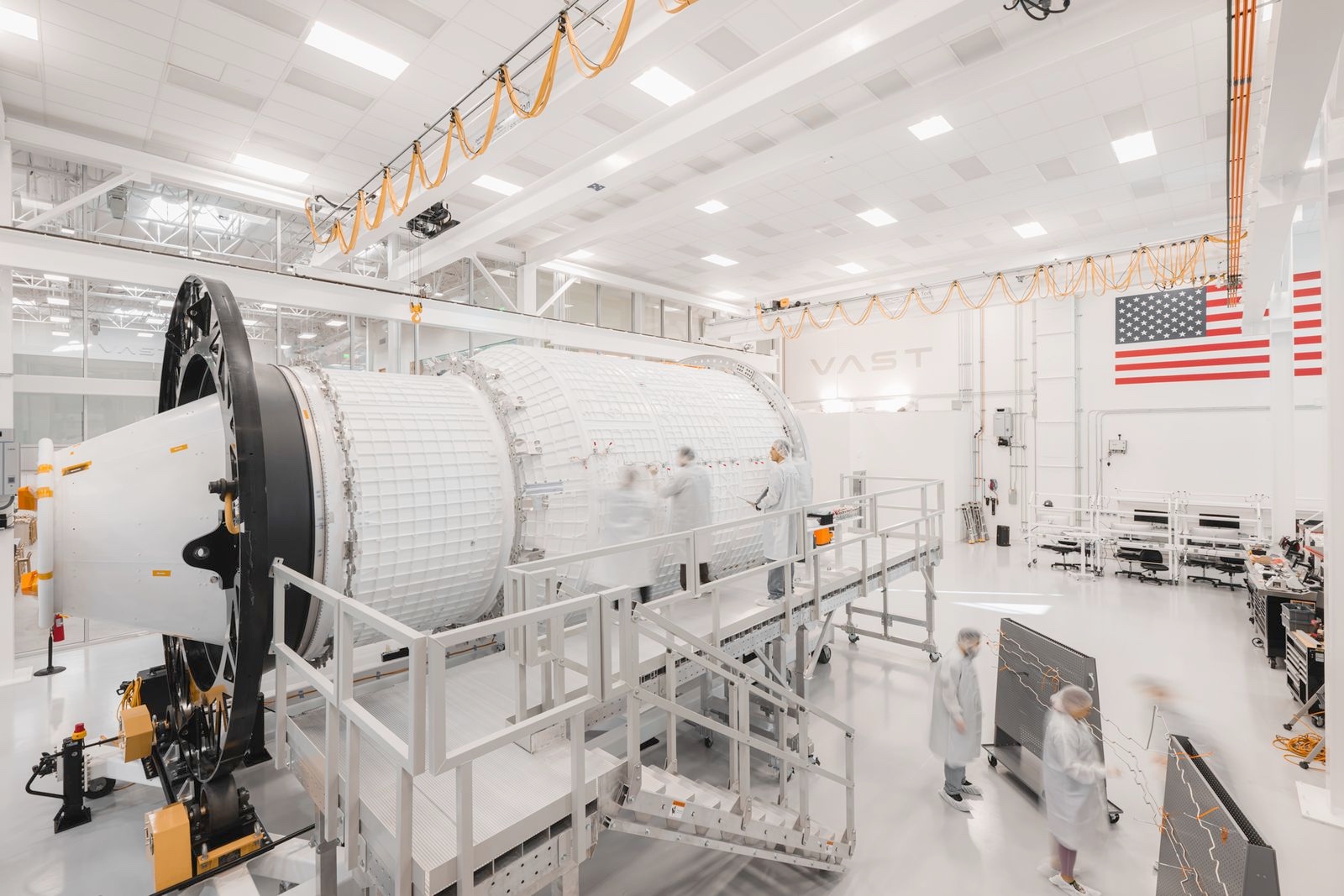
The company announced Jan. 20 that it has begun integration of Haven-1 at its facilities in Long Beach, California. That work includes installation of pressurized fluid systems and avionics. Integration will conclude with outfitting the interior of the module and installing shielding, radiators and solar arrays on the exterior.
Vast had been targeting a mid-2026 launch of Haven-1, but said in its statement that the launch has slipped to the first quarter of 2027.
“Haven-1 represents a true zero-to-one development, and as Vast moves on to its second, third and subsequent stations, schedule precision will continue to improve as systems, processes and integration maturity increase,” the company said, adding that human spaceflight safety remains its top priority.
“From the beginning, our business plan has been about building a sustainable future in orbit, one that meets today’s market while creating the foundation for what comes next,” said Max Haot, Vast’s chief executive. “By vertically integrating design, manufacturing, testing and operations, we’re moving with both speed and autonomy.”










Related Posts


Stay Informed With the Latest & Most Important News
Previous Post
Next Post


Advertisement
-
 01Two Black Holes Observed Circling Each Other for the First Time
 -
 02From Polymerization-Enabled Folding and Assembly to Chemical Evolution: Key Processes for Emergence of Functional Polymers in the Origin of Life
 -
 03Astronomy 101: From the Sun and Moon to Wormholes and Warp Drive, Key Theories, Discoveries, and Facts about the Universe (The Adams 101 Series)
 -
 04True Anomaly hires former York Space executive as chief operating officer
 -
 05Φsat-2 begins science phase for AI Earth images
 -
 06Hurricane forecasters are losing 3 key satellites ahead of peak storm season − a meteorologist explains why it matters
 -
 07Binary star systems are complex astronomical objects − a new AI approach could pin down their properties quickly