
Now Reading: Ghosts, sharks and Norse mythology: US Space Force unveils new names for satellites and space weapons
-
01
Ghosts, sharks and Norse mythology: US Space Force unveils new names for satellites and space weapons

Ghosts, sharks and Norse mythology: US Space Force unveils new names for satellites and space weapons

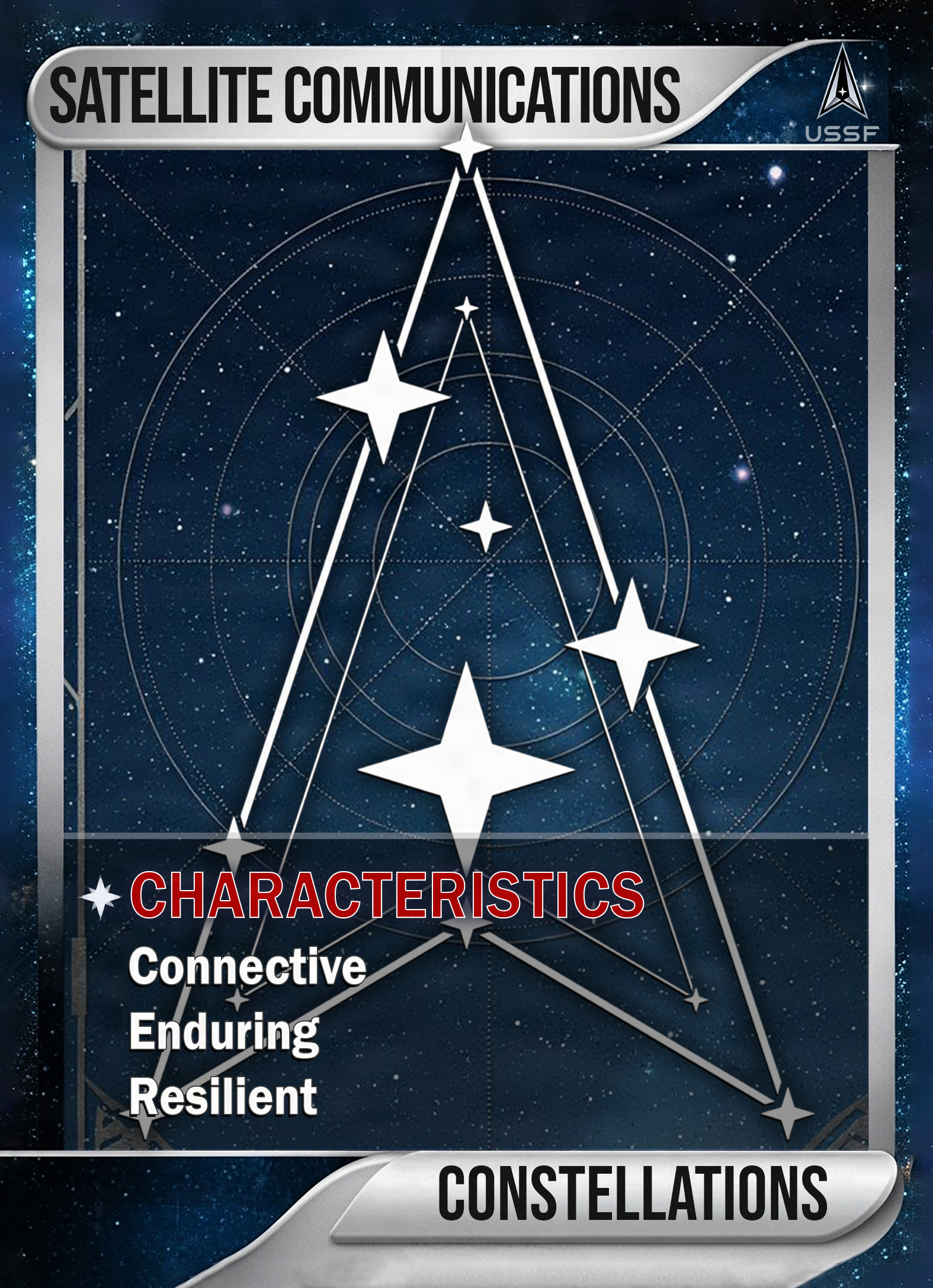
The U.S. Space Force is turning to some unlikely sources of inspiration for naming its spacecraft and space weaponry.
At the 3rd Annual Spacepower Conference, held in Orlando, Florida from Dec. 10 to Dec. 12, Chief of Space Operations Gen. Chance Saltzman told attendees that Space Force is adopting new naming schemes for each of its different mission areas that will “cement the identities of space weapon systems” much like the names of iconic aircraft, such as the A-10 Thunderbolt II or F-22 Raptor, have done for the U.S. Air Force.
Seven different naming categories were chosen, one for each of Space Force’s mission areas:
After announcing the new naming scheme, Saltzman explained two specific names that had been chosen for specific spacecraft. The first, a communications satellite in geostationary orbit previously known as the Ultra-High Frequency Follow-On system, will now be known as as Ursa Major.
“The Big Dipper — as you all know, part of the Ursa Major constellation — famously points to Polaris, our north star, always linking us to our most important missions,” Saltzman said.

Another spacecraft operated by Space Force’s 1st Space Operations Squadron (1 SOPS) used to track satellites in high orbits will now be taking a name from Norse mythology: Bifrost.
“Bifrost is a bridge between Earth and the realm of the gods,” Saltzman explained, “just as the Bifrost system in low Earth orbit bridges the divide between the Earth and the higher geostationary orbit of the other 1 SOPS systems.”

Saltzman stressed that the new naming scheme will help the newest branch of the U.S. military establish its own identity. “These symbols conjure the character of the systems, the importance of their mission, and the identity of the Guardians who employ them,” Saltzman said. The new names will serve as “a way to own the identity of our space systems as they enter the joint fight,” he added.
Unlike the U.S. Air Force’s iconic aircraft or the U.S. Army’s ground vehicles such as tanks, the public rarely gets a glimpse at Space Force’s assets in orbit. This is partly by design; many of Space Force’s spacecraft are highly classified, which can make it difficult for the service to communicate its missions and capabilities both to the public and throughout the U.S. armed services.










Related Posts
Stay Informed With the Latest & Most Important News
Previous Post
Next Post




Advertisement
-
 01Two Black Holes Observed Circling Each Other for the First Time
 -
 02From Polymerization-Enabled Folding and Assembly to Chemical Evolution: Key Processes for Emergence of Functional Polymers in the Origin of Life
 -
 03Astronomy 101: From the Sun and Moon to Wormholes and Warp Drive, Key Theories, Discoveries, and Facts about the Universe (The Adams 101 Series)
 -
 04True Anomaly hires former York Space executive as chief operating officer
 -
 05Φsat-2 begins science phase for AI Earth images
 -
 06Hurricane forecasters are losing 3 key satellites ahead of peak storm season − a meteorologist explains why it matters
 -
 07Binary star systems are complex astronomical objects − a new AI approach could pin down their properties quickly