
Now Reading: Gilles Fernandez Challenges UFO Narratives in Roswell Investigation
-
01
Gilles Fernandez Challenges UFO Narratives in Roswell Investigation


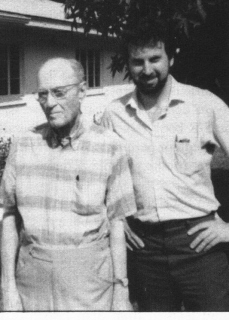

Gilles Fernandez has become a notable figure in UFO discourse, particularly regarding the Roswell incident. His inquiries and criticisms have often propelled deeper examinations into the accounts of pivotal witnesses, namely Major Jesse Marcel. While Fernandez’s scrutiny can sometimes seem relentless, it very important to separate the man from the motivations driving his questions. In a field often muddied by fervent belief and skepticism, Fernandez represents a segment of the community dedicated to unearthing truths through rigorous analysis.
To grasp this dynamic, consider, for example, the dialogue surrounding Marcel’s statements. At the core of Fernandez’s inquiries is a desire for clarity on what Marcel truly witnessed and subsequently reported following his recovery of what is widely believed to be debris from a weather balloon or, as some theorists suggest, something far more enigmatic. The conflict between testimonials and the narratives constructed around them can lead to an inclusive yet contentious atmosphere that demands critical engagement.
Reflecting on Marcel’s perspective, one of the most intriguing aspects is his assertion that the material depicted in General Ramey’s office did not match what he had recovered from the Brazel ranch. This insistence raises a plethora of questions and points to a potential fabric of narrative manipulation, intended or otherwise. As Marcel himself pointed out during various interviews, including those with Johnny Mann and Linda Corley, there was a discernible distinction between the debris he arrived with and what was later displayed under the scrutiny of press cameras.
- “The material may have looked like tinfoil and balsa wood, but the resemblance ends there.” This quote attributed to Marcel has sparked debates about the authenticity of the debris. Was it merely a misinterpretation, or did this signify something more profound?
- Listen to the echoes of skepticism. While some advocate for the Weather Balloon Theory based on these statements, skeptics within the community continuously question the validity of the evidence presented.
The skepticism around Marcel’s statements is not unique to Fernandez; it permeates the culture of UFO investigations. Allowing for different perspectives, particularly when considering conflicting narratives, is vital for any analysis of historical events. In that light, Fernandez’s persistent questioning acts as a kind of intellectual rigor, pushing the boundaries of conventional thought and encouraging deeper exploration into the episode’s implications.
Moreover, there’s the fascinating intersection between skepticism and advocacy for truth. While some may view Fernandez’s inquiries as antagonistic, others see them as a necessary counterbalance that provokes thought and critical engagement. The Roswell incident is not merely a story about a crash and cover-up; it encapsulates broader themes of secrecy, the search for truth, and the complexities surrounding human testimony.
Fernandez’s request for more substantial evidence and documented interviews may come off as demanding, but it underscores an essential principle: claims, especially those that can alter the public’s understanding of history, should be substantiated with verifiable data. This insistence on a higher standard can galvanize both proponents and skeptics, creating a richer dialogue that can lead to new insights or, at the very least, a better understanding of the shared narrative.
As discussions surrounding the Roswell incident and characters like Gilles Fernandez continue to evolve, it becomes imperative to engage with skepticism as a tool for enlightenment, rather than a barrier against belief. Each question, each inquiry, becomes a stepping stone toward understanding a mystery that still enchants and perplexes generations.
In examining the nuances of authorship, narrative control, and the shifting sands of public perception, we find that the dialogue surrounding UFOs, particularly the Roswell incident, is as much about the human experience as it is about the unexplained phenomena themselves. In this complex landscape, Gilles Fernandez stands as a figure challenging the status quo while prompting us to reconsider the nature of evidence and belief.
The role of Project Mogul in the Roswell incident is a source of intrigue and contention, a conundrum wrapped in layers of bureaucratic secrecy and the fervent desires of a public eager for answers. Project Mogul was a top-secret program initiated by the U.S. military in the late 1940s, designed to track Soviet ballistic missiles using high-altitude balloons equipped with sensitive scientific instruments. It aimed to monitor sound waves generated by nuclear explosions, using large clusters of balloons to gather atmospheric data. However, the historical significance of Project Mogul extends well beyond its original intent, interweaving itself into the narrative of one of the most famous UFO incidents of the 20th century.
The meticulous efforts behind the project led to several flights, with one—NYU Flight #4—being particularly crucial to the Roswell narrative. Launched on June 4, 1947, this flight was purportedly aimed at gathering data from the upper atmosphere. However, the details surrounding its execution became clouded, shrouded in confusion and speculation after the infamous Roswell crash. When Mac Brazel, a rancher in New Mexico, discovered unusual debris on his property a few weeks later, the military’s response, particularly that of Major Jesse Marcel, gave rise to a plethora of theories regarding what those materials truly were.
The debris recovered by Marcel was described in various forms, oscillating between mundane explanations, such as those positing it was simply remnants of a weather balloon, and more sensational claims linking it to extraterrestrial visitation. Marcel’s own accounts, stating that the materials he personally saw were distinct from what was displayed in General Ramey’s office, keeps the flame of speculation alive. Consider this famous reflective moment from Marcel as he recalled: “The stuff that was in the pictures was not what I brought from Roswell.” Such assertions have led to an ongoing debate about the nature of the material and the motivations behind the military’s handling of it.
- Historical Context: Understanding the historical backdrop of 1947 is pivotal. The post-World War II era was fraught with tension and escalating fear of the Soviet threat. Project Mogul emerged as an essential tool for national security, and in the chaotic aftermath of the Roswell incident, its significance and operational details became entangled with the UFO narrative.
- Material Evidence: The debate surrounding the Roswell debris often refers back to the rudimentary characteristics of the materials associated with Project Mogul. The rubber-like neoprene and lightweight payloads designed for high-altitude flights bear a resemblance to what was reported by witnesses. Nevertheless, these materials could easily be misconstrued in the absence of comprehensive understanding.
One salient question arises: Did the U.S. government realize the potential for misunderstanding when presenting the debris to the public? Colonel Thomas DuBose, an influential figure in the aftermath, explicitly indicated that the military switched the genuine debris with materials from Project Mogul to assuage media interest, suggesting a deliberate obfuscation of the facts. His quote, stating that the switch was made to get reporters “off the general’s back,” is a stark reminder of the bureaucracy’s attempt to control the narrative. The result was a harvest of confusion, fertile ground for conspiracy theories to take root.
Interestingly, the transparency—or lack thereof—surrounding Project Mogul did not deter interest but instead intensified it. The very existence of the project was classified, a fact that fueled speculation that something extraordinary was at play. The paradox of an unclassified program harboring classified motivations is quintessentially American, and it invokes questions about governmental transparency that remain relevant even today.
As modern investigators like Gilles Fernandez delve into historical narratives, the role of Project Mogul in the Roswell incident emerges not just as a curiosity but as a complex interplay between truth and belief. The nagging question remains: how much of what we know today is influenced by the fog of uncertainty that cloaked the events of July 1947? What remains undiscovered, hidden away from our grasp, yet perpetually fuels our fascination with the unknown?
In the ever-evolving discourse surrounding the Roswell incident, Project Mogul acts as both a scientific endeavor and a lens through which to view the cultural responses to extraterrestrial speculation. This intersection of facts and interpretations invites us to consider how we approach narratives of the unknown, challenging us to sift through the debris of human testimony in search of truth.










Related Posts


Stay Informed With the Latest & Most Important News
Previous Post
Next Post




Advertisement
-
 01Two Black Holes Observed Circling Each Other for the First Time
 -
 02From Polymerization-Enabled Folding and Assembly to Chemical Evolution: Key Processes for Emergence of Functional Polymers in the Origin of Life
 -
 03Astronomy 101: From the Sun and Moon to Wormholes and Warp Drive, Key Theories, Discoveries, and Facts about the Universe (The Adams 101 Series)
 -
 04True Anomaly hires former York Space executive as chief operating officer
 -
 05Φsat-2 begins science phase for AI Earth images
 -
 06Hurricane forecasters are losing 3 key satellites ahead of peak storm season − a meteorologist explains why it matters
 -
 07Binary star systems are complex astronomical objects − a new AI approach could pin down their properties quickly