
Now Reading: Global Space Launches Slow as Two Chinese Missions and SpaceX Falcon 9 Prepare for Year-End Liftoffs
-
01
Global Space Launches Slow as Two Chinese Missions and SpaceX Falcon 9 Prepare for Year-End Liftoffs

Global Space Launches Slow as Two Chinese Missions and SpaceX Falcon 9 Prepare for Year-End Liftoffs


As the transition from 2025 to 2026 approaches, the global launch schedule is slowing down, with just four launches lined up for the coming week. Among these, two are Chinese missions and two stem from SpaceX’s Falcon 9, aimed at deploying the CSG-3 satellite and a batch of Starlink satellites.
On December 30, a Chang Zheng 4B rocket was successfully launched by the Chinese Aerospace Science and Technology Corporation at 04:12 UTC. This mission originated from Site 94 at the Jiuquan Satellite Launch Center, heading southward with the Tianhui 7 satellite on board, which is anticipated to be used for cartography, although specifics remain scarce. The CZ-4B, first commissioned in 1999, has a solid track record, completing 56 missions with just one failure. It employs toxic yet storable hypergolic propellants across its three stages, with the first stage equipped with four YF-21C engines.
The final Chinese launch of the year is set for the same day, December 30, at 22:40 UTC, from the Wenchang Space Launch Site. The Chang Zheng 7A will carry an undisclosed payload on an easterly trajectory. This three-stage launch vehicle first flew in March 2020 and is characterized by its four side boosters, each containing a single YF-100 engine. Like its counterpart, the CZ-4B, the CZ-7A utilizes a combination of liquid kerosene and liquid oxygen in its early stages, transitioning to liquid hydrogen in the upper stage. This launch represents the 14th CZ-7A mission, and the sixth for this particular year.
On January 1 at 02:09 UTC, SpaceX will execute its final Falcon 9 mission of 2025, designated CSG-3. Liftoff is slated for 6:09 PM PST from Space Launch Complex 4 East at Vandenberg Space Force Base in California. The Falcon 9 rocket will carry the CSG-3 satellite, weighing 2,230 kilograms, to a Sun-synchronous orbit. This satellite is part of the Constellation of Small Satellites for Mediterranean Basin Observation, developed by the Italian Space Agency to enhance Earth observation capabilities. Following launch, the Falcon booster B1081 will return to land nearby at Landing Zone 4 after completing its 21st mission.
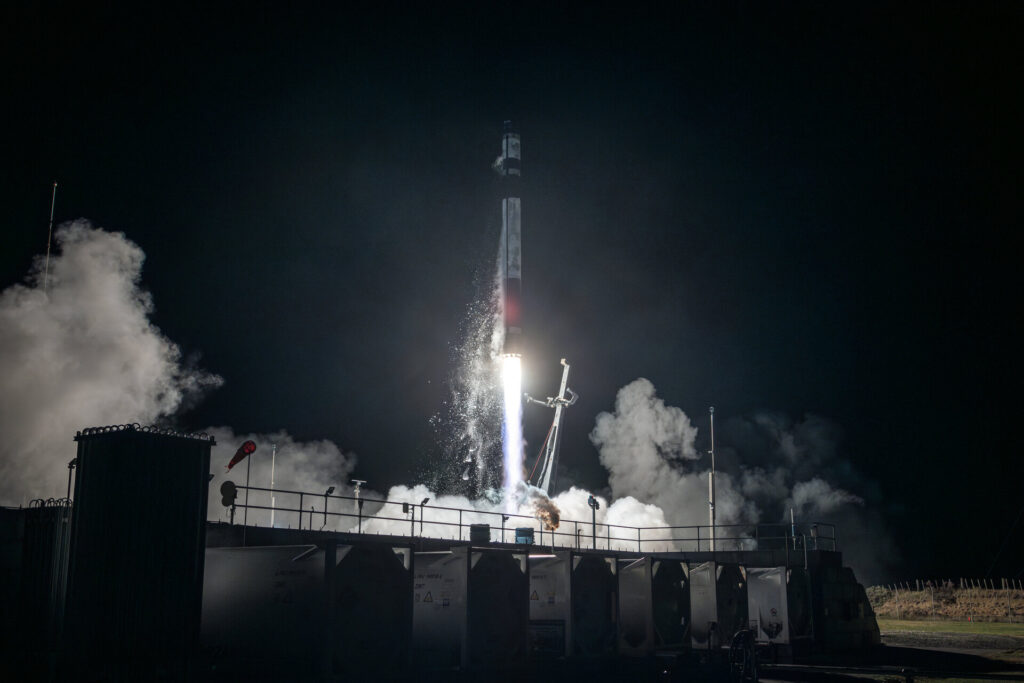
Looking ahead, the first launch of 2026 will occur on January 1 at 12:00 AM EST, with SpaceX planning to deploy Starlink Group 6-88 from Cape Canaveral Space Force Station. This mission entails launching 29 Starlink v2 Mini satellites, with a launch window extending until 3:17 AM EST. A new Falcon booster, B1101, will return to a droneship after separation from the rocket’s upper stage. This launch will initiate SpaceX’s 2026 mission roster and mark the company’s overall 585th flight.










Related Posts
Stay Informed With the Latest & Most Important News
Previous Post
Next Post



Advertisement
-
 01Two Black Holes Observed Circling Each Other for the First Time
 -
 02From Polymerization-Enabled Folding and Assembly to Chemical Evolution: Key Processes for Emergence of Functional Polymers in the Origin of Life
 -
 03Astronomy 101: From the Sun and Moon to Wormholes and Warp Drive, Key Theories, Discoveries, and Facts about the Universe (The Adams 101 Series)
 -
 04True Anomaly hires former York Space executive as chief operating officer
 -
 05Φsat-2 begins science phase for AI Earth images
 -
 06Hurricane forecasters are losing 3 key satellites ahead of peak storm season − a meteorologist explains why it matters
 -
 07Binary star systems are complex astronomical objects − a new AI approach could pin down their properties quickly