
Now Reading: H3 failure linked to payload fairing separation anomaly
-
01
H3 failure linked to payload fairing separation anomaly


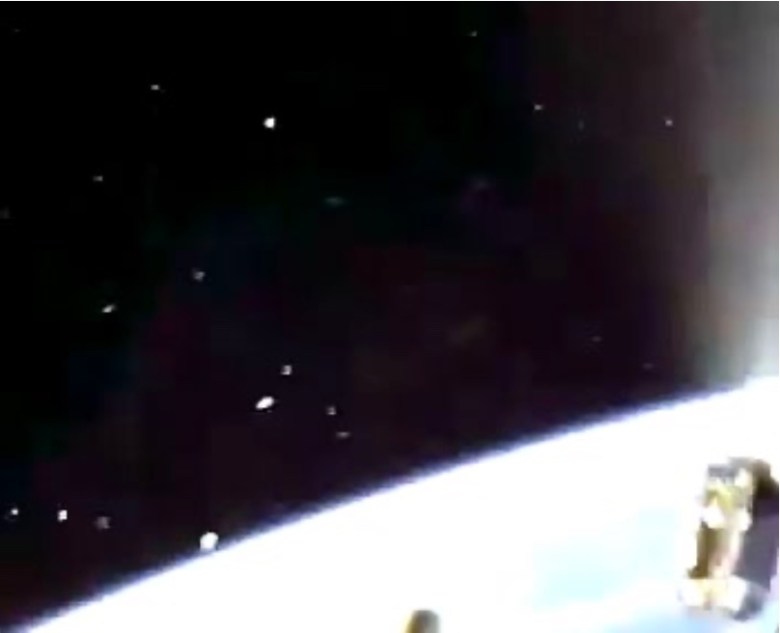
WASHINGTON — An H3 launch failure in December may have been caused by an unusual event that led to the satellite separating from the rocket prematurely.
The H3 lifted off from Tanegashima Space Center Dec. 22 (U.S. time) carrying the Michibiki 5 navigation satellite. However, the Japan Aerospace Exploration Agency said the launch failed because of problems with the second stage.
The second-stage engine fired longer than expected on its first burn and failed to ignite for a second burn. The stage and, presumably, the satellite were left in a very low orbit and reentered within hours.
A Jan. 20 report by investigators found that thrust from the second stage was about 20% lower than expected, and the engine burned for 24 seconds longer than planned. Pressure in the second stage’s liquid hydrogen tank also dropped, and the engine could not reach steady-state combustion during the second ignition attempt.
The pressure drop began when the rocket’s payload fairing separated. Telemetry showed unusual accelerations on the spacecraft at the time of fairing separation that were not detected in previous H3 launches.
Investigators believe the satellite and payload adapter were damaged by the shock of the fairing separation. A camera mounted on the adapter and pointing upward showed the satellite leaning, with apparent damage to panels and insulation. The interior of the adapter likely struck the top of the second stage, damaging liquid hydrogen propellant lines and causing the pressure loss. Investigators said there may have been multiple impacts between the adapter and the tank as vibrations from the initial shock decayed.
That scenario does not fully explain why the second stage was still able to reach a parking orbit after its first burn despite the reduced thrust. However, another camera view from the second stage appears to show Michibiki 5 falling away after stage separation.

The report concluded that “it is reasonable to assume that the satellite had already detached when the first and second stages separated,” according to a machine translation of the Japanese-language document. Telemetry was also lost from the satellite separation system at about the same time. Investigators believe the second stage could have reached orbit despite the reduced thrust if the satellite had already separated.
“Based on the analysis of telemetry and image data collected to date, we believe that immediately after the start of payload fairing separation, an unusual event occurred, such as a large acceleration not normally experienced due to some factor,” the report stated, “and damage to the onboard structure of the satellite that is thought to be related to this, and that the satellite subsequently separated from the launch vehicle at the time of separation of the first and second stages.”
The root cause of the launch failure remains under investigation, including the reason for the anomalous shock during payload fairing separation. The report did not provide a timeline for completing that work.
The failure was the second for the H3 in seven flights but the first since the vehicle’s inaugural mission in 2023 failed because of an upper-stage problem. JAXA has several H3 launches planned for 2026, including another Michibiki navigation satellite, an HTV-X cargo mission to the International Space Station and the Martian Moons Explorer, or MMX, mission to Mars, which must launch in a narrow window in late 2026 or face a two-year delay.










Related Posts
Stay Informed With the Latest & Most Important News
Previous Post
Next Post



Advertisement
-
 01Two Black Holes Observed Circling Each Other for the First Time
 -
 02From Polymerization-Enabled Folding and Assembly to Chemical Evolution: Key Processes for Emergence of Functional Polymers in the Origin of Life
 -
 03Astronomy 101: From the Sun and Moon to Wormholes and Warp Drive, Key Theories, Discoveries, and Facts about the Universe (The Adams 101 Series)
 -
 04True Anomaly hires former York Space executive as chief operating officer
 -
 05Φsat-2 begins science phase for AI Earth images
 -
 06Hurricane forecasters are losing 3 key satellites ahead of peak storm season − a meteorologist explains why it matters
 -
 07Binary star systems are complex astronomical objects − a new AI approach could pin down their properties quickly