
Now Reading: Hardware is no longer the problem holding back space-based data centers — the supply chain is
-
01
Hardware is no longer the problem holding back space-based data centers — the supply chain is

Hardware is no longer the problem holding back space-based data centers — the supply chain is

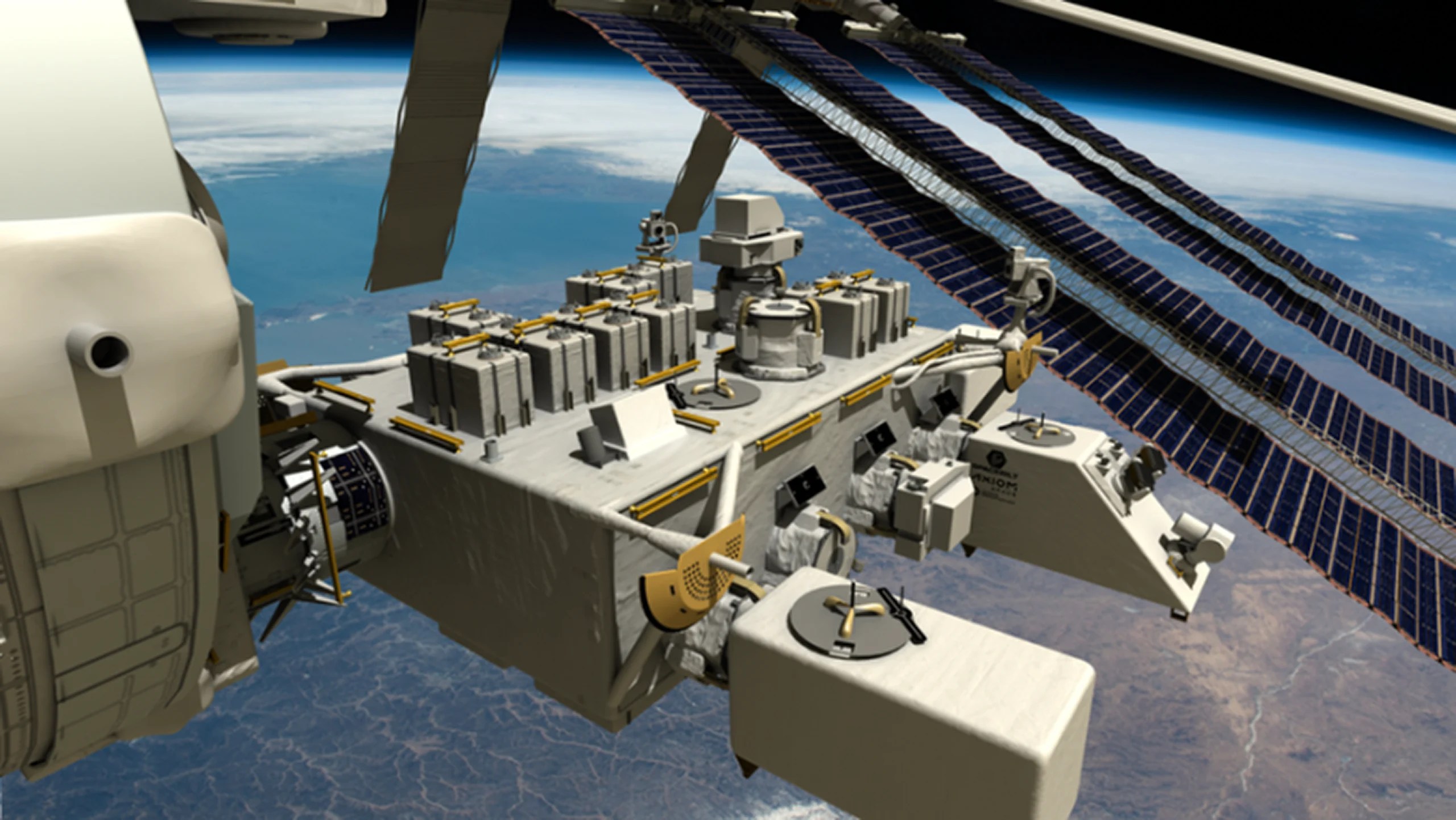

Orbital and lunar data centers are often framed as engineering challenges or launch economics problems. Those matter, but they are not the limiting factor. The real bottleneck is the absence of a procurement and logistics architecture capable of sourcing, qualifying, transporting, assembling and sustaining the technologies these systems require. If companies are going to realize their goals of building and operating space-based data centers, they must commit to building the procurement, logistics and qualification infrastructure that makes sustained deployments possible. Without that backbone, orbital compute remains a concept rather than an industry.
The overlooked foundation: a space-rated supply chain
Terrestrial data centers scale because they rely on standardized, interoperable, mass-manufactured components. Hyperscalers are converging on shared rack standards, with Omdia forecasting that 21-inch OCP racks will dominate by 2030. These standards allow direct competitors to interoperate inside the same physical and logical infrastructure.
For example, a single rack may contain servers from Dell, HPE and Supermicro; GPUs from NVIDIA, AMD and Intel; storage from Pure Storage, NetApp and Dell EMC; networking from Arista, Cisco and Juniper; and power and cooling modules from multiple manufacturers. Interoperability is assumed. Components are purposely designed to slot into standardized racks, speak common protocols and operate within predictable thermal and power envelopes.
Henry Ford used to say, “Sell to the classes, eat with the masses; sell to the masses, eat with the classes.” In orbital compute, the meaning is direct: if your hardware is vendor-agnostic, you can sell to anyone. If it only works with one boutique customer, your entire architecture collapses if they change direction.
Space operates the opposite
Space hardware remains a patchwork of bespoke, mission-specific, non-interoperable components: unique bus architectures, proprietary thermal systems, one-off power regulation modules, vendor-specific avionics and non-standard mechanical and electrical interfaces. Nothing snaps in. Nothing is interchangeable. Nothing is vendor-agnostic.
This contrast makes the bottleneck unavoidable: orbital compute cannot scale until its supply chain looks more like terrestrial data centers.
Terrestrial vs. orbital supply chains
| Dimension | Terrestrial Data Centers | Orbital / Lunar Data Centers |
| Component Standards | Mature, interoperable | Fragmented, mission – specific |
| Qualification | UL/CE, ASHRAE | Radiation, vibration, thermal cycle |
| Lead Times | 8-16 weeks | 12-36 months |
| Logistics | Predictable freight | Launch dependent |
| Lifecycle | Hot swap, on-site repair | In-orbit servicing only |
| Supplier Base | Thousands | Dozens |
| Cost Structure | Commodity pricing | Aerospace multipliers |
Why logistics is the real bottleneck
Engineering challenges are increasingly tractable. Multiple companies are exploring in-orbit processing concepts, and earlier analysis outlined cost-driven strategies for orbital data centers. But the logistics challenges remain unaddressed.
The industry lacks a standardized bill of materials for orbital compute; a sourcing framework for radiation-tolerant CPUs, GPUs, memory and storage; a comprehensive procurement model that spans launch, orbital infrastructure and compute; a replenishment and servicing strategy that treats orbital data centers as living assets; and a most importantly a global supplier network capable of scaling production for orbital-grade components.
This lack of interoperability will likely make orbital and lunar data centers several times more expensive than those on Earth.
Launch cadence as a forcing function
Recent filings indicate ambitions for extremely large constellations, such as SpaceX’s proposal for up to one million satellites to support orbital compute and communications services. A constellation of that scale would require sustained, high-frequency heavy-lift operations over multiple years.
Launch capacity alone does not create orbital compute infrastructure. It creates demand pressure for a supply chain that does not yet exist.
A Starship-class cadence forces a shift from project-based procurement to industrial supply-chain management: At that tempo, you’re no longer sourcing hardware for a single mission — you’re feeding a continuous production line. That requires:
- Multi-year vendor contracts, because suppliers must commit to stable output, long-lead materials and predictable qualification cycles rather than one off deliveries.
- Parallel production lines for compute modules, since a single line cannot sustain the volume needed for monthly or weekly launches; redundancy becomes a throughput requirement instead of a contingency.
- Inventory buffers sized to launch windows, ensuring the hardware is ready when the vehicle is ready, not the other way around. Launch cadence then becomes the gating factor, so buffers absorb slips, weather and pad availability.
- Continuous qualification pipelines, because every hardware revision, component change, or supplier substitution must be tested without interrupting production.
If launch cycles become abundant but hardware remains scarce, the bottleneck simply moves upstream.
The procurement architecture orbital and lunar data centers require
A viable end-to-end model must integrate supplier qualification for orbital-grade electronics; multi-tier sourcing strategies for critical components; manufacturing standards for modular, serviceable orbital platforms; logistics pathways from fabrication to environmental testing to launch integration; in-orbit assembly and servicing workflows; lifecycle management aligned with software and AI upgrade cycles; and redundancy strategies that combine orbital and terrestrial assets.
ROI and TCO considerations
Orbital compute economics hinge on lifecycle cost, not launch cost. Even with falling launch prices, the Total Cost of Ownership equation is dominated by component qualification, in-orbit servicing capability, module lifespan under radiation, ground-segment integration and replacement cadence tied to solar array degradation.
ROI improves dramatically when modules can be serviced, upgraded or refueled rather than replaced. A mature supply chain is the prerequisite for that shift.
What a space-rated supply chain must include:
- Radiation-tolerant compute and memory suppliers
- High-efficiency solar array and power subsystem manufacturers
- Thermal rejection hardware vendors
- Optical communications suppliers
- Structural and deployment system manufacturers
- Launch integration and vibration-testing partners
- In-orbit servicing providers
- Ground-segment operators and cloud integration partners
This is the minimum viable ecosystem for orbital compute.
Strategic implication
The future of orbital compute will not be determined by launch vehicles or thermal systems alone. It will be determined by whether the industry can build a procurement and logistics architecture that treats orbital and lunar data centers as infrastructure rather than experiments.
Until orbital hardware becomes interoperable and serviceable at scale, the supply chain is the real architecture — and without it, the rest is theory.
Where to go from here
The industry needs a cross-sector working group that brings together hyperscalers, aerospace primes, component manufacturers and launch providers to define:
- A unified bill of materials for orbital compute modules
- Qualification standards for space-rated IT hardware
- Interoperability requirements for servicing and replacement
- A procurement and logistics framework aligned with launch cadence
Without this collaboration, orbital data centers remain prototypes.
Solving this will require aligning the ecosystem around shared expectations.
Terrestrial hyperscalers can lead by translating expectations about interoperability into space — defining baseline power, thermal and telemetry interfaces so orbital vendors know what “plug-and-play” actually means.
Primes and integrators can shift from bespoke spacecraft architectures to shared electrical, mechanical, and command-and-control standards.
Component suppliers can move toward batch-based qualification and common environmental envelopes, following the model established by terrestrial standards such as ANSI/TIA-942-C and the ASHRAE TC 9.9 thermal guidelines.
Launch and in-orbit service providers can support predictable logistics by standardizing deployment fixtures and replenishment cadence.
And an AI-ready orbital data center will require that same open, modular design philosophy that allows nodes to be launched, replaced and upgraded as easily as terrestrial racks.
Most importantly, industry groups should convene to publish a Space Interoperability Baseline — a practical rulebook that defines power interfaces, thermal plates, health-reporting schemas and basic command sets for orbital compute modules.
That’s the moment logistics stops being a bottleneck — and starts becoming infrastructure.
An abridged version of this article was first published in the March 2026 issue of SpaceNews Magazine.
John David Callison is a global strategic sourcing executive and advisor at Abelian Security Council and elsewhere with more than two decades of experience architecting, negotiating, and operationalizing technology infrastructure across hyperscale cloud platforms, AI ecosystems, and mission‑critical data environments. He has led complex, multi‑billion‑dollar sourcing initiatives for Workday, SAP Cloud, Meta, Symantec and Oracle and now provides executive‑level consulting to growth‑stage firms, investor‑intelligence networks (ASC) and defense‑adjacent organizations on technology procurement, industrial‑base strategy and space‑rated infrastructure.
Joseph Minafra serves as Lead of Innovation and Technical Partnerships for the NASA Solar System Exploration Research Virtual Institute (SSERVI) at NASA Ames Research Center. With a diverse background spanning collaborative technology development, meteoritic and regolith studies, biology, robotics and software design, he has supported NASA projects for more than two decades. At SSERVI, Minafra oversees technology innovation to enable collaboration and communication among competitively selected science and research teams across the United States and internationally.
SpaceNews is committed to publishing our community’s diverse perspectives. Whether you’re an academic, executive, engineer or even just a concerned citizen of the cosmos, send your arguments and viewpoints to opinion (at) spacenews.comto be considered for publication online or in our next magazine. If you have something to submit, read some of ourrecent opinion articlesand oursubmission guidelinesto get a sense of what we’re looking for. The perspectives shared in these opinion articles are solely those of the authors and do not necessarily represent their employers or professional affiliations.










Related Posts
Stay Informed With the Latest & Most Important News
Previous Post
Next Post





Advertisement
-
 01Two Black Holes Observed Circling Each Other for the First Time
 -
 02From Polymerization-Enabled Folding and Assembly to Chemical Evolution: Key Processes for Emergence of Functional Polymers in the Origin of Life
 -
 03Astronomy 101: From the Sun and Moon to Wormholes and Warp Drive, Key Theories, Discoveries, and Facts about the Universe (The Adams 101 Series)
 -
 04True Anomaly hires former York Space executive as chief operating officer
 -
 05Φsat-2 begins science phase for AI Earth images
 -
 06Hurricane forecasters are losing 3 key satellites ahead of peak storm season − a meteorologist explains why it matters
 -
 07Binary star systems are complex astronomical objects − a new AI approach could pin down their properties quickly