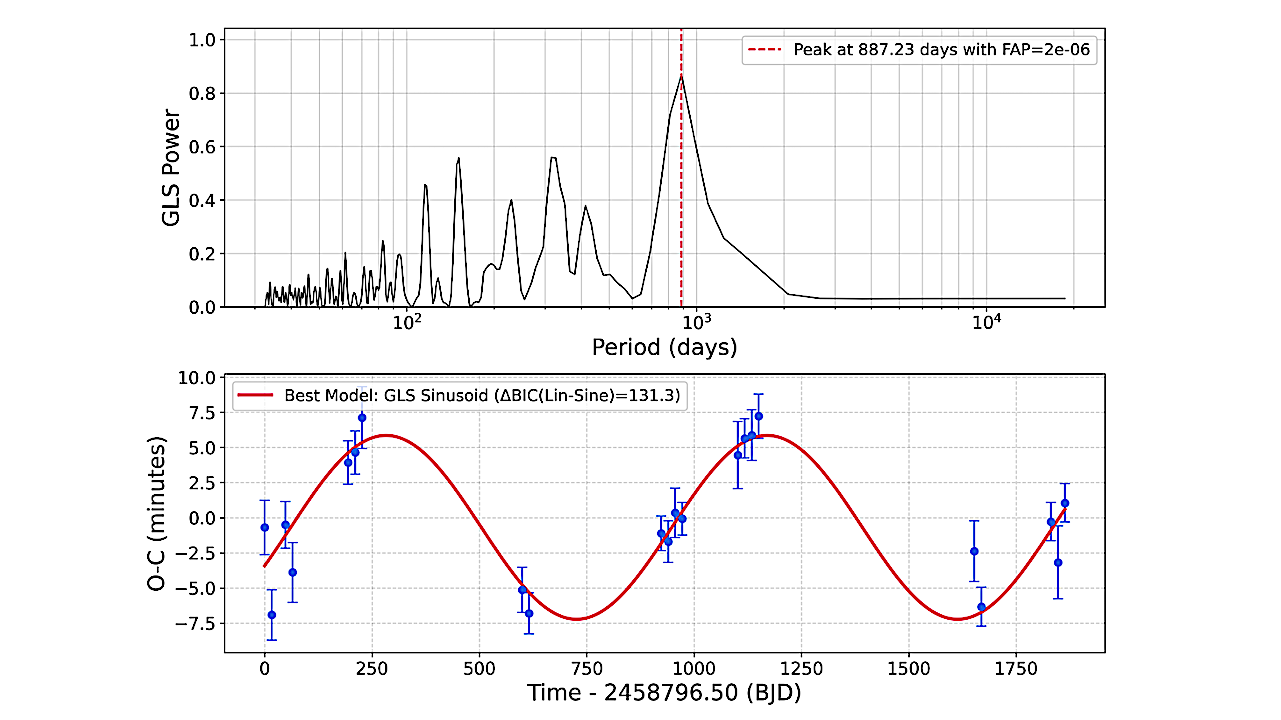
Top panel: Generalized Lomb–Scargle (GLS) periodogram of the TOI-1611 b O−C transit times, with the best periodicity highlighted by a red vertical line. Bottom panel: O−C measurements over time, with

Top panel: Generalized Lomb–Scargle (GLS) periodogram of the TOI-1611 b O−C transit times, with the best periodicity highlighted by a red vertical line. Bottom panel: O−C measurements over time, with
Tiny highly uniform magnetic fields are known to pervade the universe, influencing various cosmological processes. To date, however, the physical mechanisms underpinning the generation of these fields remain poorly understood.

Earth (ESD) Earth Explore Explore Earth Science Agriculture Air Quality Climate Change Freshwater Life on Earth Severe Storms Snow and Ice The Global Ocean Science at Work Earth Science at
Drawing together leading experts from across the field, an international collaboration of cosmologists has created a unified approach for measuring the value of the Hubble constant. Published in Astronomy &
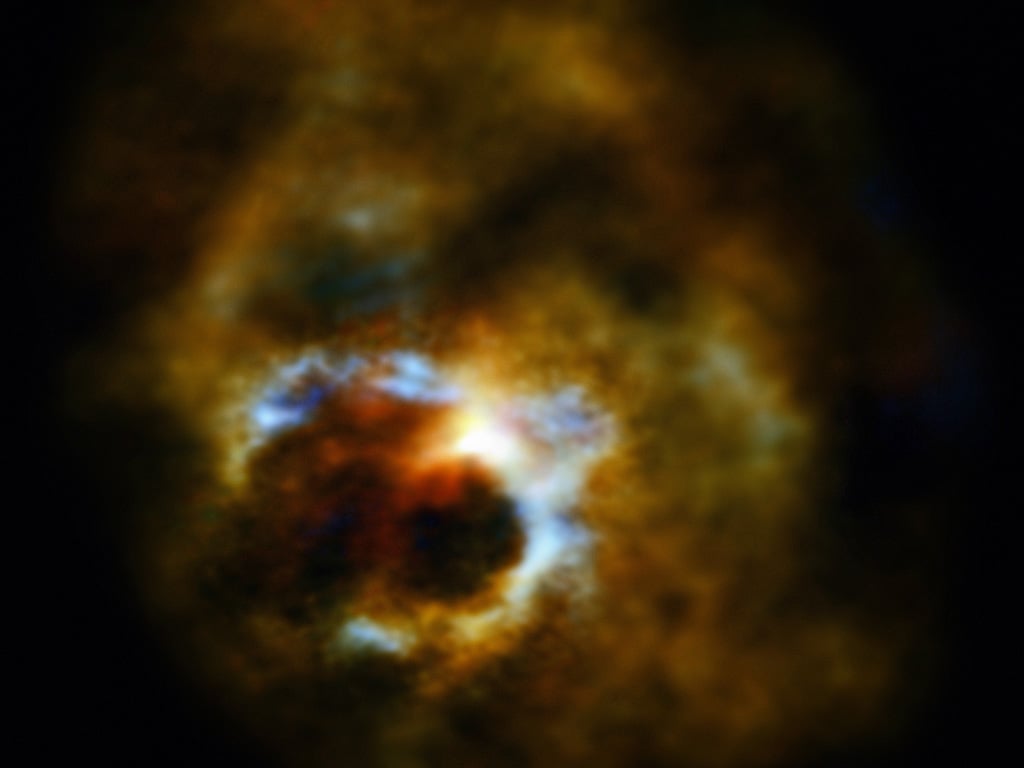
Just a few hundred light-years from Earth, the famous variable star Mira A is huffing and puffing its outer layers to space. Its most recent mass-loss event ejected more material
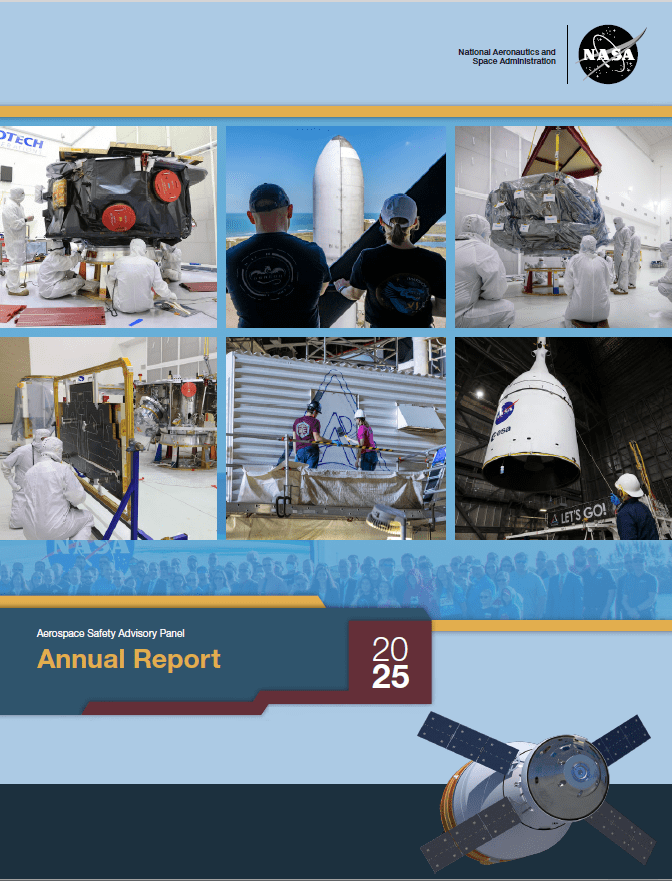
Credit: NASA The Aerospace Safety Advisory Panel (ASAP), which advises NASA and Congress on safety, has released its 2025 annual report on NASA’s performance and challenges. While the panel acknowledged NASA’s safety
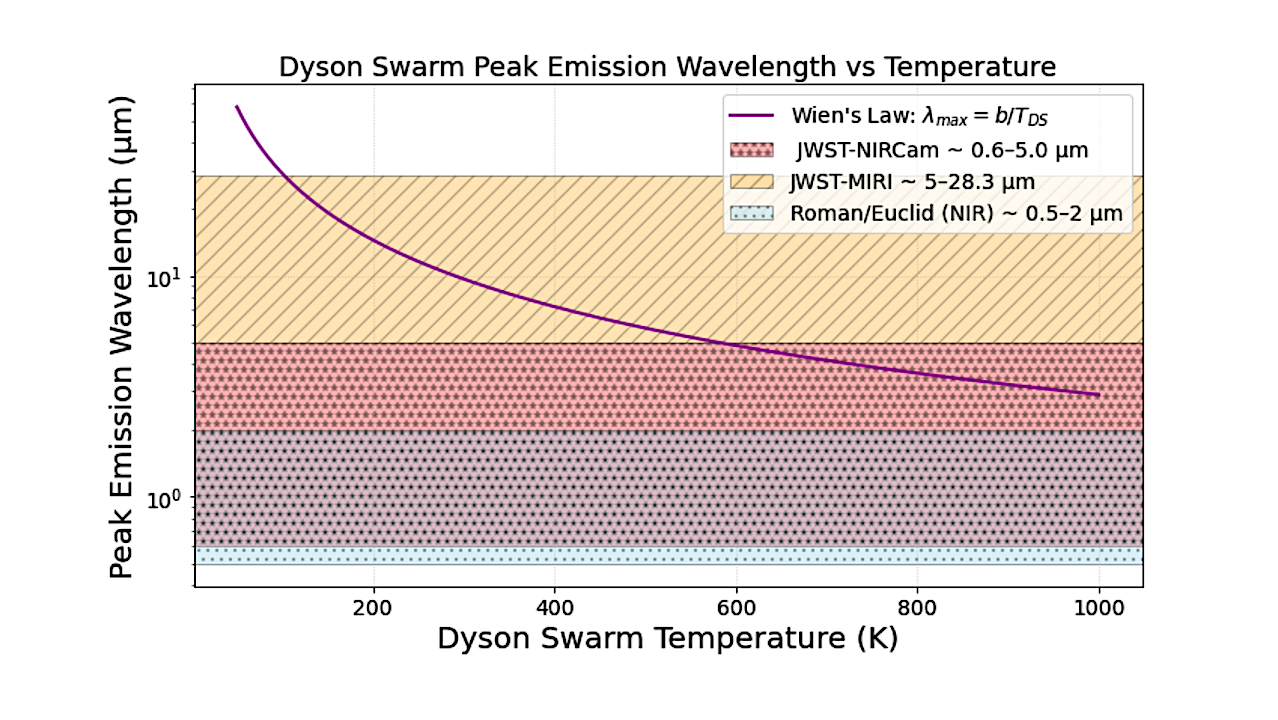
Peak emission wavelength of a Dyson Swarm as a function of swarm temperature, following Wien’s displacement law, λmax = b/TDS. The shaded regions indicate the approximate wavelength coverage of key
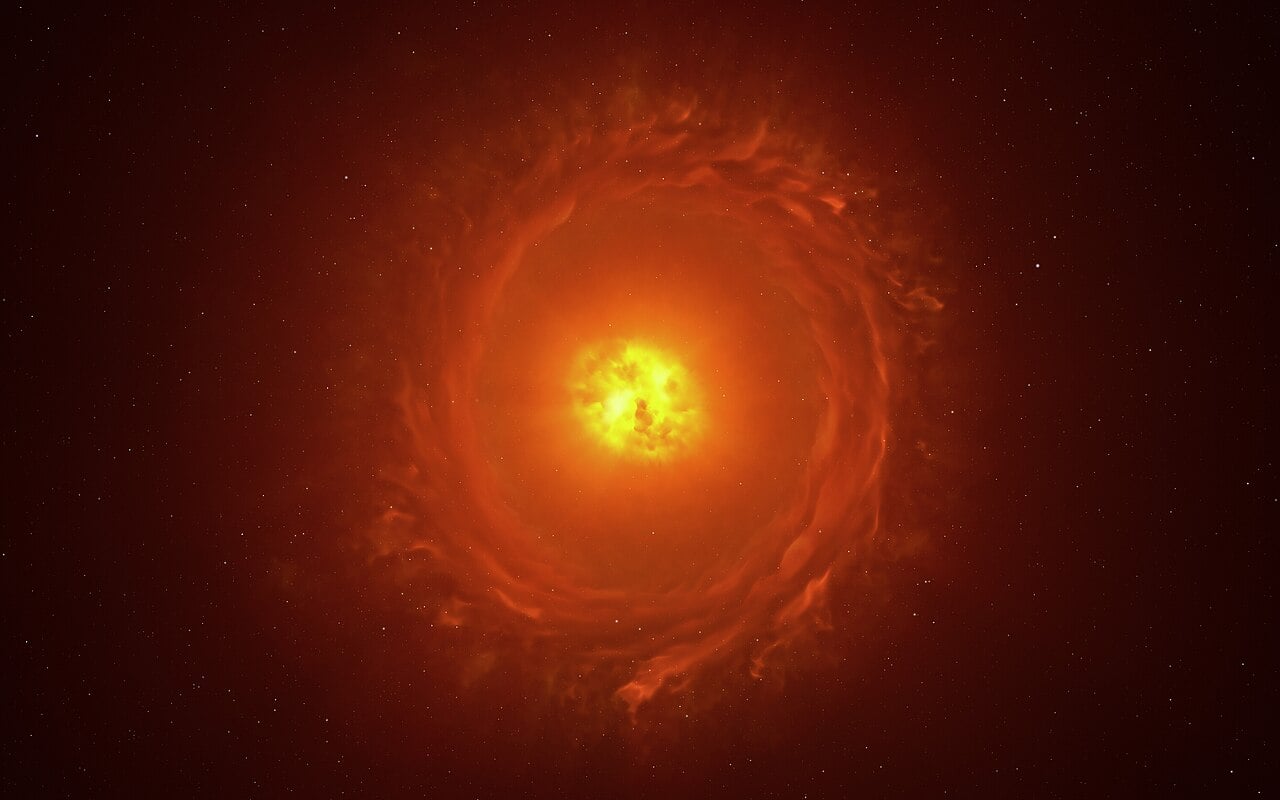
Astronomers have solved a bit of a mystery that had them questioning whether one of the most extreme stars ever observed was about to explode. WOH G64, a massive red
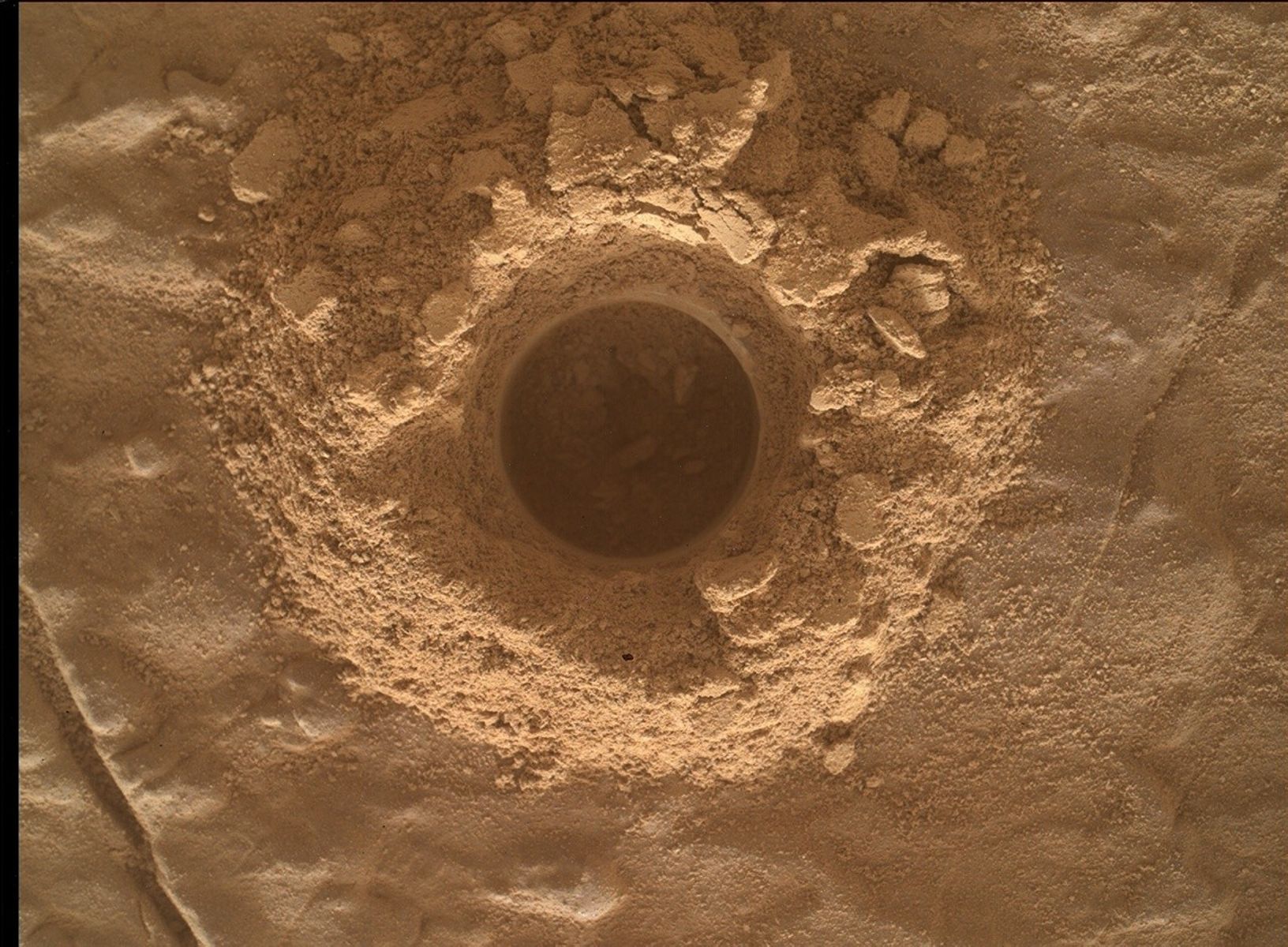
Curiosity Navigation Curiosity Home Mission Overview Where is Curiosity? Mission Updates Science Overview Instruments Highlights Exploration Goals News and Features Multimedia Curiosity Raw Images Images Videos Audio Mosaics More Resources
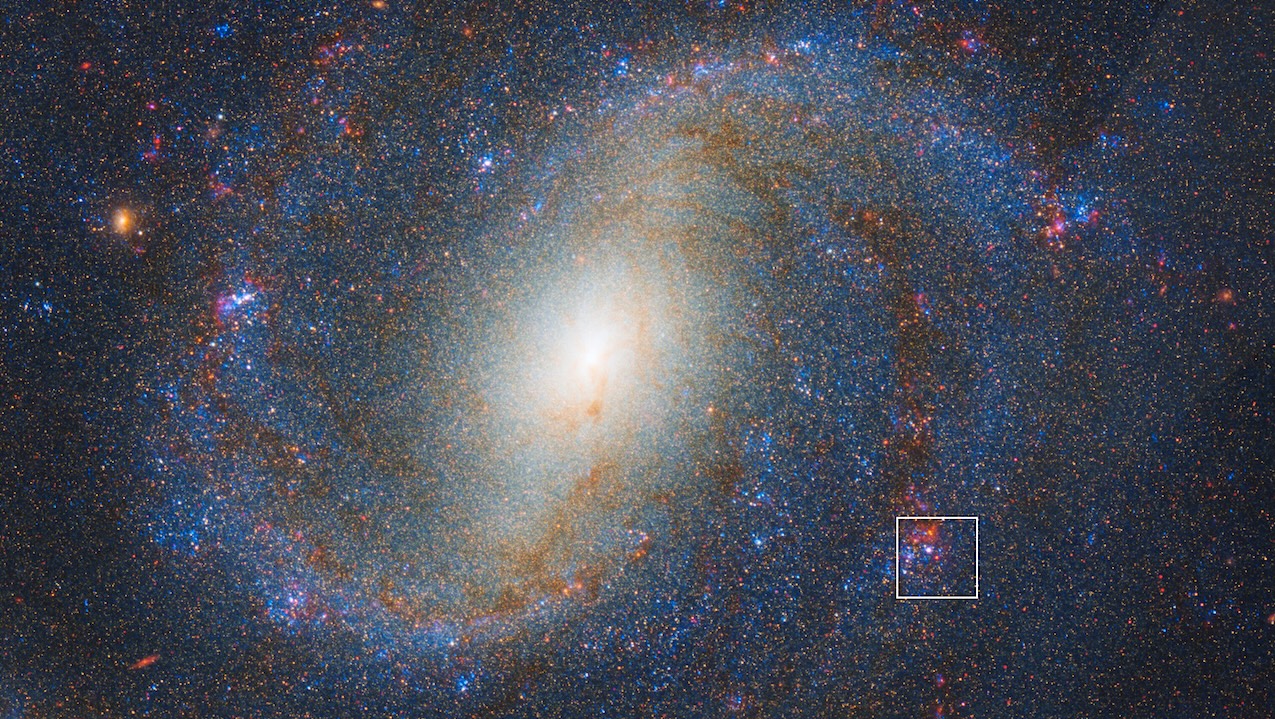
The main image at left shows a combined Webb and Hubble view of spiral galaxy NGC 1637, with the region of interest Credit: NASA, ESA, CSA, STScI, C. Kilpatrick (Northwestern),