
Now Reading: House Science Committee leaders criticize FCC rulemaking on space safety
-
01
House Science Committee leaders criticize FCC rulemaking on space safety


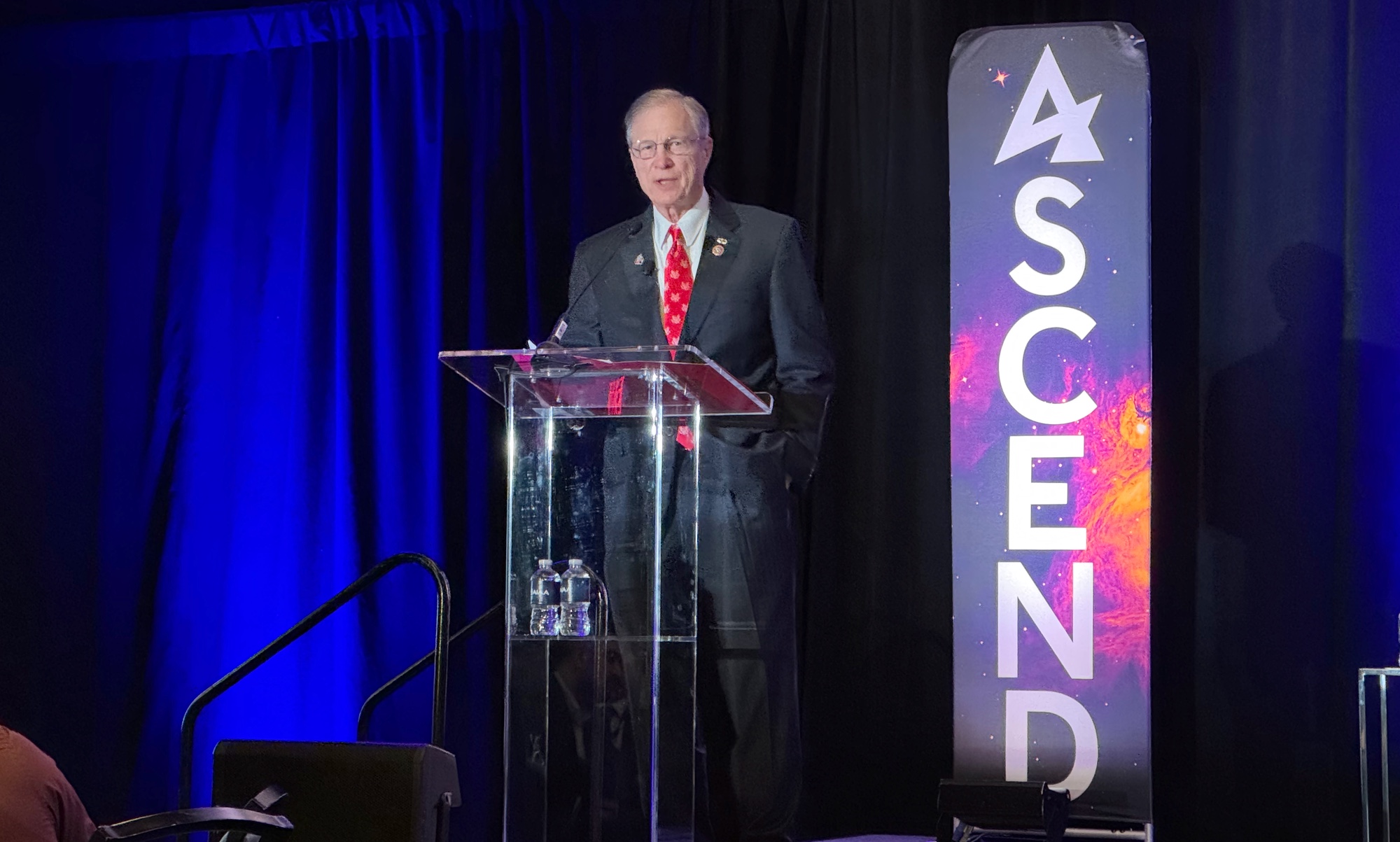

WASHINGTON — The leaders of the House Science Committee say the Federal Communications Commission is overstepping its authority with parts of a space licensing rulemaking.
In a letter last week to FCC Chairman Brendan Carr, Reps. Brian Babin, R-Texas, and Zoe Lofgren, D-Calif., said elements of the FCC’s “Space Modernization for the 21st Century” notice of proposed rulemaking, or NPRM, would impose regulations beyond the commission’s statutory authority.
Babin and Lofgren, the chair and ranking member, respectively, of the House Science Committee, said that while they support efforts to improve the licensing process for satellites and ground stations, the FCC is going too far by including provisions related to space safety.
“The Committee supports efforts to clarify and expedite FCC processes for radiofrequency communications licenses for private space systems,” they wrote. “However, the NPRM proposes requirements related to ‘space safety’ unrelated to spectrum management or the prevention of harmful radiofrequency interference.”
“Such proposed requirements would effectively condition access to spectrum licenses on compliance with operational requirements unrelated to radiofrequency communications,” they added, noting there is nothing in the FCC’s underlying legislation, the Communications Act of 1934, or subsequent laws granting the commission that authority.
Space safety is only a small portion of the proposed rule. The NPRM incorporates existing regulations on post-mission satellite disposal and would add requirements that spacecraft be trackable and that operators, upon receiving notice of a potential conjunction with another space object, “review and take all possible steps to assess and mitigate the collision risk.”
“We see these as common sense approaches that have been developed through fulsome Commission proceedings and which will help ensure the ongoing ability of systems to deliver communications services,” the FCC stated in the NPRM.
The FCC has maintained orbital debris and space safety rules for more than 20 years, largely because no other agency was able or willing to regulate those issues for commercial satellites. The commission has updated those rules over time, including a 2022 decision to shorten the deadline for deorbiting satellites at the end of their operational lives from 25 years to five.
The House Science Committee, however, has long questioned the FCC’s authority to regulate space safety. It raised similar concerns in letters to then-FCC Chairman Ajit Pai in 2020 and then-Chairwoman Jessica Rosenworcel in 2022. The 2022 letter was sent shortly before the FCC voted to change the post-mission disposal timeline.
What has changed since then is a 2024 Supreme Court ruling in the case Loper Bright Enterprises v. Raimondo that restricts the ability of agencies to enact regulations unless they are clearly authorized to do so in law. Some in industry have argued that the ruling undermines the FCC’s ability to regulate orbital debris.
“Agencies possess only those powers granted by Congress. When Congress has chosen to regulate private space activities, it has done so explicitly and unambiguously,” Babin and Lofgren wrote, citing the assignment of launch and reentry licensing to the Transportation Department. No comparable authority over space safety has been explicitly assigned to the FCC or other agencies, they argued.
Efforts over the past several years have sought to formally assign responsibility for space safety and related issues, possibly as part of a broader “mission authorization” framework for commercial space activities not clearly regulated by the FCC, Federal Aviation Administration or Office of Space Commerce.
In a speech at the ASCENDxTexas conference Feb. 26, Babin said he plans to focus this year on commercial space issues after the committee passed a NASA authorization bill in early February.
He suggested that effort would build on a commercial space bill the committee advanced in 2023 but that did not pass the House, as well as an August White House executive order on commercial space. Both included provisions to create a mission authorization system.
“Our work in this Congress will build on that framework,” he said. “Once again, we need to get a commercial space act passed.”










Related Posts

Stay Informed With the Latest & Most Important News
Previous Post
Next Post





Advertisement
-
 01Two Black Holes Observed Circling Each Other for the First Time
 -
 02From Polymerization-Enabled Folding and Assembly to Chemical Evolution: Key Processes for Emergence of Functional Polymers in the Origin of Life
 -
 03Astronomy 101: From the Sun and Moon to Wormholes and Warp Drive, Key Theories, Discoveries, and Facts about the Universe (The Adams 101 Series)
 -
 04True Anomaly hires former York Space executive as chief operating officer
 -
 05Φsat-2 begins science phase for AI Earth images
 -
 06Hurricane forecasters are losing 3 key satellites ahead of peak storm season − a meteorologist explains why it matters
 -
 07Binary star systems are complex astronomical objects − a new AI approach could pin down their properties quickly