
Now Reading: How to see the 3 March total lunar eclipse
-
01
How to see the 3 March total lunar eclipse


By Mark Armstrong
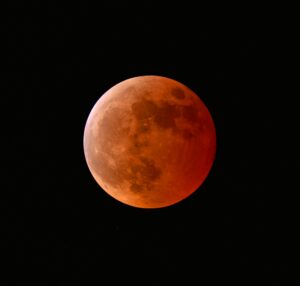
A total lunar eclipse is centred on the mid-Pacific 3 March, visible to observers in New Zealand and sweeping eastern Australia and western USA, with a large partial eclipse extending further east and west.
What is a lunar eclipse?
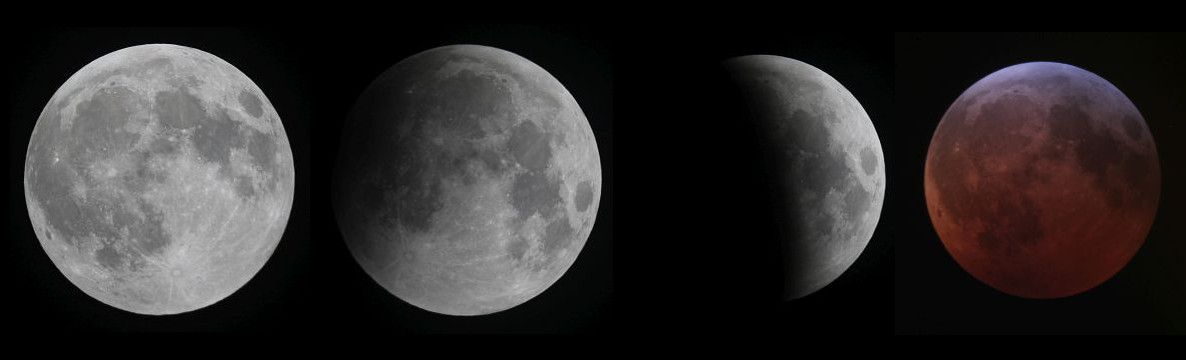
An eclipse of the Moon occurs when our satellite moves into Earth’s shadow, when Earth lies between the Sun and the Moon. Normally, this alignment causes a full Moon to be seen in the sky, and the Moon is fully illuminated. Because the Moon’s orbital plane is inclined to ecliptic (the apparent path of the Sun in the sky) by around five degrees, the Moon doesn’t encounter the cone of Earth’s shadow that frequently.
For this eclipse, the Moon lies fully within the umbra, the deepest part of the shadow cone, and we experience the glory of a total eclipse of the Moon, with penumbral and partial phases bookending totality.
From where in the world can I see the 3 March eclipse?
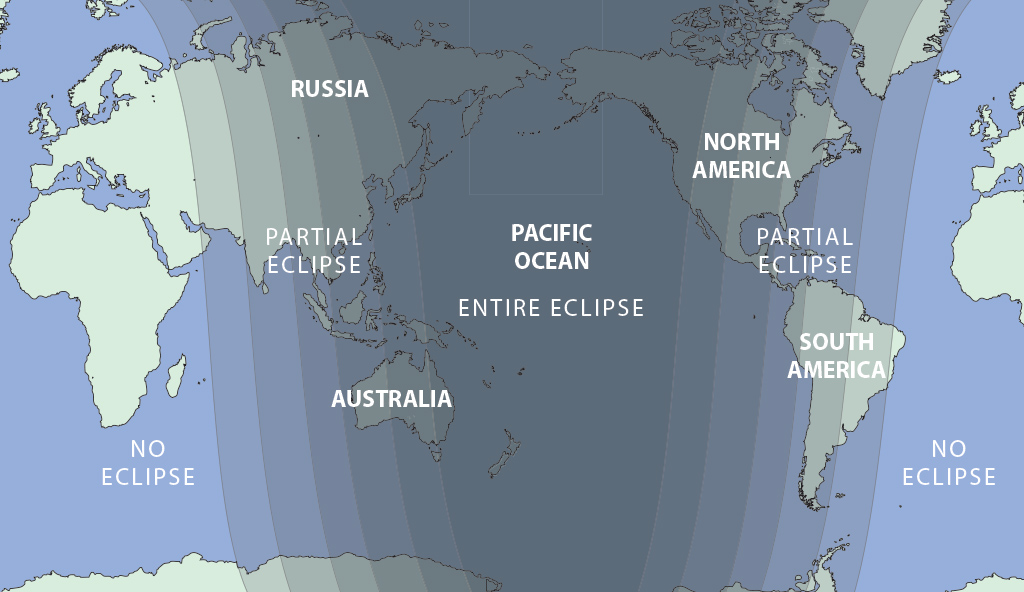
The Moon will pass through the Earth’s shadow between 08:42 and 14:24 UT, creating a total lunar eclipse. The eclipse will be visible any location where the Moon is above the horizon at the time, including from the Americas, Russia, Asia, Antarctica, Oceania and Alaska.
It will not be visible from the UK since the Moon will be beneath the horizon at the time.
How long does the eclipse last?
The total eclipse will last from 11:03 until 12:02 UT. The Moon will be partially eclipsed between 09:49 and 13:17 UT.
The eclipse will begin at 08:42, when the Moon first enters a region of the Earth’s shadow called the penumbra. As a result the Moon’s brightness will begin to dim, as it is less strongly illuminated by the Sun, but it remains illuminated.
At 09:49, the edge of the Moon’s disk will enter the Earth’s umbra. As an increasing fraction of the Moon’s face creeps into the umbra, we see our planet’s circular shadow sweep across the face of the Moon.
Eventually the Moon will pass entirely within the Earth’s umbra at 11:03, and the total eclipse will begin.
The table below lists the times when each part of the eclipse will begin and end.
| Time (UTC) | |
| 08:42 | Moon begins to enter the Earth’s penumbra |
| 09:49 | Moon begins to enters the Earth’s umbra. Partial eclipse begins. |
| 11:03 | Moon fully within Earth’s umbra. Total eclipse begins. |
| 11:33 | Midpoint of eclipse |
| 12:03 | Moon begins to leave the Earth’s umbra. Total eclipse ends. |
| 13:17 | Moon fully outside the Earth’s umbra. Partial eclipse ends. |
| 14:23 | Moon leaves the Earth’s penumbra |
What do I need to observe a lunar eclipse?
A total lunar eclipse is a delightful, easily viewed spectacle that can be savoured over a generous amount of time. It is an astronomical ‘equaliser’ that offers all viewers – from the naked-eye watcher to the highly equipped amateur – ample opportunity to enjoy and to record the event in a multitude of ways.
Steadily-held binoculars are by far the best equipment with which to enjoy and fully appreciate a lunar eclipse. Binoculars bring out colours well; they frame the Moon in a wider celestial field of view in which the surrounding stars are visible, and at totality the Moon really does appear suspended in space, presenting an almost-perceptible 3D scene.
Why does the Moon sometimes appear red during an eclipse?
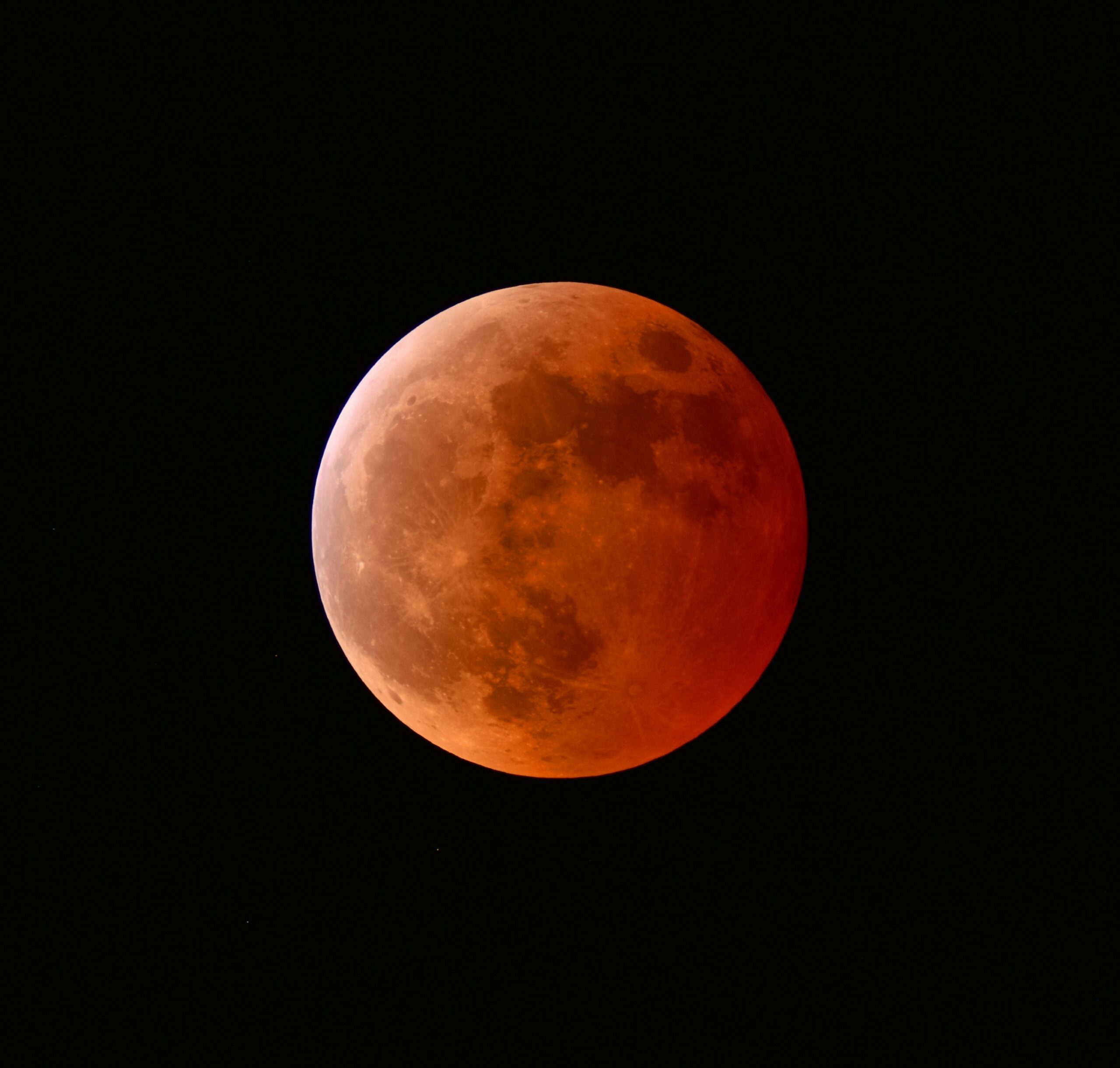
The darkness and variety of colours within the umbral shadow vary from eclipse to eclipse, depending on the state (cloud cover, particulate density caused by forest fires and volcanic activity, etc) of those parts of Earth’s atmosphere responsible for refracting sunlight into the umbra. With local effects coming into play, too – the Moon’s altitude, light pollution and atmospheric transparency – it is difficult to predict how light or dark, how orange, red or brown, the eclipsed Moon will actually appear to the observer. It’s not uncommon for observers to report a coloured rim to the umbra’s edge, occasionally bluish or yellowish.
Did you photograph the eclipse? Send your images to gallery2026@astronomynow.com for a chance to be featured on our social media channels or in our print magazine gallery.










Related Posts
Stay Informed With the Latest & Most Important News
Previous Post
Next Post


Advertisement
-
 01Two Black Holes Observed Circling Each Other for the First Time
 -
 02From Polymerization-Enabled Folding and Assembly to Chemical Evolution: Key Processes for Emergence of Functional Polymers in the Origin of Life
 -
 03Astronomy 101: From the Sun and Moon to Wormholes and Warp Drive, Key Theories, Discoveries, and Facts about the Universe (The Adams 101 Series)
 -
 04True Anomaly hires former York Space executive as chief operating officer
 -
 05Φsat-2 begins science phase for AI Earth images
 -
 06Hurricane forecasters are losing 3 key satellites ahead of peak storm season − a meteorologist explains why it matters
 -
 07Binary star systems are complex astronomical objects − a new AI approach could pin down their properties quickly