
Now Reading: Indian rocket launches AST SpaceMobile’s next-gen BlueBird 6 satellite
-
01
Indian rocket launches AST SpaceMobile’s next-gen BlueBird 6 satellite


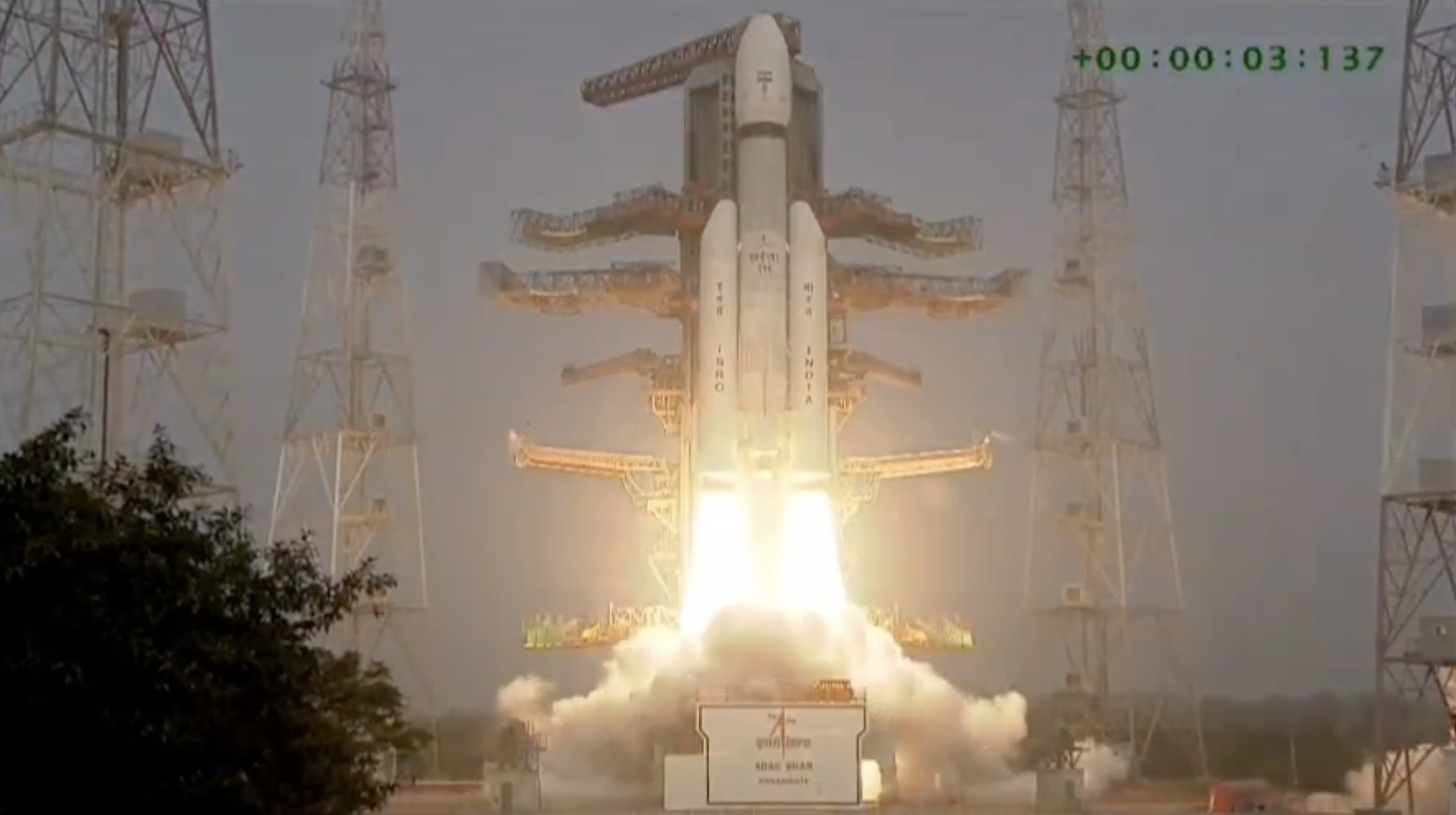

TAMPA, Fla. — An Indian LVM3 rocket launched AST SpaceMobile’s next-generation direct-to-device BlueBird satellite Dec. 23, kicking off a rollout of dozens of spacecraft built around the largest commercial communications antenna ever deployed in low Earth orbit (LEO).
The Indian Space Research Organisation’s (ISRO) largest rocket lifted off at 10:25 p.m. Eastern from the country’s Satish Dhawan Space Center, releasing the BlueBird 6 satellite about 15 minutes later.
“With this mission, India has successfully launched 434 satellites for 34 countries,” ISRO chairman V. Narayanan said. This includes 72 OneWeb LEO broadband satellites now owned by French operator Eutelsat.
At about 6,100 kilograms, Narayanan said BlueBird 6 is also “the heaviest satellite ever lifted from Indian soil using an Indian launcher.”
Abel Avellan, AST’s founder, chairman and CEO, said the company had taken control of the satellite and confirmed nominal telemetry.
With a phased array spanning roughly 223 square meters when unfolded, BlueBird 6 is about 3.5 times larger than BlueBirds 1-5, which launched together on a SpaceX Falcon 9 last year.
From early next year, AST has said the larger Block 2 BlueBirds would also use chips developed in-house to enable 10 gigahertz of processing bandwidth per satellite — 10 times the capacity of the earlier BlueBirds, supporting up to 120 megabits per second peak data rates.
Each satellite is designed to connect directly with standard mobile phones, initially using spectrum from cellular carriers to extend coverage beyond the reach of their terrestrial towers.
Busy year ahead
AST said it is on track to launch 45-60 satellites by the end of 2026 to enable full text, voice and 5G data services across the United States and other initial markets.
Last year, the Texas-based company indicated that satellites following the Indian mission would be launched in batches under a multi-provider launch plan, which includes SpaceX but relies heavily on Blue Origin’s New Glenn rocket.
AST announced Dec. 21 it had shipped BlueBird 7, identical to BlueBird 6, to Cape Canaveral in Florida for launch.
However, it added that BlueBirds 8-25 remain in various stages of assembly, integration and testing.
The availability of New Glenn flights next year, which have a fairing big enough to deploy eight BlueBirds at a time, also remains to be seen.
Blue Origin CEO Dave Limp recently said the company aims to launch “a bunch of times next year,” but did not detail New Glenn projections amid demand from the U.S. Space Force and other customers. The rocket has achieved two successful missions to date.
Multiple companies are racing to provide direct-to-device connectivity from LEO and other orbits, including frontrunner SpaceX, which is seeking to expand an already operational service next year that uses its sprawling Starlink constellation.
AST’s approach hinges on fewer, much larger LEO satellites designed to deliver higher capacity per spacecraft, versus competitors pursuing different architectures and scale strategies.










Related Posts

Stay Informed With the Latest & Most Important News
Previous Post
Next Post





Advertisement
-
 01Two Black Holes Observed Circling Each Other for the First Time
 -
 02From Polymerization-Enabled Folding and Assembly to Chemical Evolution: Key Processes for Emergence of Functional Polymers in the Origin of Life
 -
 03Astronomy 101: From the Sun and Moon to Wormholes and Warp Drive, Key Theories, Discoveries, and Facts about the Universe (The Adams 101 Series)
 -
 04True Anomaly hires former York Space executive as chief operating officer
 -
 05Φsat-2 begins science phase for AI Earth images
 -
 06Hurricane forecasters are losing 3 key satellites ahead of peak storm season − a meteorologist explains why it matters
 -
 07Binary star systems are complex astronomical objects − a new AI approach could pin down their properties quickly