
Now Reading: Industry navigates NASA’s start-and-stop approach to commercial space stations
-
01
Industry navigates NASA’s start-and-stop approach to commercial space stations


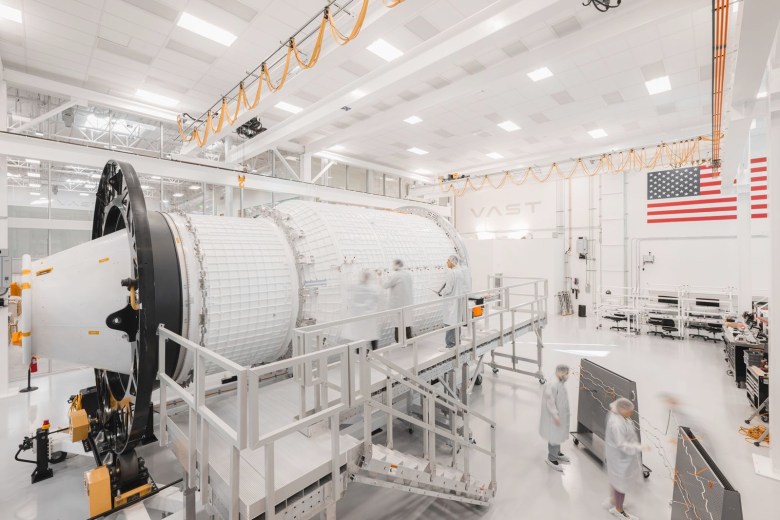
(Note: This article went to press for the April issue of SpaceNews Magazine before NASA announced potential changes to the CLD program.)
NASA signaled last summer it planned to accelerate efforts to replace the aging International Space Station. Nearly nine months later, that push appears to have slowed.
In a directive signed at the end of July, the agency’s acting administrator, Sean Duffy sought changes to the Commercial Low Earth Orbit Destinations, or CLD, program, aimed at speeding up the development of privately operated space stations. That plan included a shift to funded Space Act Agreements to multiple companies as a way to support development and demonstrations of commercial stations before NASA awarded service contracts.
NASA outlined an ambitious plan. A draft solicitation released in early September envisioned a final call for proposals in October, submissions due by December and awards by April 2026. The goal was to support demonstration missions to those companies’ stations by 2030, when the ISS is scheduled to retire.
Since then, that schedule has slipped. As of the middle of March, NASA had yet to issue the final call for proposals for the next phase of the CLD program, leaving companies waiting on the next phase — let alone awards — in the program.
Executives developing the commercial stations have been in limbo, waiting for months for an updated draft or the final call for proposals, uncertain about when it might be released and what it might contain. At least publicly, they said they are remaining patient and flexible while waiting for NASA’s next steps on the program.
“I’m not changing my plans. There’s no reason to do that,” said Jonathan Cirtain, chief executive of Axiom Space, said during a panel discussion at the ASCENDxTexas conference. “Whenever that CLD solicitation comes out, we’re ready for it.”
Some of the delay was caused by the six-week government shutdown in October and November. But the program also appears to be swept up in broader changes at the agency caused by both the arrival of Jared Isaacman as NASA administrator as well as an executive order on space policy issued by the White House in December.
NASA has publicly said little about the delays. “NASA’s procurement activities remain ongoing as the agency works to align acquisition timelines with national space policy and broader operational objectives,” the agency wrote in a Jan. 28 procurement notice about the status of the CLD program. “You should anticipate that additional clarity regarding procurement milestones will be provided in the coming weeks.”
Four weeks later, NASA had not provided that additional clarity when Ken Bowersox, at the time NASA associate administrator for space operations, spoke at the ASCENDxTexas conference in Houston.
“We got a new administrator and a new team with that administrator who is very interested in what we do in low Earth orbit and establishing a plan that is going to be workable for the future,” he said in his Feb. 25 speech. “I don’t think it’s going to be too long before we see what those next steps are.”
However, Bowersox concluded the talk by announcing he was retiring from NASA, and the agency said the next day that Bowersox had been replaced by his deputy, Joel Montalbano.
Waiting patiently
Earlier in February, Cirtain said he had met with Isaacman about the status of the CLD program and came away assured that it was a priority.
“This is a pretty substantial acquisition for him during the first few years of his tenure as administrator, and I think it’s warranted that he takes a pretty significant look at this,” he told reporters in a Feb. 12 call. “I’m quite confident that they’ll come out with a solicitation here in the next weeks that will be aligned with what the national interests are.”
Max Haot, chief executive of Vast, said during the ASCENDxTexas panel that he thinks “there is some urgency” regarding the call for proposals, “but Jared and the team will get it out as soon as they can.” That urgency, he explained, stems from the looming retirement of the ISS in 2030, less than five years away.

Another company sees additional reasons for a speedier pace in the CLD program. Marshall Smith, chief executive of Starlab Space, said that unlike NASA’s commercial crew and cargo programs, where the agency paid most of the development costs, industry expects to shoulder most of the cost of developing commercial stations, requiring significant outside investment.
“Most investors want to see commitment from the government. It is really important from that perspective to commit to where they want to go and what they want to do,” he said. “It’s time to move on. It’s time to get that decision made and get a contract out.”
Starlab Space is a joint venture whose majority shareholder is Voyager Technologies. In a company earnings call March 10, Dylan Taylor, chief executive of Voyager, said he expected to see a call for proposals within 60 days.
“We still anticipate a downselect this year. To be more precise, it is difficult to say,” he said.
Just as important as the timing of the CLD call for proposals is what differences the final version will have from the draft in September.
“I’m excited to hear what it will be. None of us know exactly what it will be,” Haot said of the solicitation. “Will it be a demonstration, or back to what it was before?”
Some companies want to see more relaxed requirements for development of their stations, giving them more freedom in their design. “We would propose maybe less requirements on the details of verification and validation,” said Randy Lillard, program manager for the Orbital Reef space station at Blue Origin.
Reduced requirements, he argued, are essential to having a station ready by the end of the decade. “I think we have a hard time closing a four-year — 2026 to 2030 — program in a completely old-style NASA approach.”
Smith, who worked on NASA’s Human Landing System program before leaving the agency to join Starlab, said he would like that program’s approach, which emphasized high-level requirements over specific ways of achieving them, applied to CLD.
“NASA has a lot of experience and we want to work with NASA very closely, but they have thousands and thousands of standards,” he said. “They should be guidelines for the most part.”
Haot said safety requirements should be treated differently from others. “For measured, safety-driven requirements, we welcome them,” he said. “We want the insight, we want the supervision.”
He contrasted that with requirements to support research on the station. “For these, we definitely would like to have as much flexibility to work with NASA and other commercial partners,” he said. “Not all requirements are equal.”
Cirtain said his primary concern with the CLD draft solicitation was the requirement for companies to perform a demonstration mission.
“There are ways that NASA has demonstrated that you can build and demonstrate that the systems meet the requirements on the ground,” he said, “and then you fly them in space and operate them safely.”
Congressional pressure
While industry has been waiting patiently for NASA to move ahead with the next phase of the CLD program, some in Congress have been less patient. They include Sen. Ted Cruz (R-Texas), chair of the Senate Commerce Committee, who industry sources say has been pushing NASA for months to move ahead with the CLD solicitation.
That effort became more apparent March 4 when Cruz’s committee advanced a NASA authorization bill. It included a section that extends the life of the ISS by two years, through 2032, and directs that NASA not deorbit the ISS until at least one commercial station is ready.

The bill clearly linked that extension to what it considered to be slow progress on CLD. “NASA has repeatedly delayed the release of a request for proposals for sustained commercial low-Earth-orbit services, and such delays, coupled with shifting requirements and inconsistent programmatic direction, have introduced substantial uncertainty into the development planning, financing, workforce scaling, and infrastructure investment decisions of commercial providers,” it states.
“As a result of such uncertainty and delayed procurement action,” it continues, “commercial providers have been unable to scale development and private investment at a pace aligned with the previously articulated NASA objective of deorbiting the ISS in or around 2030.”
The bill includes timetables for releasing the call for proposals and issuing awards for the next phase of the CLD program, including a requirement that NASA select at least two companies. Since it’s unclear when, or even if, the Senate bill will pass — a House NASA authorization bill lacks that language — the provisions are primarily seen in industry as a way for the committee to make clear its dissatisfaction with the pace of progress on CLD.
Ready for game day
Commercial space station companies have not been sitting idly. They have focused on commercial aspects of their stations as well as financing.
Axiom announced Feb. 12 it raised a new $350 million round led by Type One Ventures and Qatar Investment Authority (QIA). Most of the funding will go toward completing modules for its station.
“The bulk of the funding will be spent on the completion of module one and the continued development work on module two as we seek to deploy those in 2028 and 2029,” Cirtain said in a call about the funding round. Those two modules will form the core of a station capable of hosting four astronauts at a time.
Three weeks later, Vast announced it raised a $500 million round led by Balerion Space Ventures. (QIA, one of the investors in Axiom’s round, also participated in the Vast round.) This was the first outside investment for Vast, which had relied on its founder, cryptocurrency billionaire Jed McCaleb, for its first billion dollars.
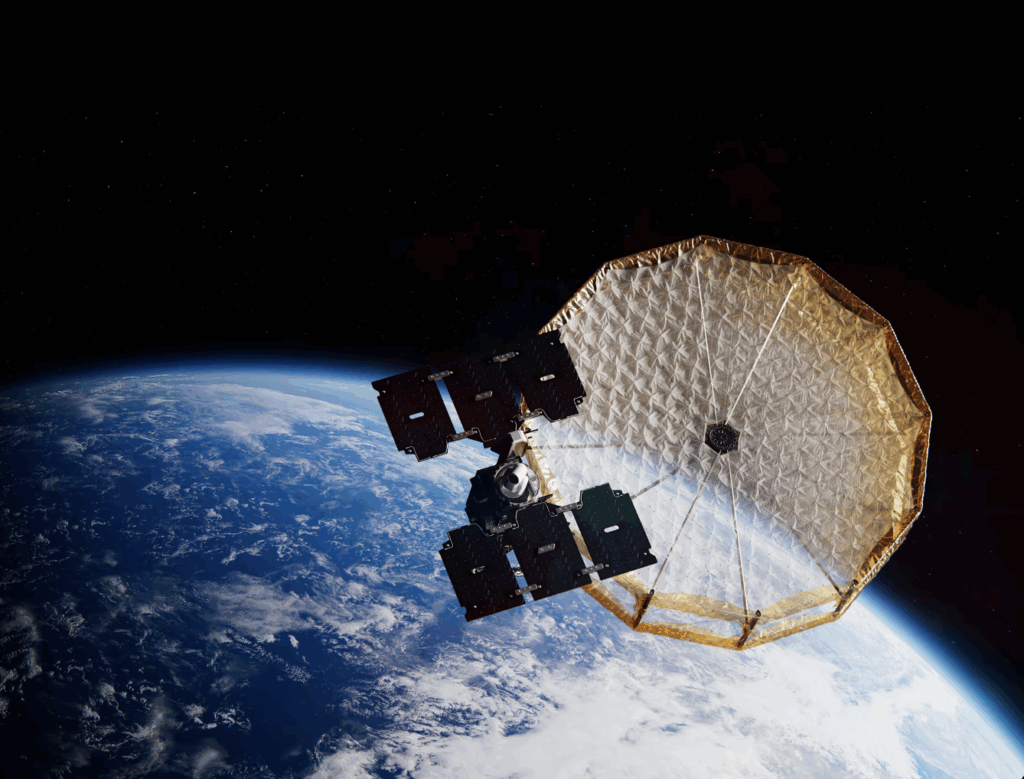
The funds will help accelerate development of Haven-2, the space station Vast is developing for the CLD program. It will build on the experience the company gains from the single-module Haven-1 station set to launch in early 2027.
Starlab Space is working on its own funding round, Voyager executives said on their earnings call, with the joint venture announcing investments of undisclosed size from several firms in recent months.
Taylor also said on the call that Starlab had sold all the payload space on the station reserved for commercial customers. “It’s a fantastic outcome given the fact that we won’t be in orbit for another 36 months.”
While companies talk up the prospects of using those stations for commercial applications ranging from pharmaceuticals to materials development, they acknowledge those markets are still nascent and that governments will likely be the major initial customers.
“In the long term, we all want the LEO economy to thrive. We want to be making drugs in space,” Haot said at ASCENDxTexas, but noted that in Vast’s business models, the company has “close to zero dollars” from that economy in the next five years.
“We need to be profitable on the current market,” he said, which he described as NASA and other Western ISS partners along with emerging space agencies.
That underscores the importance of the CLD program in helping develop commercial stations, and with it the promise of future NASA contracts to use those stations.
“The game is won on the practice field,” said Cirtain of his company’s preparations for CLD solicitation. “We’re ready for game day.”
This article first appeared in the April 2026 issue of SpaceNews Magazine with the title “Hurry up and wait.”










Related Posts


Stay Informed With the Latest & Most Important News
Previous Post
Next Post


Advertisement
-
 01Two Black Holes Observed Circling Each Other for the First Time
 -
 02From Polymerization-Enabled Folding and Assembly to Chemical Evolution: Key Processes for Emergence of Functional Polymers in the Origin of Life
 -
 03Astronomy 101: From the Sun and Moon to Wormholes and Warp Drive, Key Theories, Discoveries, and Facts about the Universe (The Adams 101 Series)
 -
 04True Anomaly hires former York Space executive as chief operating officer
 -
 05Φsat-2 begins science phase for AI Earth images
 -
 06Hurricane forecasters are losing 3 key satellites ahead of peak storm season − a meteorologist explains why it matters
 -
 07Binary star systems are complex astronomical objects − a new AI approach could pin down their properties quickly