
Now Reading: Industry says proposed NASA changes to commercial space station plans create confusion
-
01
Industry says proposed NASA changes to commercial space station plans create confusion

Industry says proposed NASA changes to commercial space station plans create confusion

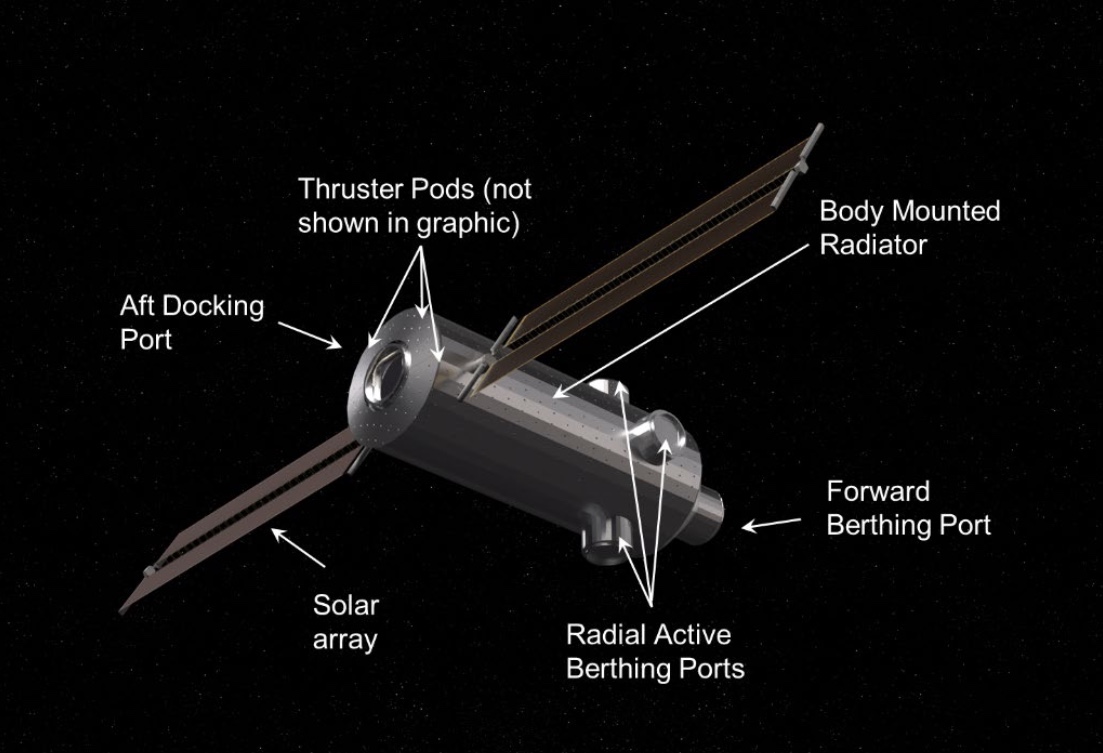

WASHINGTON — NASA’s proposed changes to its support of commercial space stations have created concern and confusion among companies developing them, the head of an industry organization warned.
In March 25 testimony at a hearing of the House Science Committee’s space subcommittee, Dave Cavossa, president of the Commercial Space Federation, opposed a potential revamp of NASA’s plans to shift from the International Space Station to commercial stations announced the day before.
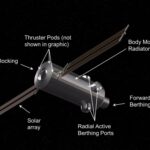
At NASA’s “Ignition” event March 24, NASA announced it was considering an alternative approach to what it calls commercial low Earth orbit destinations, or CLDs. Under that new approach, NASA would procure a core module from industry that would be installed on the ISS, to which additional commercial modules could be added. That would form the basis of a commercial station, or stations, that would detach from the ISS.
NASA said at the event it is considering the new approach because it believes the market for commercial stations is not developing as rapidly as previously expected, and because companies don’t have experience with space station operations.
Cavossa, whose organization includes several companies working on commercial space stations, criticized the NASA proposal.
“Yesterday, NASA announced it is considering yet another major change to the Commercial LEO Destination program, sowing concern and, really, sowing confusion among the commercial space companies I represent,” he said.
He rejected NASA’s claims that the commercial market has been slow to materialize, citing recent investment in companies working on those stations as well as an announcement by Starlab Space that it has fully booked its commercial payload racks on its station.
“The commercial market is there. We’ve been building it,” he said. “NASA’s stated rationales for changes to the program are flawed and, ultimately, not addressed by their proposal yesterday.”
Joel Montalbano, NASA’s acting associate administrator for space operations, defended the revised concept at the hearing, saying there was little evidence so far of a growing commercial market for the ISS or commercial successors.
“We expected a launch market that was going to take off. We expected tourism to take off. We expected the ability to do research and technology development on the International Space Station, bring it back to Earth and mass produce it,” he said. “We’re not seeing any of those three things.”
He said the current approach would lead to just a single commercial station provider being funded by NASA. “In our opinion, that’s a very risky approach,” he argued.
“We believe that the option we introduced yesterday has multiple opportunities for the commercial industry to get involved, start out in an incremental approach,” he said. Commercial modules under that approach would not have to be “fully equipped” but could instead rely on resources from the ISS.
“They can grow and, when they’re done and they’re ready to separate, they go off to become their own space station,” he said.
NASA faced criticism for that approach not just from Cavossa but from a key member of the committee.
“The fundamental issue I have here is that in a general sense, NASA has for 20 years been following a strategy that hopes to attract new sources of private investment in civil space projects,” said Rep. George Whitesides, D-Calif., vice ranking member of the full committee. That strategy, he noted, has the goal of reducing NASA’s costs.
“Based on the old plan, several companies raised probably in excess of $2 billion in private capital and did so on the expectation that NASA would follow through,” he said. “My concern is that if NASA is not a reliable partner for private investors, we’re not going to get that money and we’re not going to then save money by being able to cost-share with the private sector.”
Whitesides said he was skeptical that NASA could afford to build the core module in that new plan while also operating the ISS, or that the core module could be done quickly enough to be installed on the station while maintaining a planned 2030 retirement date for the ISS.
Montalbano did not provide a budget for the core module but suggested it could be cheaper to develop than other station modules since it would rely on the ISS for some capabilities, like life support. He also reiterated that NASA still expected to retire the ISS in 2030.
NASA issued March 25 a request for information (RFI) seeking industry input on that alternative approach. It asks companies for their insights into the state of the commercial market for CLDs as well as feedback on the technical and procurement approaches for the proposed core module. Responses are due April 8, the same day as a separate RFI on crew and cargo transportation issues.
Montalbano said NASA will follow those requests for information up with a “final RFI” in late April, followed by a request for proposals in June.
“Once we get that information, we’ll have an opportunity to better understand costs of what’s going in the future,” he said, adding that the agency may consider the current approach to supporting CLDs.
“If there’s a commercial company out there and says, ‘NASA, your market analysis is incomplete or we have additional data that you don’t have,’ we want to hear that,” he said.
Cavossa, in his testimony, called on NASA to retain its current CLD approach, stating that uncertainty by the agency is delaying some business plans by station developers.
“They’re telling me that once NASA decides what the strategy is going to be, the amount of interest that’s going to come out of the rest of the market that’s been waiting in the background will explode,” he said.
“There will be tremendous announcements that can be made, but they’ve all been waiting for NASA to say this is where we’re going, this is our strategy, and that keeps changing. So, it’s slowing things down.”










Related Posts

Stay Informed With the Latest & Most Important News
Previous Post
Next Post

Advertisement
-
 01Two Black Holes Observed Circling Each Other for the First Time
 -
 02From Polymerization-Enabled Folding and Assembly to Chemical Evolution: Key Processes for Emergence of Functional Polymers in the Origin of Life
 -
 03Astronomy 101: From the Sun and Moon to Wormholes and Warp Drive, Key Theories, Discoveries, and Facts about the Universe (The Adams 101 Series)
 -
 04True Anomaly hires former York Space executive as chief operating officer
 -
 05Φsat-2 begins science phase for AI Earth images
 -
 06Hurricane forecasters are losing 3 key satellites ahead of peak storm season − a meteorologist explains why it matters
 -
 07Binary star systems are complex astronomical objects − a new AI approach could pin down their properties quickly