
Now Reading: Investing in student programs is essential for America’s lead in space
-
01
Investing in student programs is essential for America’s lead in space


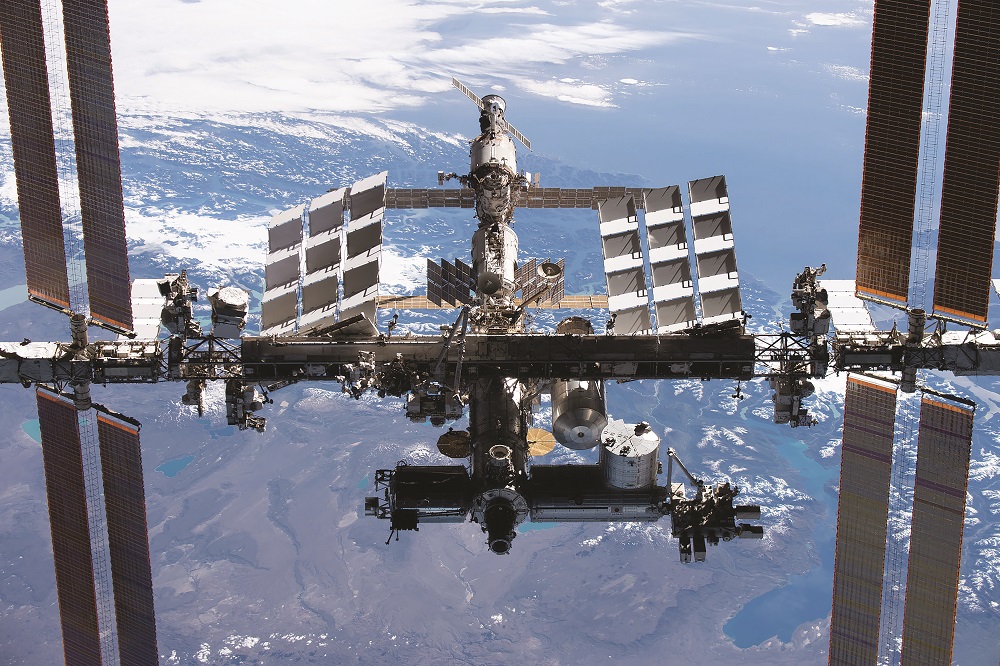

The University of Illinois’ Space Entanglement and Annealing Quantum Experiment (SEAQUE) is a compelling success story in the global race to develop quantum communication networks in space. The experiment’s success was enabled by a novel collaboration approach across academia, industry and government. As such, SEAQUE is more than a physics experiment. It’s a demonstration of student-driven innovation, commercial collaboration, and American ingenuity at the edge of science that offers a model for how the United States can lead on crucial space-based quantum technologies. But that model could be at risk if not financially supported.
Backed by NASA, the International Space Station National Laboratory (ISSNL), and partnerships with the Jet Propulsion Lab and Aegis Aerospace, SEAQUE was designed to investigate and validate technologies critical to future quantum networks. The experiment incorporates a novel entanglement source and two sensor annealing techniques to “heal” radiation damage in single-photon detectors, components that are essential to creating secure global quantum communications. SEAQUE is a showcase of what can happen when universities, federal agencies and commercial providers come together to empower the next generation of innovators.
Student teams were at the heart of SEAQUE’s development. They faced the full complexity of building space hardware, dealing with design, safety standards and environmental qualification tests. These students gained firsthand experience working with real flight constraints while collaborating with industry engineers and federal partners. The project was a first for the U.S., resulting in a high-functioning, high performance quantum payload operating in low Earth orbit.
Many of these students, including those from the University of Illinois, the University of Waterloo and the National University of Singapore, are now being recruited by national labs and quantum startups. More than just names on a research paper, they carry with them the rare experience of building and operating successful spaceflight hardware.
But opportunities like these are under threat.
Global investment in quantum technologies is growing rapidly. China has committed an estimated $10 billion to its National Laboratory for Quantum Information Sciences and already achieved the world’s first quantum-encrypted, un-hackable intercontinental video call. The EU has pledged 1 billion euros ($1.2 billion) through its Quantum Flagship program, with active support for satellite-based secure communications. Australia is investing nearly900 million Australian dollars ($640 million) in quantum systems, including space applications. Meanwhile, U.S. support for space-based experiments is faltering, especially for creative, cost-effective, student-driven space experiments.
Consider the recent case of a physics team at the University of Chicago. They earned a CubeSat Launch Initiative award, secured funding and completed development on a student-built laser communications satellite. But their launch was then rescinded due to Congressional budget constraints. These setbacks discourage exactly the kind of early-career, high-skill engineering experience that future innovation depends on.
China is estimated to graduate as many as seven to eight times more engineers per year than the U.S. and 23 times the number of STEM PhDs. To remain competitive, the U.S. must double down on real-world, hands-on space projects like SEAQUE. This includes protecting dedicated funding for academic payloads, expanding access to commercial platforms like Aegis Aerospace’s MISSE and incentivizing cross-disciplinary programs that merge quantum science, aerospace engineering and systems management.
These missions are targeted investments in orbital infrastructure and talent pipelines. Yes, they deliver research, but they also inspire and train future STEM leaders, accelerate technology and build resilience in the commercial space ecosystem. Without these opportunities enabled by NASA and ISSNL, and the commercial space services offered by Aegis Aerospace, SEAQUE’s success would not have been possible. These types of partnerships, academic, governmental and commercial, should be nurtured and expanded.
The next breakthroughs in quantum communications will not happen in the lab alone. Allies and competitors are planning and conducting quantum experiments in space and it’s critical that the U.S. continue to do so if we hope to lead in this crucial technology. If we fail to invest in missions like SEAQUE, a national strategic asset, we don’t just lose research opportunities, we lose a generation of innovators who are ready to create what comes next.
Michael Lembeck is an adjunct professor of aerospace engineering and the Chief Technical Officer of StarSense Innovations, LLC.
Mark M. Gittleman, P.E., is a senior advisor to Aegis Aerospace, Inc. and the Chairman of the Board of Advisors for the ISS National Laboratory User Advisory Committee.
SpaceNews is committed to publishing our community’s diverse perspectives. Whether you’re an academic, executive, engineer or even just a concerned citizen of the cosmos, send your arguments and viewpoints to opinion (at) spacenews.com to be considered for publication online or in our next magazine. If you have something to submit, read some of our recent opinion articles and our submission guidelines to get a sense of what we’re looking for. The perspectives shared in these opinion articles are solely those of the authors and do not necessarily represent their employers or professional affiliations.










Related Posts
Stay Informed With the Latest & Most Important News
Previous Post
Next Post

Advertisement
-
 01Two Black Holes Observed Circling Each Other for the First Time
 -
 02From Polymerization-Enabled Folding and Assembly to Chemical Evolution: Key Processes for Emergence of Functional Polymers in the Origin of Life
 -
 03Astronomy 101: From the Sun and Moon to Wormholes and Warp Drive, Key Theories, Discoveries, and Facts about the Universe (The Adams 101 Series)
 -
 04True Anomaly hires former York Space executive as chief operating officer
 -
 05Φsat-2 begins science phase for AI Earth images
 -
 06Hurricane forecasters are losing 3 key satellites ahead of peak storm season − a meteorologist explains why it matters
 -
 07Binary star systems are complex astronomical objects − a new AI approach could pin down their properties quickly