
Now Reading: Is the race for moon missions lunacy?
-
01
Is the race for moon missions lunacy?


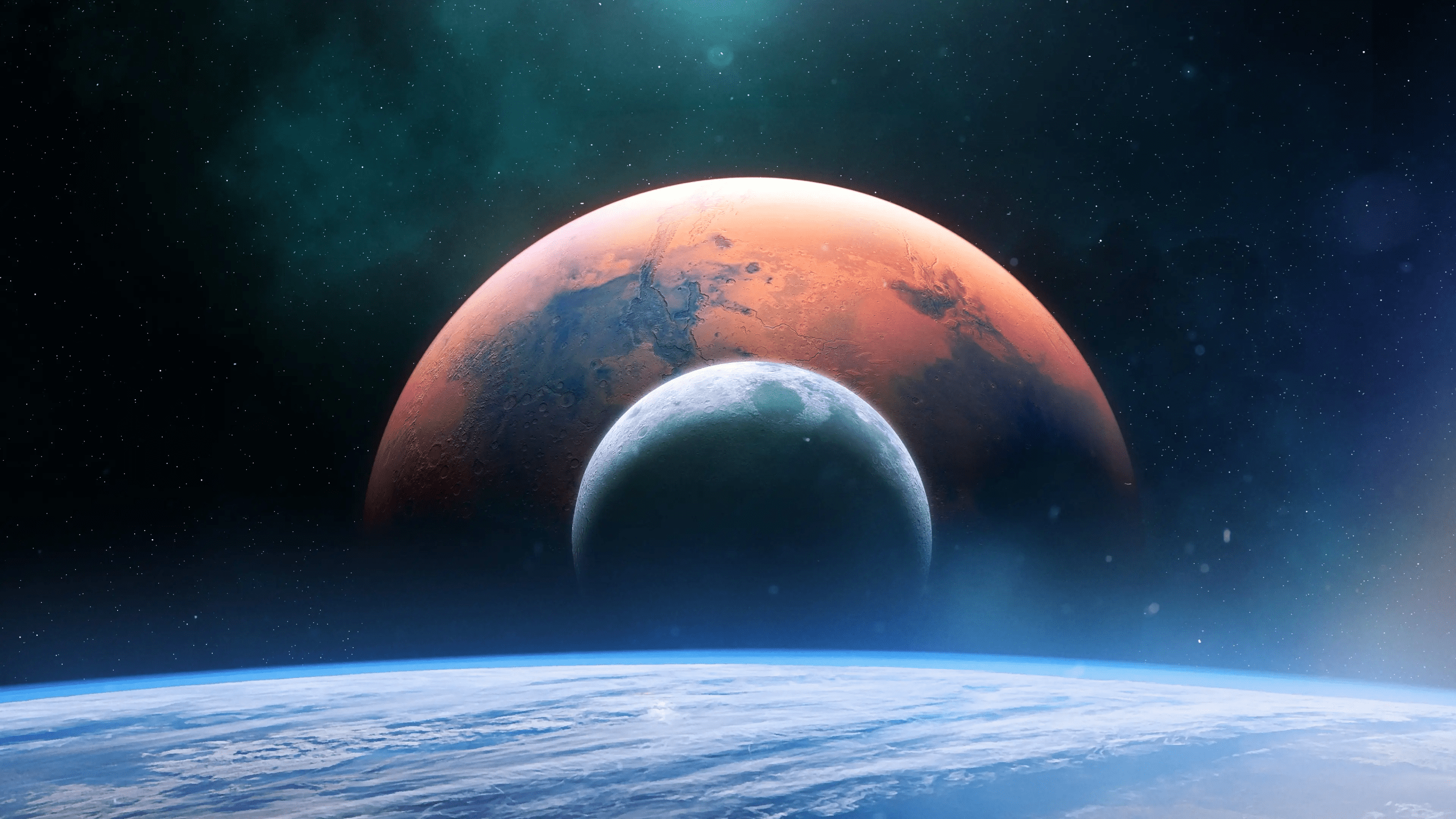

Even as NASA prepares for its Artemis 2 moon-circling mission, an Artemis 3 lunar-landing mission has suffered multiple delays, with no assurance of a launch before 2030. That may be a good thing because NASA still has not overcome critical risks and technological gaps of lunar exploration. These problems must be solved before we can establish a safe, productive long-term human presence on the moon. I hope that the tenure of Jared Isaacson will bring an energized NASA and produce the wise long-term planning and sufficient funding needed to tackle them.
While NASA has long recognized a host of severe “Red Risks” of deep-space travel and lunar missions — including radiation health effects, degraded vision, cognitive decline and deficient food and nutrition — it has not solved them.
In particular, NASA does not know how to protect astronauts from space radiation, especially from the highest energy cosmic rays. Astronauts on the lunar surface will actually experience higher radiation levels than they did on their trip to the moon. The moon itself creates radiation when high-energy galactic cosmic rays impact the lunar soil, or regolith. This impact radiation produces an additional dose of neutrons and gamma radiation, revealed measurements made by the Chinese lunar lander Chang’E 4. Researchers found radiation levels about 2.6 times higher than those aboard the International Space Station because the station is partially shielded by the Earth’s protective magnetosphere.
To reduce astronauts’ radiation exposure, engineers have proposed covering a lunar base with regolith, but cosmic ray impacts on the regolith would generate a secondary radiation cascade. Scientists have proposed adding a layer of radiation-absorbing materials such as plastic. However, they have done only theoretical studies, and such additional shielding would mean transporting and installing large masses of the material.
Space radiation could not only cause chronic effects, but be lethal. For example, one of the largest solar energetic particle events ever recorded occurred between the Apollo 16 and 17 missions. Its radiation was so intense that if the Apollo astronauts had been en route to the moon or on its surface, they would have absorbed potentially lethal radiation doses because spacecraft hulls offer very little protection.
The lunar surface also presents hazards that NASA’s exploration plans have not yet addressed. Among the greatest of those hazards is lunar dust. While dust is a mere annoyance on Earth, it is a major hazard for lunar exploration. Unlike terrestrial dust whose edges have been dulled by wind and water, jagged lunar dust particles are the equivalent of microscopic shards of broken glass. The dust was created over eons by the impact on the lunar surface of micrometeorites. Making the dust even more hazardous is that it is electrically charged from solar wind bombardment, which makes it cling to suits, walls, even astronaut’s skin and lungs.
The Apollo astronauts found their suits covered in clinging dust; suffered sneezing and congestion of “lunar hay fever;” and were assailed by the dust’s cloying smell they described as like burnt gunpowder.
A NASA report on the effects of lunar dust during the Apollo missions found that it produced “vision obscuration, false instrument readings, dust coating and contamination, loss of traction, clogging of mechanisms, abrasion, thermal control problems, seal failures, and inhalation and irritation.”
A report on the lung effects of lunar dust concluded that, “The combination of altered pulmonary deposition of extraterrestrial dust and the potential for the dust to be highly toxic likely makes dust exposure the greatest threat to the lung in planetary exploration.”
What’s more, the lower lunar gravity means that inhaled dust will penetrate deeper into the lungs. On Earth, gravity exerts a protective effect, since inhaled particles tend to settle in the larger airways, where they can be cleared by the lung’s cilia. But as a NASA research description asserted, in lunar gravity particle clearance rates “. . . are likely to be substantially reduced compared to that in 1G, resulting in increased residence times of these particles in the periphery of the lung, enhancing their potential to cause lung damage.”
Moon landings will launch high-speed “dust bullets” that could damage equipment even far from a landing site. Rocks and gravel-sized material could travel up to six football fields away in the low lunar gravity, found calculations of the potential trajectory of such moon dust. Fine dust and sand could be blasted hundreds of kilometers away, at speeds up to 1,000 meters per second (2,200 miles per hour) — about as fast as a bullet.
The Apollo 12 astronauts discovered how damaging such ejected material could be after they touched down 183 meters from the Lunar Surveyor 3 lander — a distance they thought would not damage the lander. However, an analysis found that the lander was severely sandblasted by the dust, which even penetrated its interior.
Another surface hazard could be the moon’s undulating surface, which could prove treacherous to navigate. And, the stark lighting could play tricks on astronauts’ vision. For example, at the proposed lunar south pole Artemis 3 landing site, the sun is constantly at a low angle, meaning that astronauts must cope with either blinding sunlight or the total darkness of shadows in the airless environment.
Key technologies for lunar exploration have not yet been developed by NASA and private contractors. For example, SpaceX’s Starship lunar lander meant to ferry astronauts to the surface is long delayed and awaits major technological demonstrations such as on-orbit fuel transfer. And the Gateway orbiting lunar space station — meant as a base camp and research lab — has not yet even begun construction.
Gateway has sparked considerable controversy. Aerospace engineer and Mars Society president Robert Zubrin called the plan “severely defective.” He wrote, “It will cost a fortune to build, a fortune to maintain, and it will add to the cost, risk, and timing constraints of all subsequent missions to the moon or Mars by adding an unnecessary stop along the way.”
If NASA is to advance to long-term missions, it needs to develop a lunar surface infrastructure — for example, dependable power generation. Solar power would not be reliable on the moon because of the two-week-long lunar nights and that sunlight would not reach into deep craters or lava tubes. Only nuclear power could offer such a baseline source to power oxygen generation, heat, light, transportation, mining, materials processing and communications.
Such nuclear power systems are still in the very early stages of development and face significant challenges. The massive generators weighing many tons would still have to be transported, landed, deployed and maintained. They would have to function for years with little maintenance in vacuum or near-vacuum conditions, endure huge temperature fluctuations and be protected against abrasive lunar dust.
Long-term missions would also need automated machinery for lunar mining and construction. Developing such technology might seem straightforward. After all, excavators routinely operate on Earth. And farming and other equipment already exist that can operate automatically.
But machinery used on the moon must function in low gravity, a vacuum and amid abrasive lunar dust. It must also survive the two-week lunar night of electronics-killing temperatures that plunge to -240 degrees Celsius (-400 degrees Fahrenheit). NASA has ranked such survival as its top technical challenge.
Lunar excavators will need cameras and other sensors to scan the landscape, decide which rocks to pick up and test the properties of the regolith to be excavated. They must constantly watch for hazards from rocks and cavities. A mistake could mean being broken, getting stuck, or even being buried forever.
None of this machinery has been invented, and NASA has compiled a long list of “shortfalls,” of technologies needed for habitation, power, thermal management, propulsion and other capabilities.
And, just testing such machines is far more complex than simply having them dig dirt on some terrestrial vacant lot. Testing would require highly complex, large-scale Lunar Proving Grounds. The facility would have to mimic the vacuum, temperature, lighting, radiation, chemistry, electrostatics, dust, variable terrain and other features of the lunar surface.
The word lunacy derives from the Latin “luna,” reflecting the belief that the moon can trigger insanity. Perhaps the moon has, indeed, caused a form of insanity among planners who seek to send humans to the lunar surface before solving the serious risks and obstacles the moon presents. Such efforts require long-term political commitment, careful planning and adequate funding, none of which exist now.
Dennis Meredith’s career as a science communicator has included service at some of the country’s leading research universities, including MIT, Caltech, Cornell, Duke and the Universities of Rhode Island and Wisconsin. He is a member of the Society of Environmental Journalists and the National Association of Science Writers.
SpaceNews is committed to publishing our community’s diverse perspectives. Whether you’re an academic, executive, engineer or even just a concerned citizen of the cosmos, send your arguments and viewpoints to opinion (at) spacenews.com to be considered for publication online or in our next magazine. If you have something to submit, read some of our recent opinion articles and our submission guidelines to get a sense of what we’re looking for. The perspectives shared in these opinion articles are solely those of the authors and do not necessarily represent their employers or professional affiliations.










Related Posts
Stay Informed With the Latest & Most Important News



Advertisement
-
 01Two Black Holes Observed Circling Each Other for the First Time
 -
 02From Polymerization-Enabled Folding and Assembly to Chemical Evolution: Key Processes for Emergence of Functional Polymers in the Origin of Life
 -
 03Astronomy 101: From the Sun and Moon to Wormholes and Warp Drive, Key Theories, Discoveries, and Facts about the Universe (The Adams 101 Series)
 -
 04True Anomaly hires former York Space executive as chief operating officer
 -
 05Φsat-2 begins science phase for AI Earth images
 -
 06Hurricane forecasters are losing 3 key satellites ahead of peak storm season − a meteorologist explains why it matters
 -
 07Binary star systems are complex astronomical objects − a new AI approach could pin down their properties quickly