
Now Reading: Isaacman emphasizes accelerating NASA programs as he takes agency’s reins
-
01
Isaacman emphasizes accelerating NASA programs as he takes agency’s reins


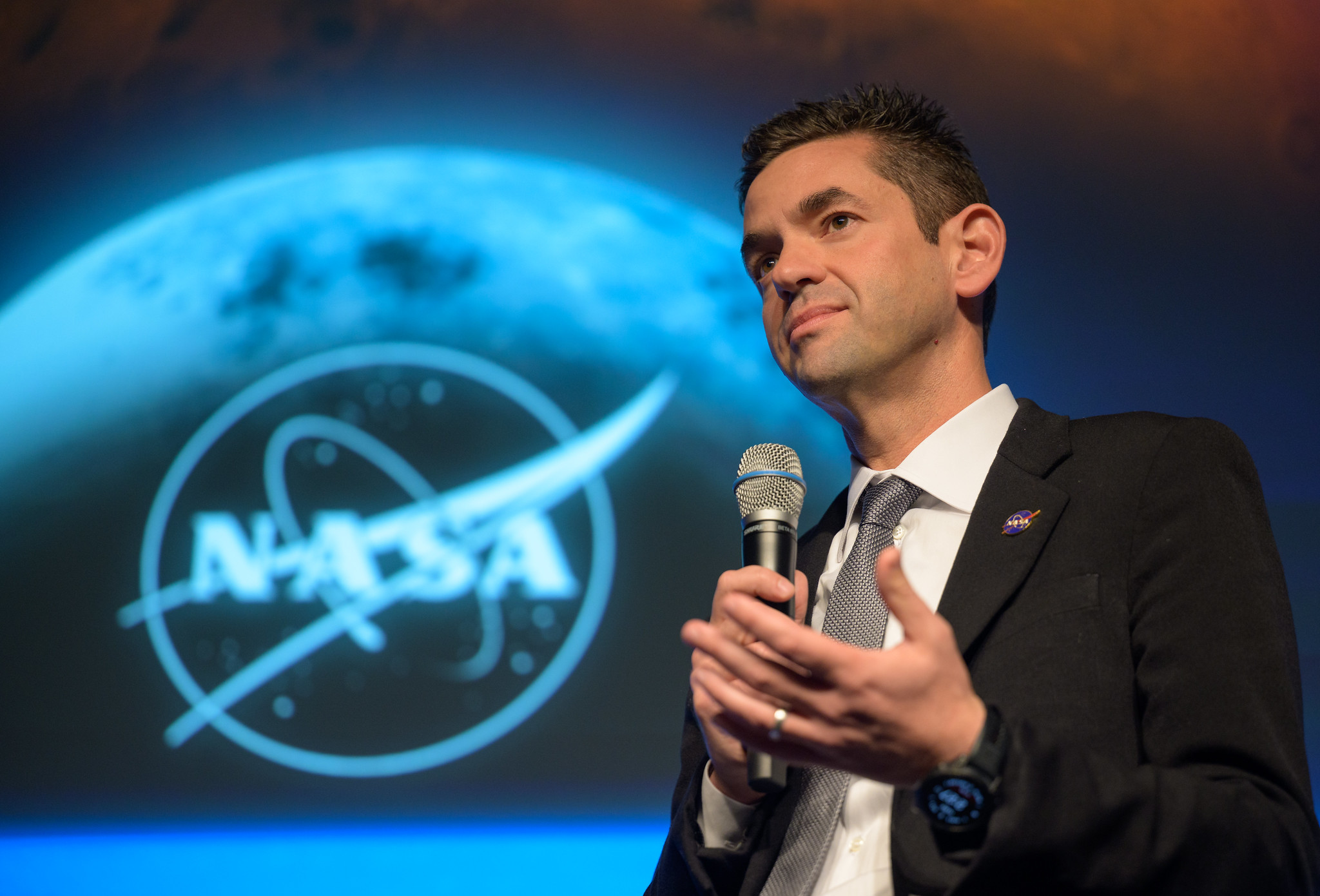

WASHINGTON — New NASA Administrator Jared Isaacman said he wants the agency to move faster on key programs such as Artemis but acknowledged he needs time to get up to speed on NASA’s activities.
Isaacman, confirmed by the Senate on a 67-30 vote Dec. 17, was sworn in the following day during a private ceremony in the Eisenhower Executive Office Building by a district judge. The low-profile ceremony contrasted with those of the previous two administrators, Jim Bridenstine and Bill Nelson, who were sworn in by the vice president.
Isaacman took questions from NASA employees during a Dec. 18 town hall at NASA headquarters, where he emphasized his desire to speed up program implementation.
“We cannot achieve our objectives the way they’ve been done in recent years,” he said, citing the “absolutely impressive speeds” of China’s space activities. “We must do all we can to minimize the bureaucratic drag that can slow us down.”
That effort includes companies and international partners working with NASA, particularly on plans to return humans to the moon. “We will prepare for the inevitable return by working with our commercial and international partners to ensure they’re aligned with our programmatic objectives and acting with the urgency needed” to deliver Artemis elements, he said.
Isaacman highlighted an executive order signed by President Trump on Dec. 18 titled “Ensuring American Space Superiority,” which includes provisions calling for a human return to the lunar surface by 2028 and the establishment of initial elements of a permanent lunar outpost by 2030.
“In my view, it is one of the most significant commitments to America’s space program by any administration since the Kennedy era,” Isaacman said. He attended the signing ceremony in the Oval Office shortly after being sworn in.
He did not elaborate on why he viewed the policy as that significant. The programmatic aspects largely reaffirm ongoing NASA efforts, including the planned 2030 retirement of the International Space Station and development of a fission surface power system for the moon. Other elements of the order focus on acquisition reform, such as greater use of fixed-price contracts and other transaction authorities.
Isaacman said his near-term priority is Artemis 2, scheduled to launch as soon as early February. “Making sure we concentrate a lot of our resources, rightfully, in that direction is most appropriate,” he said.
He said he wanted NASA to move up follow-on missions, including the return of astronauts to the lunar surface on Artemis 3. “We’ll look for every opportunity to pull forward the Artemis program to the limits that physics and safety afford, while increasing the flight cadence across the architecture,” he said.
The 2028 date in the executive order appears to acknowledge that Artemis 3 will not be ready to launch in 2027, as currently planned, given issues with development of the Starship lunar lander. During the first Trump administration, NASA had planned a 2028 human lunar landing until Vice President Mike Pence moved the target up by four years in a 2019 speech.
Isaacman did not discuss specific ways to accelerate the Artemis architecture and acknowledged he still has much to learn about agency activities. “There is an awful lot to learn,” he said. “There are volumes of materials on my desk right now to get through.”
He deferred questions on topics ranging from the use of artificial intelligence at NASA to whether he would lift a hiring freeze, citing the need for further review. “This journey began today,” he said. “We’ve had a number of meetings where I’ve been asking to gather as much data as possible so we have good situational awareness to make the right decisions.”
Isaacman said he plans to visit every NASA field center in the coming weeks and meet with international and commercial partners. “I want to hear directly what is broken so we can work together to fix it, and where we are excelling so we can do a lot more of it,” he said.
While he offered few specifics, Isaacman said his general views on NASA and its programs were well known. “Between two hearings, a few podcasts, a document that circulated a little wider than expected,” he said, referring to the “Project Athena” document he prepared earlier this year during his first confirmation process, “there should really be no mystery as to how I’m thinking about things.”
One thing Isaacman, who commanded two private astronaut missions in 2021 and 2024, made clear was that he doesn’t plan to return to space while serving as administrator. “That has not crossed my mind,” he said in response to one question about another mission. “I hardly imagine I’ll find time for any of these other activities.”










Related Posts
Stay Informed With the Latest & Most Important News
Previous Post
Next Post




Advertisement
-
 01Two Black Holes Observed Circling Each Other for the First Time
 -
 02From Polymerization-Enabled Folding and Assembly to Chemical Evolution: Key Processes for Emergence of Functional Polymers in the Origin of Life
 -
 03Astronomy 101: From the Sun and Moon to Wormholes and Warp Drive, Key Theories, Discoveries, and Facts about the Universe (The Adams 101 Series)
 -
 04True Anomaly hires former York Space executive as chief operating officer
 -
 05Φsat-2 begins science phase for AI Earth images
 -
 06Hurricane forecasters are losing 3 key satellites ahead of peak storm season − a meteorologist explains why it matters
 -
 07Binary star systems are complex astronomical objects − a new AI approach could pin down their properties quickly