
Now Reading: ispace redesigns lunar lander, introduces lunar communications service
-
01
ispace redesigns lunar lander, introduces lunar communications service



WASHINGTON — Japanese company ispace is revising its lunar lander design and further delaying the first mission by its American subsidiary while also unveiling plans for a lunar satellite constellation.
The company announced March 27 that it decided to replace the main engine it was jointly developing with American propulsion company Agile Space Industries. That engine, called VoidRunner, was to be used on both the Apex 1.0 landers built by ispace U.S. as well as the Series 3 landers built by ispace in Japan.
In an earnings call in February, ispace executives said it was taking longer than expected to achieve the engine’s required performance levels. At the time, ispace said it was considering switching engines but warned that doing so would further delay its first U.S. lander, Mission 3. That mission had already slipped from 2026 to 2027 when ispace said in May 2025 it would work with Agile on the VoidRunner engine.
In place of VoidRunner, ispace will use an engine from an undisclosed supplier. Jumpei Nozaki, chief financial officer and executive business director of ispace, said in an interview that the contract with that engine supplier is being finalized but noted the engine already has flight experience, including on lunar lander missions.
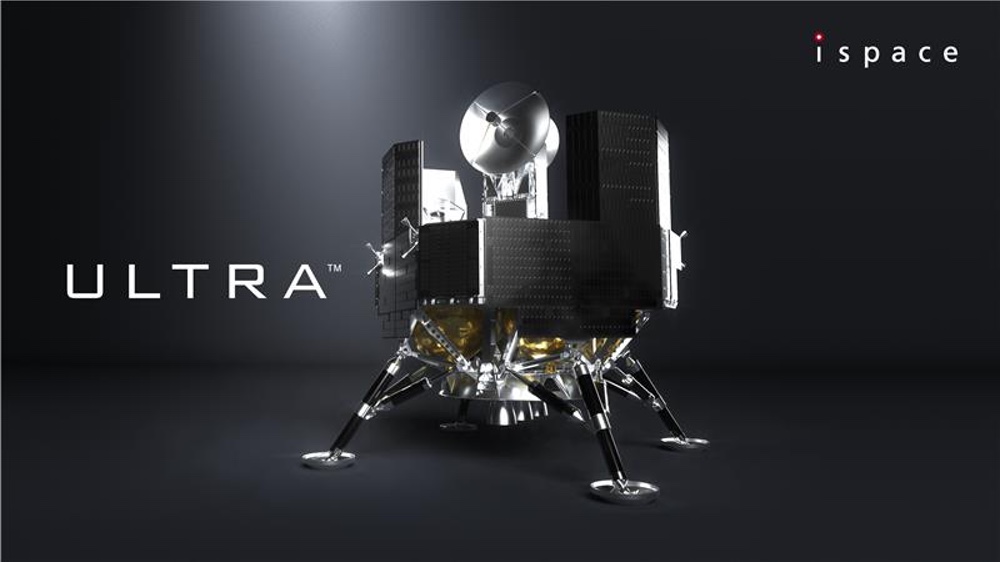
In parallel with the change in engines, ispace said it decided to unify the separate lander designs developed in Japan and the United States. The company will now offer a single lander design, called Ultra, that will be based largely on the Japanese Series 3 lander while incorporating some technologies from the American Apex 1.0 design.
Ryo Ujiie, chief technology officer of ispace, said one example of Apex 1.0 technology being adopted into the new design is the propellant tanks, originally developed for Apex 1.0 and later incorporated into Series 3 and now Ultra. The Apex 1.0 communications system, designed to work with relay satellites in lunar orbit, will also be used by Ultra.
The engine switch and design change mean a significant delay for the first ispace U.S. mission, known as Mission 3 by ispace. That lander, which will be used for a NASA Commercial Lunar Payload Services (CLPS) mission being led by Draper, will now launch in 2030, a three-year delay.
Under its revised schedule, ispace’s next mission will be one in development in Japan, supported by a Japanese government SBIR award, launching in 2028. It will be followed by another Japanese lander, supported by a Space Strategy Fund award, launching in 2029. Those missions, originally designated Mission 4 and Mission 6 respectively, have been renamed Mission 3 and Mission 4. Both will use the Ultra lander design.
The revamped ispace U.S. mission, launching in 2030 and using the Ultra lander, has been renamed Mission 5. Nozaki said ispace has been in discussions with NASA about the change in lander design and schedule slip but is awaiting formal approval from the agency. That lander mission was also carrying some commercial payloads, which Nozaki said will likely move to the Japanese Mission 4 or 5 landers.
The unified lander design also involves creating a single global design team at the company reporting to Ujiie, rather than separate units in Japan and the United States.
The lander design changes will have costs that ispace is still calculating, Nozaki said. The consolidation will also result in some layoffs, but he declined to disclose specifics other than it would involve a modest fraction of its more than 350 employees worldwide.
Lunar satellite system
As ispace revises its lunar landers, it is embarking on a new satellite program. The company announced its Lunar Connect Service, which will involve spacecraft in orbit providing communications and other services.
The company projects having five satellites in orbit by 2030 that will offer communications and navigation services along with imaging of the lunar surface and space situational awareness capabilities.
“We believe that by 2040, at least $3 billion in annual market size can be expected,” Nozaki said. With NASA’s lunar base plans, he added, “we believe these activities and market size can be enhanced going forward.”
The first of those satellites will launch in 2027 through an agreement with Argo Space, a U.S. company developing orbital transfer vehicles, or OTVs. ispace is calling that flight Mission 2.5.
“We wanted to explore an earlier launch option as much as possible, and then we found a great solution from Argo,” said Takeshi Hakamada, founder and chief executive of ispace. “They have a solid plan to launch their OTV in this 2027 timeframe, so we want to leverage this opportunity to begin the Lunar Connect Service as soon as possible.”
ispace U.S. had been developing two relay satellites, called Alpine and Lupine, that would launch with the original Mission 3 to provide communications services for the lander on the far side of the moon. One of those satellites will launch on Mission 2.5 instead.
Several companies and countries have announced plans for lunar communications systems. Intuitive Machines is developing a five-satellite system with support from a NASA contract, while Telespazio is working on a similar system for the European Space Agency’s Moonlight program. The two companies said in December they would collaborate to ensure interoperability of their networks.
Hakamada said it was too early to discuss how ispace’s Lunar Connect Service would differ from those efforts. He noted ispace will collaborate with Japanese company KDDI on the service, including use of KDDI ground stations. KDDI has its own Space Strategy Fund award from the Japanese government to study a lunar communications network.
He added that there may be opportunities for the Lunar Connect Service, along with its landers, to support NASA’s plans announced March 24 to develop a lunar base. “We will follow that progress and then adapt to that demand as quickly as possible,” he said.
“We are very much now set to provide our best kind of quality and solutions to NASA and all global space agencies,” Nozaki said. “If NASA wishes to have more missions, we are very happy to answer that request.”










Related Posts

Stay Informed With the Latest & Most Important News



Advertisement
-
 01Two Black Holes Observed Circling Each Other for the First Time
 -
 02From Polymerization-Enabled Folding and Assembly to Chemical Evolution: Key Processes for Emergence of Functional Polymers in the Origin of Life
 -
 03Astronomy 101: From the Sun and Moon to Wormholes and Warp Drive, Key Theories, Discoveries, and Facts about the Universe (The Adams 101 Series)
 -
 04True Anomaly hires former York Space executive as chief operating officer
 -
 05Φsat-2 begins science phase for AI Earth images
 -
 06Hurricane forecasters are losing 3 key satellites ahead of peak storm season − a meteorologist explains why it matters
 -
 07Binary star systems are complex astronomical objects − a new AI approach could pin down their properties quickly