
Now Reading: Israeli startup targets the economics of high-resolution Earth observation
-
01
Israeli startup targets the economics of high-resolution Earth observation


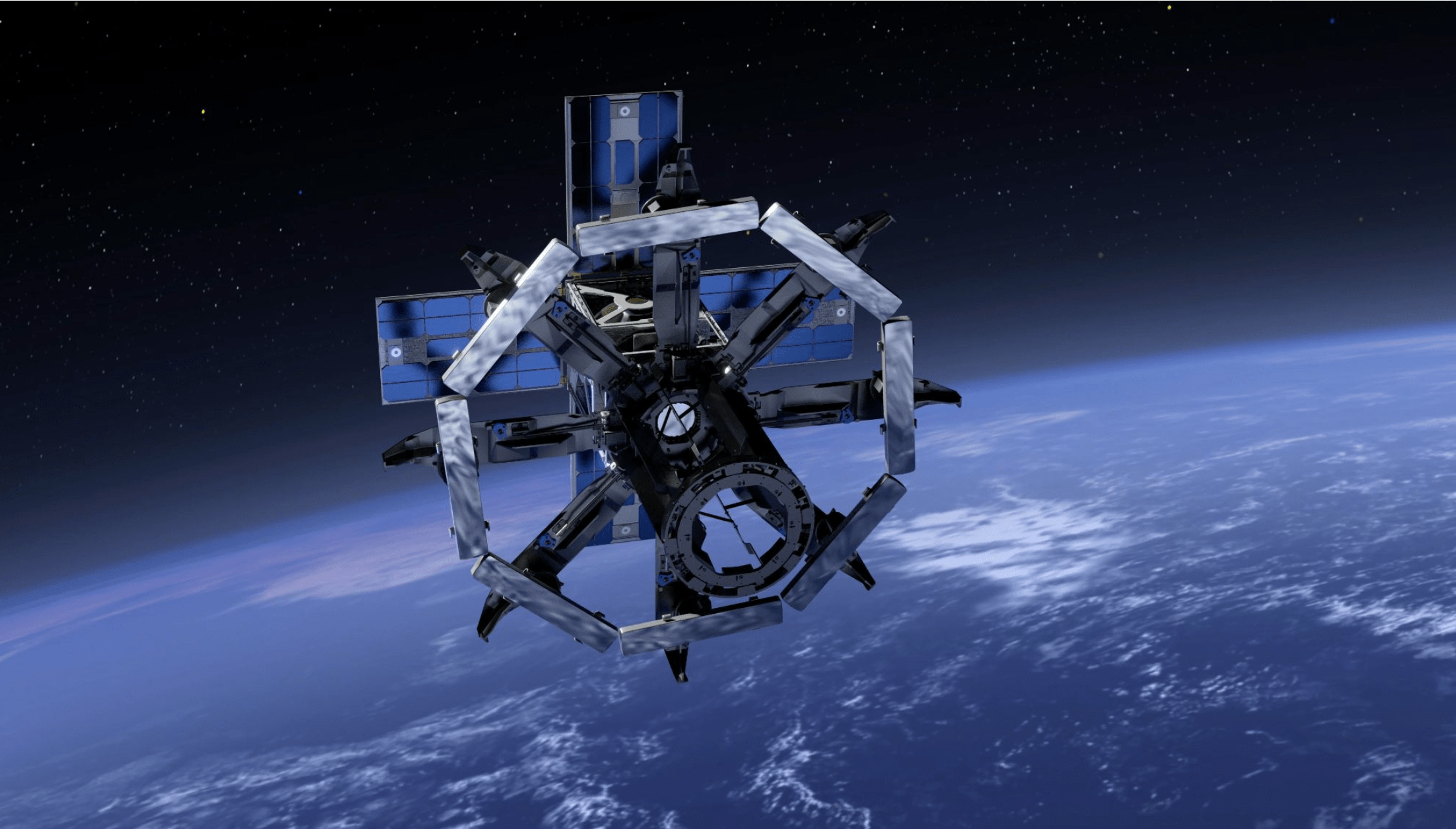

WASHINGTON — An Israeli space startup says it has found a way to extract high-resolution imagery from satellites small enough to fit in a carry-on bag — an engineering claim that, if validated in orbit, could alter the cost structure of commercial remote sensing.
Remondo, based in Israel, plans to launch its first mission in 2027 to demonstrate what it calls a partial aperture imaging system, or PAIS. The company says the payload is designed to capture imagery at sub-30 centimeter resolution from small, low-cost satellites operating in low Earth orbit.
Today, satellites that achieve that level of optical resolution typically rely on large, precise telescope assemblies. Those systems are expensive to manufacture, launch and operate. Remondo’s approach attempts to shift part of that burden from hardware to computation.
The company’s co-founder and chief executive, Ido Priel, said Remondo has raised $20 million from private investors and Israeli government grants to develop the proprietary payload. Backers include 10D, Ace Capital Partners, 2i, Chartered Group, Starburst Ventures and Venture Israel.
Rather than relying on a single large mirror, the PAIS architecture is designed to extract high-resolution imagery without a large telescope aperture. Priel said the payload is compatible with small satellite buses like 12U or 16U cubesats.
In conventional optical imaging, resolution improves as aperture diameter increases. That principle has driven the design of most high-end Earth observation spacecraft. Remondo’s system instead captures partial optical information and reconstructs higher-fidelity imagery through calibration and processing. The company has tested the imaging system in laboratories and in a collimator setup that simulates distant targets. The next step is proving performance in orbit.
If the approach works as intended, smaller satellites could begin to approach image quality typically associated with much larger spacecraft. That shift would have implications for governments and commercial operators that want high-resolution data without the capital outlays required for traditional systems.
Remondo is unveiling the PAIS system this week at the Defense Geospatial Intelligence conference in London.
The long-term strategy is twofold. Remondo intends to build its own constellation and offer imagery as a service. At the same time, it plans to sell the hardware directly to national governments seeking sovereign control over tasking and data.
“Many countries today want their own constellations, but they have limited budgets, so they either have to compromise on the resolution or on the number of satellites,” Priel said. “We think they can have both.”










Related Posts

Stay Informed With the Latest & Most Important News
Previous Post
Next Post






Advertisement
-
 01Two Black Holes Observed Circling Each Other for the First Time
 -
 02From Polymerization-Enabled Folding and Assembly to Chemical Evolution: Key Processes for Emergence of Functional Polymers in the Origin of Life
 -
 03Astronomy 101: From the Sun and Moon to Wormholes and Warp Drive, Key Theories, Discoveries, and Facts about the Universe (The Adams 101 Series)
 -
 04True Anomaly hires former York Space executive as chief operating officer
 -
 05Φsat-2 begins science phase for AI Earth images
 -
 06Hurricane forecasters are losing 3 key satellites ahead of peak storm season − a meteorologist explains why it matters
 -
 07Binary star systems are complex astronomical objects − a new AI approach could pin down their properties quickly