
Now Reading: Japanese launch company Interstellar Technologies raises $130 million
-
01
Japanese launch company Interstellar Technologies raises $130 million


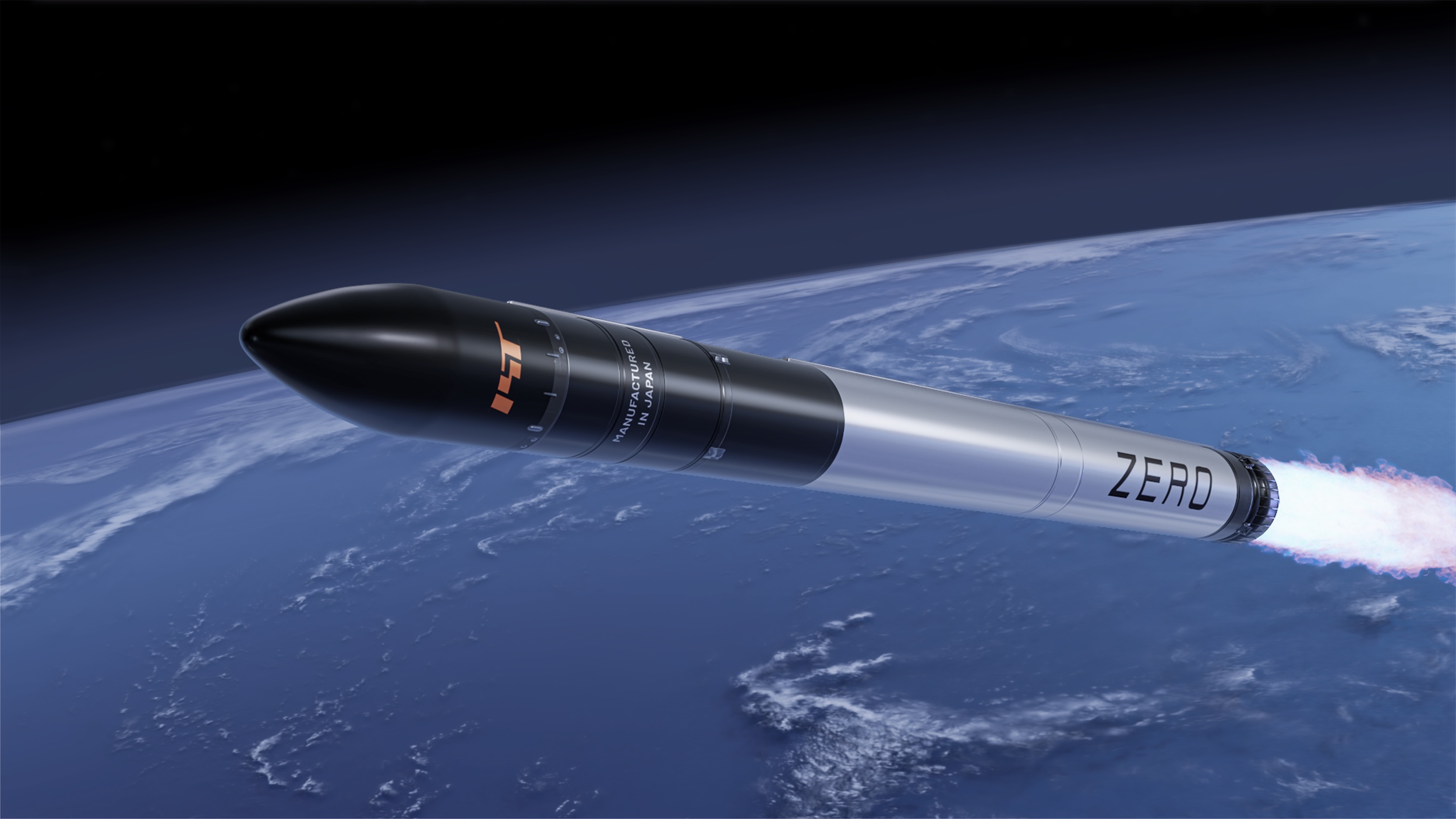

WASHINGTON — Japanese launch vehicle startup Interstellar Technologies has raised nearly $130 million to continue development of its Zero small launch vehicle.
The company announced Jan. 16 that it raised 20.1 billion yen ($129.7 million) in a Series F round combining debt and equity. The fundraising nearly doubles the total capital raised by the Hokkaido-based startup to 44.6 billion yen. Interstellar announced a partial close of the Series F round in July, when it raised 8.9 billion yen.
The Series F round included 14.8 billion yen from equity investors, led by Woven by Toyota, with participation from SBI Group, Nomura Real Estate Development, B Dash Venture and SMBC Edge, among others. An additional 5.3 billion yen came from debt financing, including 1.8 billion yen from Japan Finance Corporation.
“We are pleased to announce the successful completion of the Series F fundraising round, made possible by the support of our investors and financial institutions that are leaders in their respective fields,” said Takahiro Inagawa, chief executive of Interstellar Technologies.
The company said it will use the proceeds to continue development of Zero, a two-stage small launch vehicle using methane and liquid oxygen propellants and designed to place up to 1,000 kilograms into low Earth orbit. Interstellar is targeting a first launch of Zero in 2027.
In August, Interstellar announced it had signed five customers from Japan, Singapore, South Korea and the United States for Zero’s inaugural launch, carrying several cubesats and a satellite separation system. The company announced three additional cubesat customers from Japan and the United States for that first launch in November.
Interstellar has yet to attempt an orbital launch but previously developed a suborbital rocket called Momo. That vehicle launched seven times from 2017 through 2021, three of which the company declared successful.
Japan has struggled in the launch market. The country’s flagship H3 rocket failed in its most recent launch Dec. 22. A series of launch and ground test failures of the smaller Epsilon S rocket prompted the Japanese space agency, JAXA, to purchase two Electron launches from Rocket Lab in October. The first two launches of Kairos, a small launch vehicle developed by Japanese company Space One, also failed, although the company is preparing for a third launch attempt.
“Space transportation represents a critical infrastructure underpinning the industrial foundation of the rapidly expanding global space market; however, the number of operators in Japan remains limited,” said Hiroyuki Ono, general manager of SBI Group, in a statement.
“In this context, Interstellar Technologies has established itself as a leading domestic player, distinguished by its robust technological capabilities and strong execution track record, and we expect it to further enhance its presence in the global market going forward,” he added.
Interstellar said the Series F funding will also support scaling up manufacturing of Zero as well as work on a communications satellite system. The company recently announced progress on technology that would use formation-flying satellites to create a phased-array antenna for direct-to-device communications.










Related Posts

Stay Informed With the Latest & Most Important News
Previous Post
Next Post



Advertisement
-
 01Two Black Holes Observed Circling Each Other for the First Time
 -
 02From Polymerization-Enabled Folding and Assembly to Chemical Evolution: Key Processes for Emergence of Functional Polymers in the Origin of Life
 -
 03Astronomy 101: From the Sun and Moon to Wormholes and Warp Drive, Key Theories, Discoveries, and Facts about the Universe (The Adams 101 Series)
 -
 04True Anomaly hires former York Space executive as chief operating officer
 -
 05Φsat-2 begins science phase for AI Earth images
 -
 06Hurricane forecasters are losing 3 key satellites ahead of peak storm season − a meteorologist explains why it matters
 -
 07Binary star systems are complex astronomical objects − a new AI approach could pin down their properties quickly