
Now Reading: Japan’s ispace warns of delays in new lunar lander engine
-
01
Japan’s ispace warns of delays in new lunar lander engine


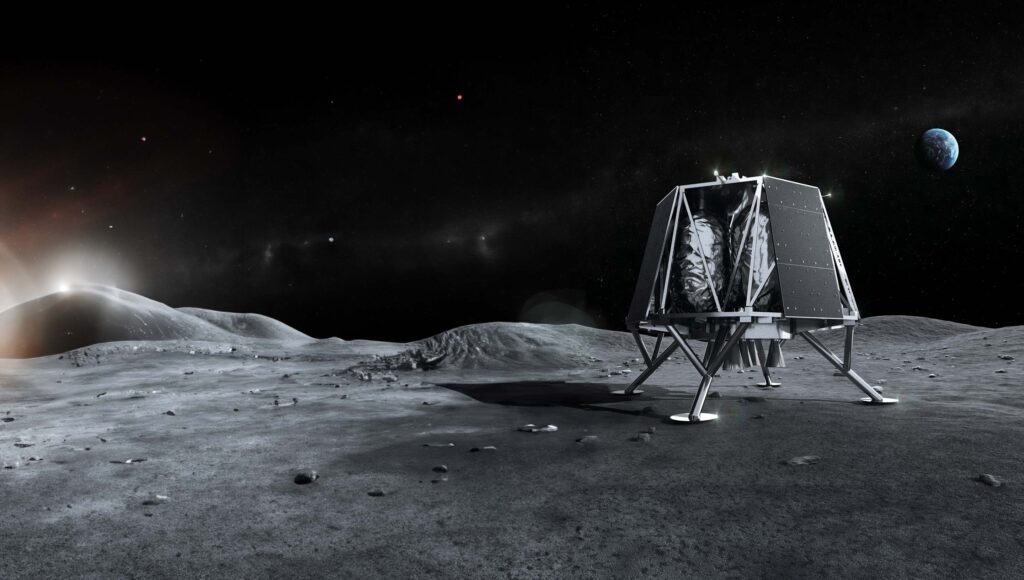
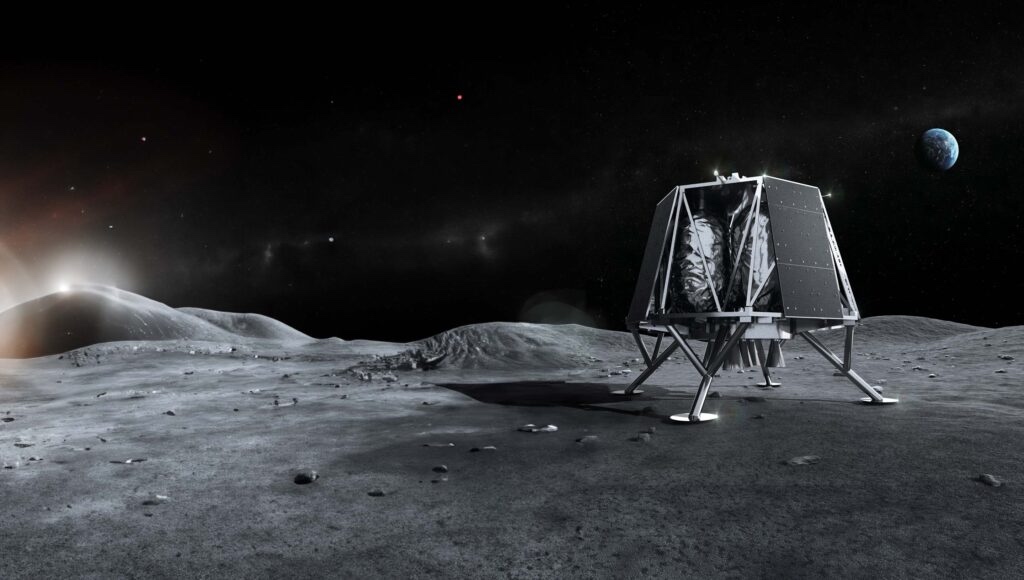
WASHINGTON — Japanese lunar company ispace said work on a new engine for its lunar landers is facing delays and that it is keeping open the option of switching engines.
In an earnings call discussing its fiscal third-quarter financial results this month, ispace executives said issues with development of the new VoidRunner engine could delay the company’s next lander mission.
VoidRunner is a joint project between ispace’s U.S. subsidiary and Agile Space Industries, a U.S. space propulsion company, announced in May 2025. It replaced an Agile Space engine originally planned for use on the Apex 1.0 lander that ispace U.S. is developing.
Changing the engine required modifications to the lander design, ispace said at the time, delaying its use on a mission led by Draper for NASA’s Commercial Lunar Payload Services, or CLPS, program from 2026 to 2027. That mission to the lunar farside is designated Mission 3 by ispace.
During the earnings call, Jumpei Nozaki, chief financial officer and executive business director of ispace, said it was taking longer than expected to achieve the required performance levels for VoidRunner, including thrust and fuel efficiency.
One option, he said, would be to switch engines again.
“We are continuing to improve and test to realize performance, but as a backup measure when it is difficult to realize it, we are considering switching to an alternative engine,” he said in translated remarks.
Switching to a different engine, or further delays in development of VoidRunner, could push back Mission 3. It would also affect Mission 4, which will use a new Series 3 lander design under development by ispace in Japan that will also incorporate the engine. Mission 4 is currently scheduled for launch in 2028.
Company executives did not provide specifics about the issues with VoidRunner, and a spokesperson for Agile Space Industries did not respond to a Feb. 18 request for comment. While Agile Space is leading development of the engine, ispace is responsible for the engine’s valve system.
“Agile’s strength lies in the use of 3D printing technology, which allows it to quickly redesign, manufacture and repeat tests when problems arise,” said Takeshi Hakamada, founder and chief executive of ispace, on the call. “Therefore, we believe that we can achieve our goals, and we are currently monitoring.”
“In addition to simply observing the situation, we also dispatch engineers to the site to discuss with Agile engineers. While monitoring is progressing, we must consider backup measures as a company, so we are proceeding with discussions by management,” he added.
The delay with VoidRunner was a key factor in reducing ispace’s revenue forecast for its current fiscal year, which ends March 31. The company said it was cutting its forecast for project revenue from 10 billion yen ($64.6 million) to 6 billion yen.
The impact of engine delays on Missions 3 and 4, pushing related revenue beyond the current fiscal year, was the largest factor in the reduction. The company also reported smaller declines in projected revenue stemming from the crash of its Mission 2 lander on the moon in June 2025 and the failure of ispace U.S. so far to win a CLPS task order for a second Apex 1.0 lander mission, designated Mission 5.
Despite those setbacks, ispace highlighted progress in other areas, including another Japanese-built lander, Mission 6, slated for 2029. That includes work by ispace’s European subsidiary on MAGPIE, a rover funded by the European Space Agency valued at up to $76 million.
The company also won in January an award from Japan’s Space Strategic Fund valued at up to 20 billion yen to incorporate high-precision landing technology demonstrated on JAXA’s Smart Lander for Investigating Moon mission into Mission 6, enabling a landing in the moon’s south polar region.










Related Posts
Stay Informed With the Latest & Most Important News

Advertisement
-
 01Two Black Holes Observed Circling Each Other for the First Time
 -
 02From Polymerization-Enabled Folding and Assembly to Chemical Evolution: Key Processes for Emergence of Functional Polymers in the Origin of Life
 -
 03Astronomy 101: From the Sun and Moon to Wormholes and Warp Drive, Key Theories, Discoveries, and Facts about the Universe (The Adams 101 Series)
 -
 04True Anomaly hires former York Space executive as chief operating officer
 -
 05Φsat-2 begins science phase for AI Earth images
 -
 06Hurricane forecasters are losing 3 key satellites ahead of peak storm season − a meteorologist explains why it matters
 -
 07Binary star systems are complex astronomical objects − a new AI approach could pin down their properties quickly