
Now Reading: K2 Space raises $250 million to scale high-power satellite line
-
01
K2 Space raises $250 million to scale high-power satellite line


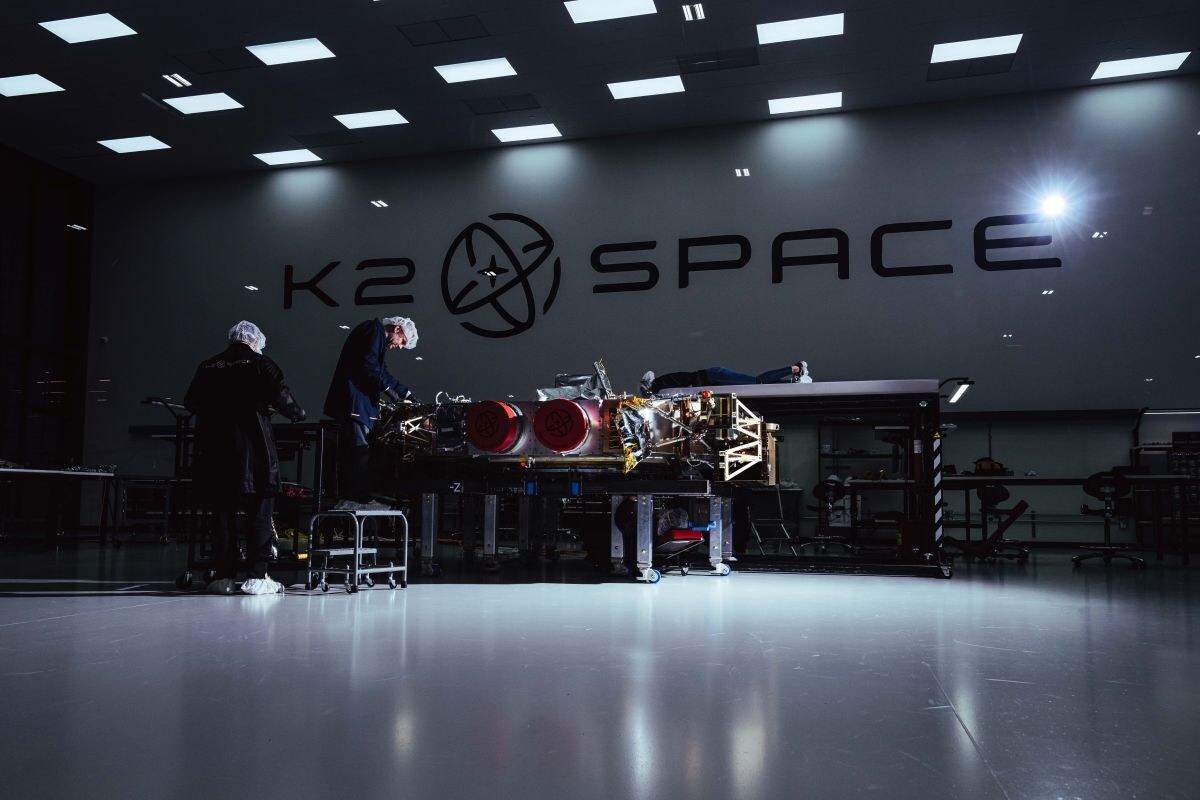

ORLANDO, Fla. — K2 Space said Dec. 11 it raised $250 million in new funding that values the satellite manufacturing startup at $3 billion.
The Series C round was led by Redpoint, with additional backing from accounts advised by T. Rowe Price Associates, Hedosophia, Altimeter, Lightspeed and Alpine Space Ventures.
Torrance, California-based K2 was founded in 2022 to build large satellites with more onboard power and volume than typical platforms in low, medium or geostationary orbit. The company aims to offer a single bus that can operate across all three regimes, a break from the orbit-specific designs common in today’s market.
K2 in October outlined plans for a demonstration mission to validate its “multi-orbit” platform. The company says it has developed key subsystems in-house, including a high-power Hall-effect thruster, large solar arrays, radiation-tolerant avionics, large reaction wheels and high-voltage power systems.
“What stands out about K2 is how much core hardware they’ve built themselves,” said Elliot Geidt, partner at Redpoint. He said the sector is “attracting investment because the underlying demand is real and accelerating.”
T. Rowe Price investment analyst Jason Leblang said K2 is “tackling one of the biggest limitations in the space economy: meaningful increases in power and scale.”
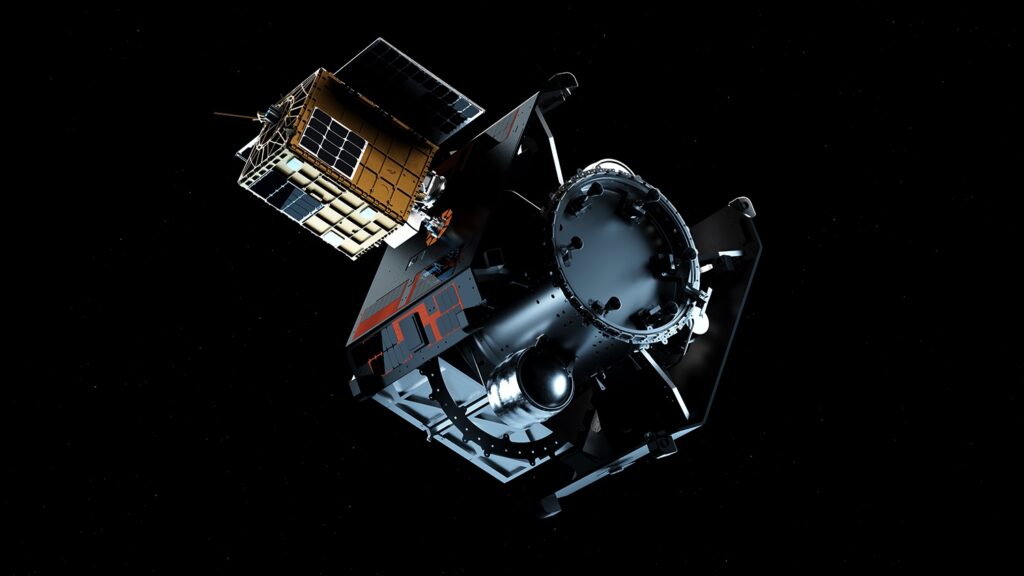
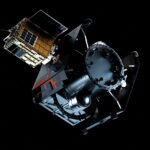
K2 plans to launch “Gravitas,” the first unit of its “Mega Class” line, in March 2026. The mission would mark the company’s first flight of a fully integrated platform and attempt several industry firsts, including in-space firing of a 20-kilowatt Hall-effect thruster and deployment of twin 10-kilowatt solar arrays. It will also test a high-voltage power system paired with radiation-tolerant avionics, a combination companies typically qualify over multiple missions.
Higher onboard power, the company said, is sought for payloads such as high-capacity communications, remote sensing with large apertures and hosted defense missions. Hall-effect thrusters in the 20-kilowatt class, if proven reliable, could shorten orbit-raising timelines for heavy satellites or support more agile maneuvering in LEO and MEO.
K2 said it will scale manufacturing at its Torrance factory after Mega’s launch. The site is sized for output of about 100 high-power satellites a year. The company said it has booked contracts with commercial operators including SES and has U.S. government work underway.
The next platform on K2’s roadmap is “Giga,” a larger bus sized for massive rockets like SpaceX’s Starship and Blue Origin’s New Glenn. The company is targeting roughly 100 kilowatts of power per satellite, a level aligned with emerging heavy-lift launch capacity and with Pentagon demand for more capable proliferated constellations.










Related Posts

Stay Informed With the Latest & Most Important News
Advertisement
-
 01Two Black Holes Observed Circling Each Other for the First Time
 -
 02From Polymerization-Enabled Folding and Assembly to Chemical Evolution: Key Processes for Emergence of Functional Polymers in the Origin of Life
 -
 03Astronomy 101: From the Sun and Moon to Wormholes and Warp Drive, Key Theories, Discoveries, and Facts about the Universe (The Adams 101 Series)
 -
 04True Anomaly hires former York Space executive as chief operating officer
 -
 05Φsat-2 begins science phase for AI Earth images
 -
 06Hurricane forecasters are losing 3 key satellites ahead of peak storm season − a meteorologist explains why it matters
 -
 07Binary star systems are complex astronomical objects − a new AI approach could pin down their properties quickly