
Now Reading: Landspace secures launch contracts for China’s megaconstellation projects
-
01
Landspace secures launch contracts for China’s megaconstellation projects


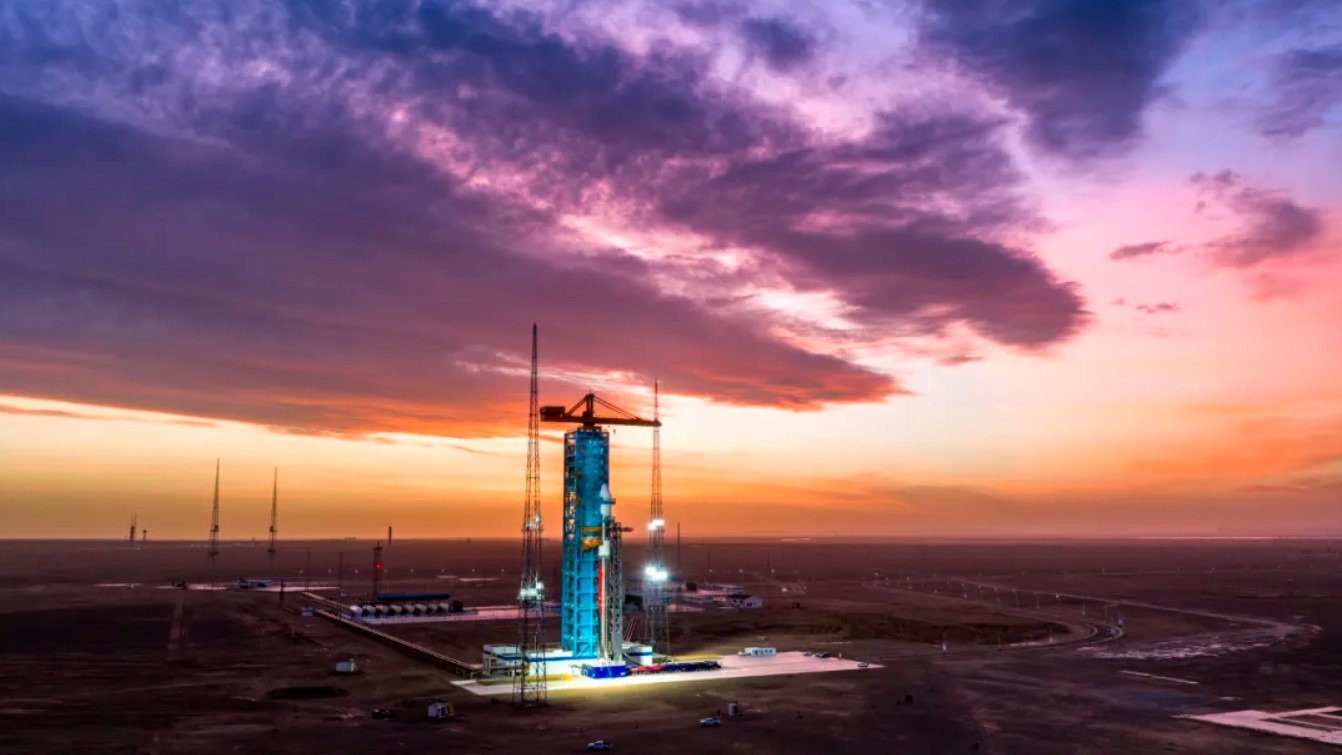

HELSINKI — Commercial launch startup Landspace has secured formal contracts to launch satellites for China’s two main megaconstellation projects, helping to address a launch capacity bottleneck.
Chinese media reported Jan. 7 that Landspace had secured formal contracts to launch satellites for the Guowang megaconstellation led by state-owned China SatNet and the Shanghai-backed Qianfan (Thousand Sails) project, citing LandSpace’s STAR Market initial public offering (IPO) prospectus filed on the Shanghai Stock Exchange. The company’s IPO application was accepted in late December and is seeking to raise up to $1 billion.
The document hosted on the Shanghai Stock Exchange website stated that Landspace’s Zhuque-3 methane-liquid oxygen reusable launch vehicle has been selected for the China SatNet core supplier list, and has won the bid for Yuanxin Satellite’s “2025 Launch Vehicle Launch Service Procurement Project” for a single launch deploying 18 satellites. It adds that the company will meet major strategic requirements for Guowang and Qianfan through high-cadence launch services.
So far only Long March rockets from the state-owned China Aerospace Science and Technology Corporation (CASC) have been used to launch satellites for Guowang and Qianfan. While expected, the development is the clearest indication that China will utilize new launch vehicles being developed in the country’s commercial space sector to help construct the constellations, seen as China’s response to Starlink and other commercial constellations, and potentially also to Starshield.
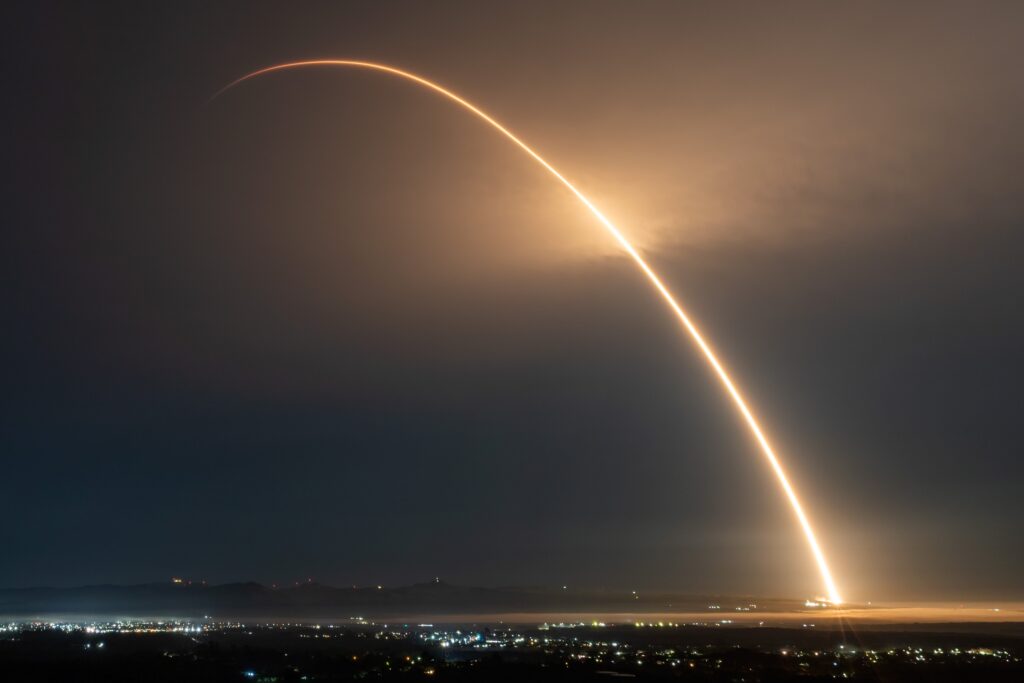
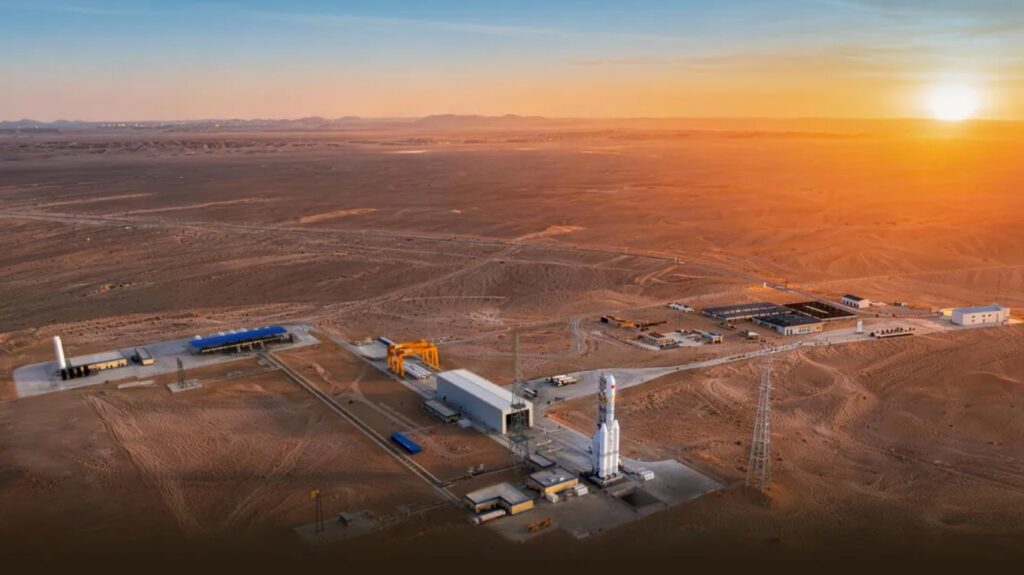
Landspace conducted the first orbital test launch of stainless steel Zhuque-3 in early December. The second stage successfully reached low Earth orbit but carried no payload, while the attempt to recover the first stage—a first for China—ended in failure following an anomaly shortly after the initiation of a landing burn. The company is understood to be targeting a second launch and landing attempt no earlier than April.
Other commercial launch companies, including Space Pioneer, Galactic Energy, CAS Space, Deep Blue Aerospace, Sepoch and Orienspace could debut their own new potentially reusable launchers in 2026.
Guowang envisions 12,992 satellites, according to filings with the International Telecommunication Union, comprising 6,080 satellites in 500-600 kilometer orbits and 6,912 satellites at around 1,145 km. Qianfan plans to launch 15,000 satellites, with 1,296 expected to be in orbit by the end of 2027 to provide global coverage. As of December 2025, there were 136 operational Guowang satellites in orbit, while the Thousand Sails Constellation had launched 108 satellites. Achieving these targets requires sustained growth of China’s launch capabilities.
China launched a national record 92 times in 2025, far surpassing its previous record of 68 set in 2024. The country’s launch cadence is expected to grow again in 2026, boosted by demand from Gouwang and Qianfan, and facilitated by new reusable launch vehicles, including CASC’s Long March 12A and 10 series, continued production of expendable rockets and the further expansion of the nation’s space launch facilities.










Related Posts

Stay Informed With the Latest & Most Important News
Previous Post
Next Post




Advertisement
-
 01Two Black Holes Observed Circling Each Other for the First Time
 -
 02From Polymerization-Enabled Folding and Assembly to Chemical Evolution: Key Processes for Emergence of Functional Polymers in the Origin of Life
 -
 03Astronomy 101: From the Sun and Moon to Wormholes and Warp Drive, Key Theories, Discoveries, and Facts about the Universe (The Adams 101 Series)
 -
 04True Anomaly hires former York Space executive as chief operating officer
 -
 05Φsat-2 begins science phase for AI Earth images
 -
 06Hurricane forecasters are losing 3 key satellites ahead of peak storm season − a meteorologist explains why it matters
 -
 07Binary star systems are complex astronomical objects − a new AI approach could pin down their properties quickly