
Now Reading: Launch companies debate how to compete against SpaceX
-
01
Launch companies debate how to compete against SpaceX


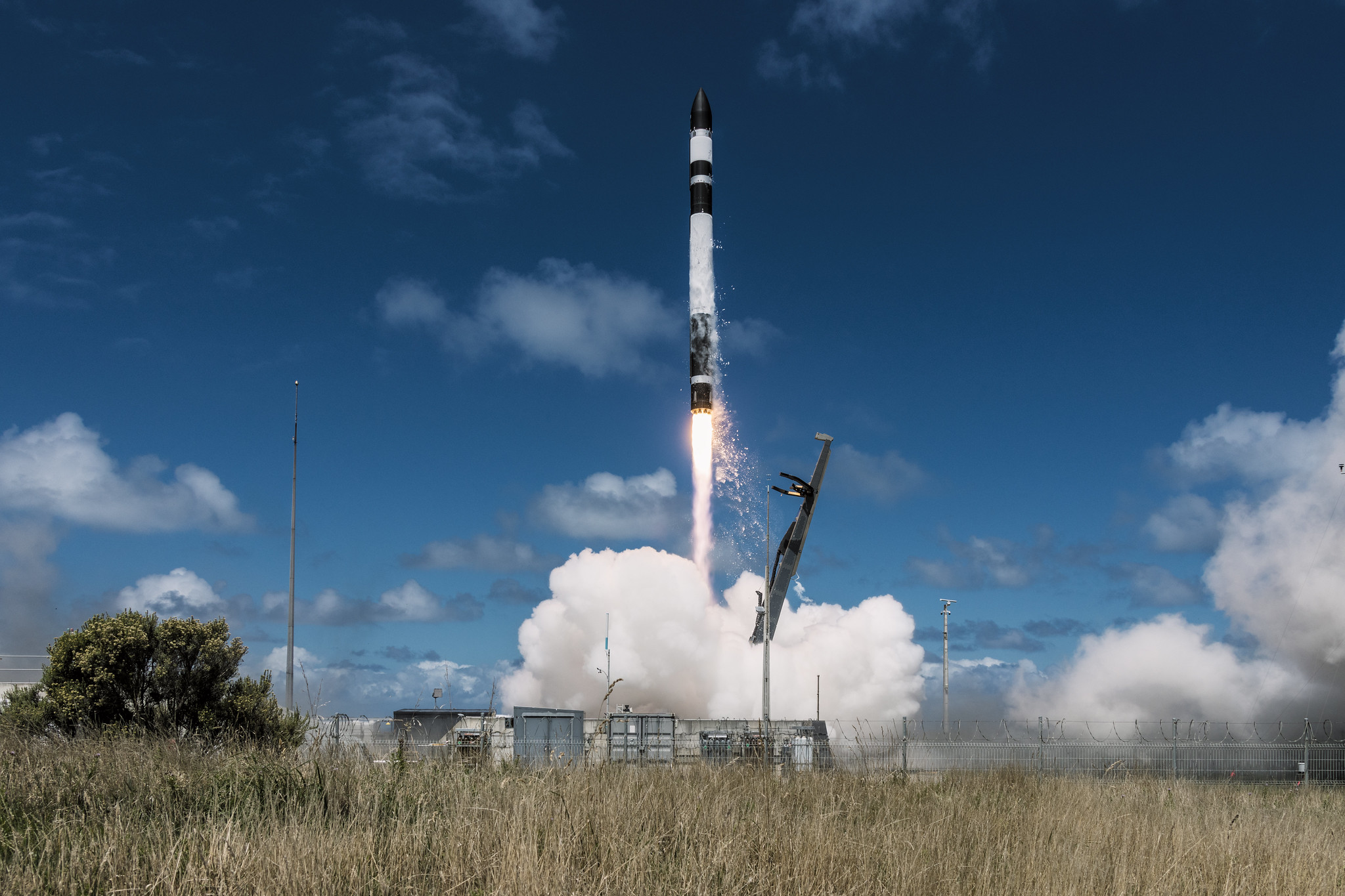

MOUNTAIN VIEW, Calif. — Launch companies are divided on how to compete with SpaceX in a market where demand outstrips supply, yet customers remain price sensitive.
During a panel at the SmallSat Symposium on Feb. 11, executives from several launch companies acknowledged the challenge of competing with SpaceX, which accounted for about half of all orbital launches globally in 2025, despite strong customer demand for launch services.
The issue is particularly acute for small launch vehicle developers, who have struggled to compete on price with SpaceX’s rideshare program.
“If your idea is to go into the market competing with SpaceX on price, you’re probably not in a good competitive position,” said Brian Rogers, vice president of global launch services at Rocket Lab, one of the few small launch vehicle developers to thrive despite competition from SpaceX.
“You have to have a different market entry strategy,” he said, competing on factors other than price. “You have to be able to differentiate yourself.”
Daniele Dallari, sales manager at PLD Space, a Spanish small launch vehicle developer, agreed. He said the company believed its prices were “very competitive” but acknowledged it could not compete on price alone.
“It’s the services that we provide, not just the price. That’s dedicated launch and quick response to customer needs,” he said.
“Yes, price needs to be competitive, absolutely. There’s no doubt about that,” he added. “But there’s a point where it doesn’t matter anymore. It’s the level of service that you provide that makes a difference to the customer.”
Devon Papandrew, vice president of business development at Stoke Space, disagreed. “You absolutely have to have a plan to compete with SpaceX on price,” he said.
Papandrew said Stoke Space, which announced Feb. 10 that it had raised an additional $350 million, expects to compete with a fully reusable medium-lift vehicle. “If you are fully reusable, then you have a cost floor that won’t be undercut by any other launch vehicle,” he said.
He added that SpaceX faces internal constraints because it is its own largest launch customer for deploying Starlink satellites. “Every time they sell a launch to a third-party customer, it means 24 or so Starlink satellites don’t get to orbit. That has a significant cost for SpaceX,” he said.
Scarcity versus saturation
Papandrew said that dynamic is one reason demand for launches currently exceeds supply. “You see all these market forces continuing to push scarcity among supply,” he said. “Where pricing shakes out in the market is going to be driven by that scarcity.”
Not long ago, however, the market appeared oversupplied with launch vehicles, particularly at the small end. Many of those vehicles never reached the pad, facing technical and financial setbacks. On Feb. 11, for example, Orbex, a U.K.-based small launch vehicle developer, entered administration, the British equivalent of bankruptcy protection.
“There were too many people creating launch vehicles. The market was saturated with new entrants,” said Rogers. “But I think everyone is in this market because we believe there is demand for more launch.”
Papandrew said SpaceX achieved its current market dominance through mastery of booster reuse. “They created a step change in capability that unlocked higher cadence and lower cost,” he said.
The issue of launch scarcity and SpaceX’s dominant market position was also a theme of other conference panels, including one earlier in the day focused on investment.
“There has been a massive imbalance of supply and demand in launch for a number of years,” said Tyler Letarte, principal at AE Industrial Partners. That imbalance factored into his firm’s decision to invest in Firefly Aerospace, which operates the Alpha rocket and is developing the larger Eclipse vehicle.
“On this stage years ago, everybody made that point: there was too much launch capability and not enough demand,” said Karl Schmidt, managing director at KippsDeSanto & Co.
However, Randy Segal, a partner at Hogan Lovells, said the perceived oversupply of previous years disappeared because companies were unable to deliver on their proposed vehicles.
“They didn’t go forward because it is rocket science,” she said. “They all said it wasn’t rocket science, but it is rocket science.”










Related Posts

Stay Informed With the Latest & Most Important News
Previous Post
Next Post



Advertisement
-
 01Two Black Holes Observed Circling Each Other for the First Time
 -
 02From Polymerization-Enabled Folding and Assembly to Chemical Evolution: Key Processes for Emergence of Functional Polymers in the Origin of Life
 -
 03Astronomy 101: From the Sun and Moon to Wormholes and Warp Drive, Key Theories, Discoveries, and Facts about the Universe (The Adams 101 Series)
 -
 04True Anomaly hires former York Space executive as chief operating officer
 -
 05Φsat-2 begins science phase for AI Earth images
 -
 06Hurricane forecasters are losing 3 key satellites ahead of peak storm season − a meteorologist explains why it matters
 -
 07Binary star systems are complex astronomical objects − a new AI approach could pin down their properties quickly