
Now Reading: Launch operators are the rocket fuel required to galvanize spaceports in Europe
-
01
Launch operators are the rocket fuel required to galvanize spaceports in Europe


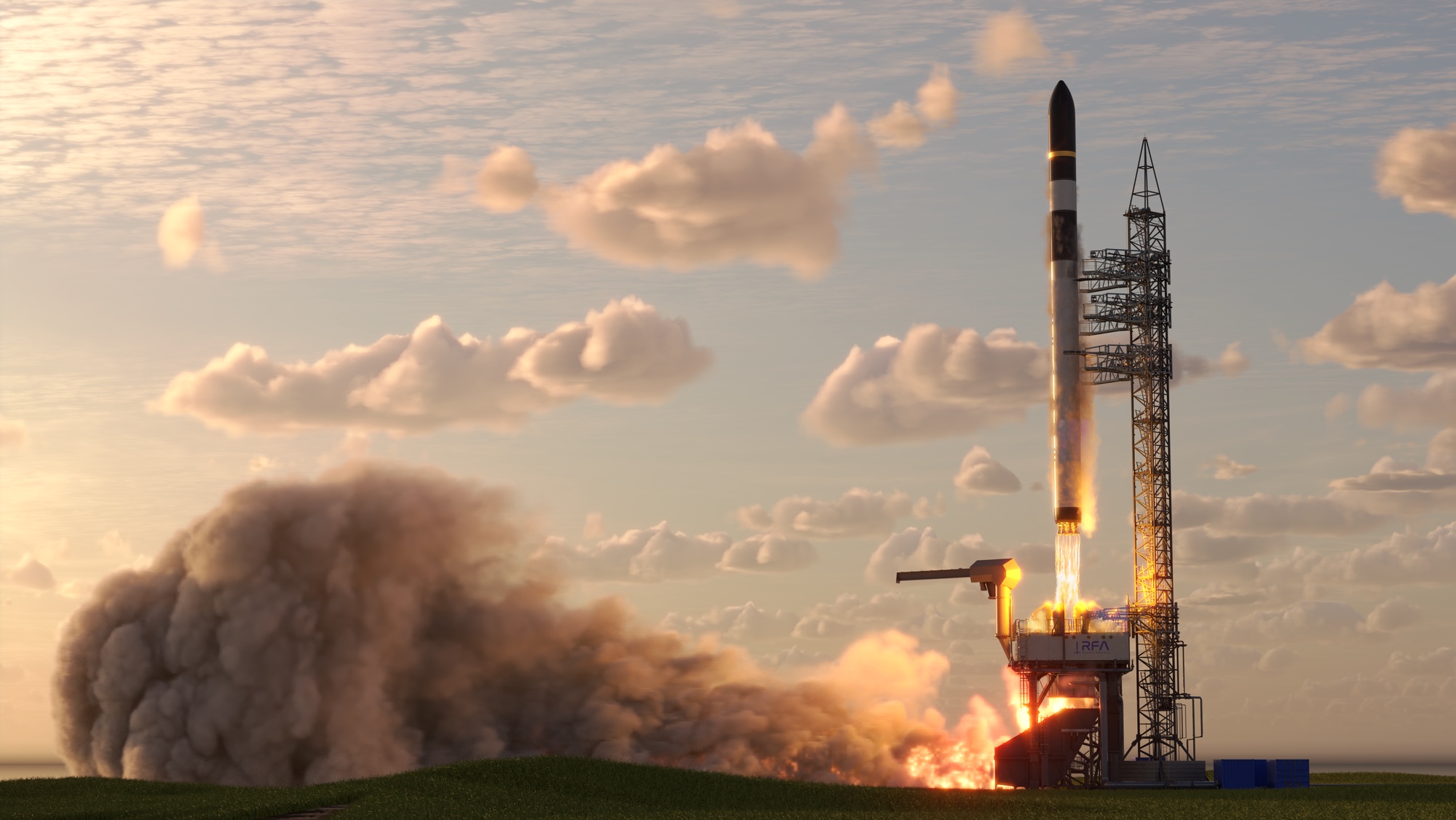

Europe stands on the precipice of launching a satellite from the mainland. Until now, the Guiana Space Centre in South America has operated as Europe’s “gateway to space” but spaceports in SaxaVord and Andøya offer the tantalizing prospect of launches much closer to home.
Yet infrastructure alone will not get us there. A launchpad is only as valuable as the rockets that lift off from it. Without a vibrant launch operator sector to drive sustained demand, Europe’s commercial spaceport model cannot succeed.
For decades, Europe’s access to space has depended on a patchwork of arrangements — commercial, multinational and often reliant on non-European infrastructure. As a continent, we have finally woken up to the strategic weakness of not having sovereign access to space. Yet, we remain years away from true self-sufficiency, and progress will stall unless launch operators step up as active partners in shaping Europe’s launch ecosystem.
Across the continent, from SaxaVord in Scotland to Andøya in Norway and Esrange in Sweden, a network of new and revitalized spaceports is taking shape. Each reflects different commercial and regulatory models — some privately financed, others government-backed, some hybrid. This diversity demonstrates the entrepreneurial energy behind the emerging launch ecosystem, but it also exposes the risk of fragmentation.
If every spaceport operates to different standards, with different levels of government engagement, investment and regulatory readiness, Europe’s ability to compete on the global stage will suffer. Instead of a cohesive launch capability, we risk a patchwork of isolated efforts that struggle to achieve scale or interoperability.
Europe must start treating spaceports as strategic national infrastructure. Just as governments once led the construction of airports, seaports and rail networks, public investment and coordination are essential to ensure secure space access.
However, even the best infrastructure means little without the operators to use it. A thriving European launch industry requires not just multiple spaceports, but a competitive market of launch providers. Sustained cadence — not one-off demonstrations — drives cost reductions and builds the experience base that attracts investment and customers.
In other words, Europe must foster not only a network of launch sites, but an ecosystem of launchers. The success of one depends on the other. Spaceports need regular users to be viable, and launch operators need predictable access and coordinated regulation to plan missions and scale production. Governments should therefore view support for early launch operations as an investment in industrial capability and not a subsidy. Too many fail to recognize space as a catalyst for long-term economic growth and technological innovation.
We have seen this model succeed elsewhere. In the United States, NASA and the U.S. Space Force developed and maintained the infrastructure at Cape Canaveral and Vandenberg, enabling a new generation of private launch providers to flourish. India’s ISRO and Japan’s JAXA have shown how state-backed launch sites can evolve into national assets that attract private participation and drive sustained industrial growth. Europe cannot afford to lag behind or remain dependent on non-European launch providers for access to orbit.
To achieve true resilience and competitiveness, Europe needs multiple, geographically diverse launch sites and a competitive ecosystem of operators capable of launching regularly. Together, they can form a distributed yet cohesive launch network that safeguards access to space even during political or logistical disruptions.
Europe’s strength has always come from collaboration. If we bring that same spirit to the way we set up and operate spaceports, we can establish a coordinated and resilient launch ecosystem.
Volodymyr Levykin is founder and CEO of Skyrora.
SpaceNews is committed to publishing our community’s diverse perspectives. Whether you’re an academic, executive, engineer or even just a concerned citizen of the cosmos, send your arguments and viewpoints to opinion (at) spacenews.com to be considered for publication online or in our next magazine. If you have something to submit, read some of our recent opinion articles and our submission guidelines to get a sense of what we’re looking for. The perspectives shared in these opinion articles are solely those of the authors and do not necessarily represent their employers or professional affiliations.










Related Posts


Stay Informed With the Latest & Most Important News
Previous Post
Next Post
Previous Post
Next Post


Advertisement
-
 01Two Black Holes Observed Circling Each Other for the First Time
 -
 02From Polymerization-Enabled Folding and Assembly to Chemical Evolution: Key Processes for Emergence of Functional Polymers in the Origin of Life
 -
 03Astronomy 101: From the Sun and Moon to Wormholes and Warp Drive, Key Theories, Discoveries, and Facts about the Universe (The Adams 101 Series)
 -
 04True Anomaly hires former York Space executive as chief operating officer
 -
 05Φsat-2 begins science phase for AI Earth images
 -
 06Hurricane forecasters are losing 3 key satellites ahead of peak storm season − a meteorologist explains why it matters
 -
 07Binary star systems are complex astronomical objects − a new AI approach could pin down their properties quickly