
Now Reading: Legacy of Official UFO Magazine Shaped Cultural and Scientific Discourse on the Unknown
-
01
Legacy of Official UFO Magazine Shaped Cultural and Scientific Discourse on the Unknown

Legacy of Official UFO Magazine Shaped Cultural and Scientific Discourse on the Unknown

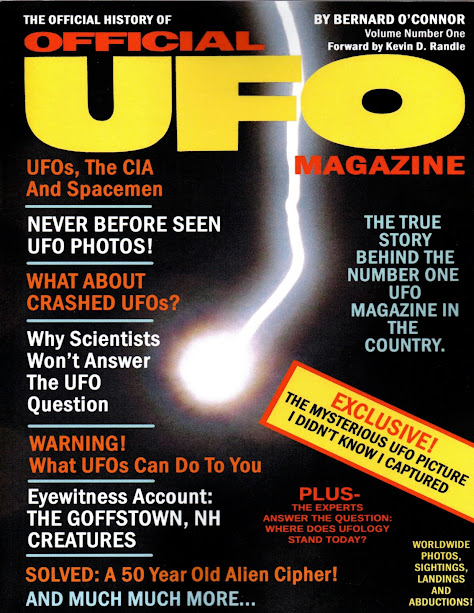

The legacy of Official UFO Magazine is a fascinating tapestry woven with the threads of curiosity, skepticism, and relentless exploration of the unknown. Established in the mid-1970s, the magazine became a cornerstone for UFO enthusiasts and researchers alike, offering a platform that balanced the zealous search for truth with a critical eye towards sensationalism. It fostered an environment where both believers and skeptics could present their views, creating a dialogue that enriched the discourse surrounding unidentified flying objects.
One of the most significant aspects of Official UFO Magazine was its editorial policy under Bernie O’Connor, who prioritized credible reporting over mere sensationalism. O’Connor’s approach encouraged contributors to delve into rigorous investigations and present well-documented evidence, ensuring that the stories shared were not only engaging but also grounded in reality. This ethos resonated with many budding writers and researchers, including myself, who found our voices within its pages.
Throughout its run, the magazine published a diverse range of articles that explored various facets of UFO phenomena, from eyewitness accounts to in-depth historical analyses. For instance, it showcased notable figures such as Philip Klass and his skeptical inquiries into famous abduction stories, including the infamous Travis Walton case. By featuring voices from different perspectives, Official UFO Magazine not only appealed to its core audience but also challenged preconceived notions about what constituted credible evidence.
The cultural impact of Official UFO Magazine cannot be overstated. During its peak, it influenced both public perception and the broader scientific community’s approach to UFO research. The magazine served as a bridge, connecting the enthusiasts who passionately sought answers with the skeptics who demanded rigorous scrutiny. This balancing act is a testament to the timeless allure of the UFO phenomenon, which continues to captivate the human imagination.
- The magazine published groundbreaking articles that became reference points for further research and analysis.
- It laid the groundwork for future UFO publications, establishing standards for quality and credibility.
- It fostered a community of writers, researchers, and enthusiasts, encouraging collaboration and dialogue.
Moreover, the magazine’s timeless documentation of reader interest during the 1970s provides valuable insights into the cultural and societal context that framed UFO discussions. The stories featured not only reflected the spirit of inquiry but also mirrored the anxieties and hopes of a generation grappling with rapid technological advancements and the looming threat of the Cold War. The images and advertisements included in the book chronicling its history further immerse readers in the aesthetic and cultural ethos of the time, showcasing what captivated the collective consciousness.
The passion behind Official UFO Magazine’s legacy is palpable in the talents it nurtured. Writers who emerged from its pages have since become prominent figures in the field, contributing to a richer understanding of UFOs and related phenomena. Their stories and investigations have inspired countless others to look to the skies with both wonder and skepticism.
As we revisit the legacy of Official UFO Magazine, we are reminded of the importance of maintaining a balanced perspective in the search for truth. With the resurgence of interest in UFOs in contemporary times, this legacy continues to resonate, highlighting the need for diligent inquiry and open-mindedness in both the scientific and the public realms. The magazine may have evolved with the times, but its core mission—to explore the unknown through a lens of credibility and curiosity—remains as relevant as ever.
During the 1970s, the landscape of UFO research was rich with both speculation and scientific inquiry, and Official UFO Magazine played a pivotal role in shaping this discourse. The magazine served as a treasure trove of reputable investigations, interviews, and analyses, positioning itself as a beacon of credible information at a time when misinformation was rampant. This period marked a significant shift in how UFO phenomena were perceived, with an increasing acceptance of the subject within certain academic circles.
One of the standout contributions of the magazine was its dedication to featuring thorough investigations that scrutinized significant encounters and sightings. Among these was the comprehensive reporting on the infamous Roswell incident, which had taken place in 1947 but gained renewed interest during the 1970s. Articles dissecting witness testimonies, military involvement, and the influence of media coverage helped to cultivate a more nuanced understanding of the events surrounding Roswell, juxtaposing sensationalist theories with factual investigation.
Moreover, the magazine didn’t shy away from tackling controversial issues that sparked public debate. For example, it published critical discussions about government secrecy concerning UFOs, including the highly publicized existence of the Robertson Panel and its recommendations regarding UFO research in the 1950s. The articles prompted readers to question the transparency of governmental agencies and their motives, fostering an environment ripe for activism and inquiry. This kind of investigative journalism was groundbreaking and set a precedent for future UFO publications to follow suit.
Another key insight from the 1970s was the expanding acknowledgment of psychological and sociological dimensions of UFO sightings. The magazine explored the phenomena of misidentified aircraft, the impact of mass sightings on collective psychology, and the role of folklore in shaping people’s beliefs about extraterrestrial life. Writers brought forth the idea that UFO encounters could not only be viewed through the lens of physical evidence but also must be understood within the context of human perception and societal influences. This multidisciplinary approach broadened the scope of UFO research, emphasizing the need for an intersectional understanding of the phenomenon.
In addition to its rigorous exploration of sightings and theories, Official UFO Magazine also emphasized the importance of community engagement. The Vibrant Letters to the Editor section allowed readers to voice their opinions and share personal encounters, creating a communal atmosphere of shared experiences and collective curiosity. This engagement fostered a sense of camaraderie among readers, many of whom found solace in connecting with others who experienced similar feelings of wonder and uncertainty regarding the phenomenon of UFOs.
- Innovative investigation techniques were highlighted, including the use of interviews and archival research to validate claims.
- Articles often featured critical evaluations of famous UFO cases, encouraging readers to think critically.
- Prominent contributors included both believers and skeptics, enriching the dialogue with diverse perspectives.
As we traverse the pages of this pivotal era captured within Official UFO Magazine, we uncover a tapestry interwoven with a thirst for knowledge, a desire for truth, and a deep-seated curiosity about our place in the universe. The magazine not only chronicled the excitement of UFO sightings but also served as a historical document reflecting societal concerns, technological advances, and the complex relationship between humanity and the unknown. It is a clear testament to the power of journalism to shape our understanding of reality, especially in a field as elusive and controversial as UFO research.










Related Posts


Stay Informed With the Latest & Most Important News
Previous Post
Next Post
Previous Post

Next Post




Advertisement
-
 01Two Black Holes Observed Circling Each Other for the First Time
 -
 02From Polymerization-Enabled Folding and Assembly to Chemical Evolution: Key Processes for Emergence of Functional Polymers in the Origin of Life
 -
 03Astronomy 101: From the Sun and Moon to Wormholes and Warp Drive, Key Theories, Discoveries, and Facts about the Universe (The Adams 101 Series)
 -
 04True Anomaly hires former York Space executive as chief operating officer
 -
 05Φsat-2 begins science phase for AI Earth images
 -
 06Hurricane forecasters are losing 3 key satellites ahead of peak storm season − a meteorologist explains why it matters
 -
 07Binary star systems are complex astronomical objects − a new AI approach could pin down their properties quickly